• Wyszukiwanie zaawansowane
  • Kategorie
  • Kategorie BISAC
  • Książki na zamówienie
  • Promocje
  • Granty
  • Książka na prezent
  • Opinie
  • Pomoc
  • Załóż konto
  • Zaloguj się

Accidents and Disasters: Lessons from Air Crashes and Pandemics » książka


zaloguj się | załóż konto
Logo Krainaksiazek.pl

koszyk

konto

szukaj
topmenu
Księgarnia internetowa
Szukaj
Książki na zamówienie
Promocje
Granty
Książka na prezent
Moje konto
Pomoc
 
 
Wyszukiwanie zaawansowane
Pusty koszyk
Bezpłatna dostawa dla zamówień powyżej 20 złBezpłatna dostawa dla zamówień powyżej 20 zł

Kategorie główne

• Nauka
 [2949965]
• Literatura piękna
 [1857847]

  więcej...
• Turystyka
 [70818]
• Informatyka
 [151303]
• Komiksy
 [35733]
• Encyklopedie
 [23180]
• Dziecięca
 [617748]
• Hobby
 [139972]
• AudioBooki
 [1650]
• Literatura faktu
 [228361]
• Muzyka CD
 [398]
• Słowniki
 [2862]
• Inne
 [444732]
• Kalendarze
 [1620]
• Podręczniki
 [167233]
• Poradniki
 [482388]
• Religia
 [509867]
• Czasopisma
 [533]
• Sport
 [61361]
• Sztuka
 [243125]
• CD, DVD, Video
 [3451]
• Technologie
 [219309]
• Zdrowie
 [101347]
• Książkowe Klimaty
 [123]
• Zabawki
 [2362]
• Puzzle, gry
 [3791]
• Literatura w języku ukraińskim
 [253]
• Art. papiernicze i szkolne
 [7933]
Kategorie szczegółowe BISAC

Accidents and Disasters: Lessons from Air Crashes and Pandemics

ISBN-13: 9789811999833 / Angielski
Satish Chandra
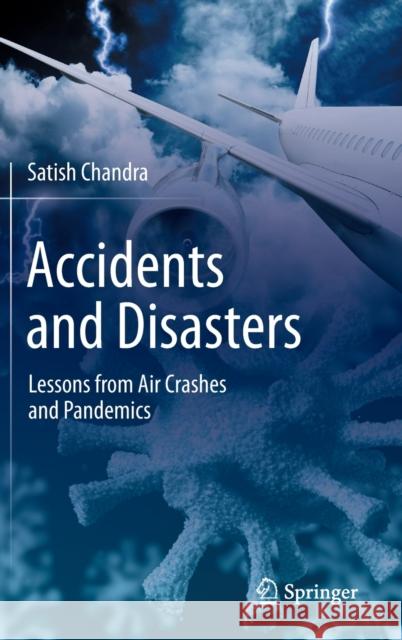
Accidents and Disasters: Lessons from Air Crashes and Pandemics Satish Chandra 9789811999833 Springer Verlag, Singapore - książkaWidoczna okładka, to zdjęcie poglądowe, a rzeczywista szata graficzna może różnić się od prezentowanej.

Accidents and Disasters: Lessons from Air Crashes and Pandemics

ISBN-13: 9789811999833 / Angielski

Satish Chandra
cena 181,55 zł
(netto: 172,90 VAT:  5%)

Najniższa cena z 30 dni: 173,46 zł
Termin realizacji zamówienia:
ok. 22 dni roboczych
Bez gwarancji dostawy przed świętami

Darmowa dostawa!
inne wydania

This book deals with the contemporary subject of perception of risk and its influence on accidents and disasters. The contents examine the conventional viewpoints on human errors, incubation of errors, complexity and organisational deviance as a cause for accidents. Work of Mary Douglas with regard to risk, Charles Perrow's work on the normal accident theory and Diane Vaughn's theory on normalisation of deviance are examined from a fresh perspective in this book. It also discusses prominent accidents in aviation, space, nuclear energy, automotive and healthcare, using the pandemic and Boeing 737 Max as a backdrop to study accidents and disasters. It further explores the background and similarities to these events and addresses the core issues such as the state of regulation, the worldview of the sociologists, and proposes that mental models of complex systems, avarice and risk for gain as other possibilities for accidents. Using the concept of nudge in behavioural economics and the Elinor Ostrom’s viewpoint on regulating for common good, it suggests a way forward through the High Reliability Organisation Theory (HRO) leading to enhanced risk perception. The book will be of interest to those who would like to understand the need to incorporate risk perception into regulation, engineers and scientists, professionals and policy makers working in the areas of disaster and risk management, technology areas like aviation, nuclear plants, space and healthcare, students of the sociology of risk and of course the general reader.


This book deals with the contemporary subject of perception of risk and its influence on accidents and disasters. The contents examine the conventional viewpoints on human errors, incubation of errors, complexity and organisational deviance as a cause for accidents. Work of Mary Douglas with regard to risk, Charles Perrow's work on the normal accident theory and Diane Vaughn's theory on normalisation of deviance are examined from a fresh perspective in this book. It also discusses prominent accidents in aviation, space, nuclear energy, automotive and healthcare, using the pandemic and Boeing 737 Max as a backdrop to study accidents and disasters. It further explores the background and similarities to these events and addresses the core issues such as the state of regulation, the worldview of the sociologists, and proposes that mental models of complex systems, avarice and risk for gain as other possibilities for accidents. Using the concept of nudge in behavioural economics and the Elinor Ostrom’s viewpoint on regulating for common good, it suggests a way forward through the High Reliability Organisation Theory (HRO) leading to enhanced risk perception. The book will be of interest to those who would like to understand the need to incorporate risk perception into regulation, engineers and scientists, professionals and policy makers working in the areas of disaster and risk management, technology areas like aviation, nuclear plants, space and healthcare, students of the sociology of risk and of course the general reader.

Kategorie:
Technologie
Kategorie BISAC:
Technology & Engineering > Industrial Engineering
Business & Economics > Insurance - Risk Assessment & Management
Psychology > Industrial & Organizational Psychology
Wydawca:
Springer Verlag, Singapore
Język:
Angielski
ISBN-13:
9789811999833

Introduction.- Incidents, Accidents and Unmitigated Disasters.- Learning from Failures – Evolution of Risk and Safety Regulation.- Keep it Simple but Not Stupid - Complex Technology and Complex Organisations.- Are Failures Stepping Stones to More Failures - The Sociology of Danger and Risk.- To Err is Human – What exactly is Human Error?.- What I Do Not Know Will Hurt Me - Mental Models and Risk Perception.- Is Greed Really that Good - Avarice and Gain versus Risk and Blame.- And There is Dr. Kato: How Does it Look and Where Do We Go from Here?.

Dr. Satish Chandra is a former Programme Director and Chairman, Structures and Materials Cluster at the National Aerospace Laboratories and presently, Director at Healthseq, a precision medicine and health systems company. He has spent an entire career looking at safety and risk in aviation. He established a crashworthiness laboratory dealing with aircraft and automotive safety and has experience with social and organizational behavior and its impact on risk perception. Overall, Dr. Chandra’s expertise has combined research and technology with the broader aspects of regulatory compliance, technology development, operating economics and public policy. He has a Ph.D from the University of Bristol from a systems engineering laboratory that has recognized work in dealing with human errors and organisational behaviour as contributory causes to accidents. The book draws on the Boeing 737 Max accidents and the pandemic and is shaped by the author’s earlier experience. Dr. Chandra has been particularly interested in sociology theories on accidents, and a view of developing a broader perspective regarding risk perception by embedding issues of human behaviour and sociology into regulation, especially in healthcare and aviation. Dr. Chandra has published work in aircraft design for safety and related areas. He has served as a reviewer and has been on editorial boards of technology journals.

This book deals with the contemporary subject of perception of risk and its influence on accidents and disasters. The contents examine the conventional viewpoints on human errors, incubation of errors, complexity and organisational deviance as a cause for accidents. Work of Mary Douglas with regard to risk, Charles Perrow's work on the normal accident theory and Diane Vaughan's theory on normalisation of deviance are examined from a fresh perspective in this book. It also discusses prominent accidents in aviation, space, nuclear energy, automotive and healthcare, using the pandemic and Boeing 737 Max as a backdrop to study accidents and disasters. It further explores the background and similarities to these events and addresses the core issues such as the state of regulation, the worldview of the sociologists, and proposes that mental models of complex systems, avarice and risk for gain as other possibilities for accidents. Using the concept of nudge in behavioural economics and the Elinor Ostrom’s viewpoint on regulating for common good, it suggests a way forward through the High Reliability Organisation Theory (HRO) leading to enhanced risk perception. The book will be of interest to those who would like to understand the need to incorporate risk perception into regulation, engineers and scientists, professionals and policy makers working in the areas of disaster and risk management, technology areas like aviation, nuclear plants, space and healthcare, students of the sociology of risk and of course the general reader.




Udostępnij

Facebook - konto krainaksiazek.pl


Opinie o Krainaksiazek.pl na Opineo.pl

Partner Mybenefit

Krainaksiazek.pl w programie rzetelna firma Krainaksiaze.pl - płatności przez paypal

Czytaj nas na:

Facebook - krainaksiazek.pl
  • książki na zamówienie
  • granty
  • książka na prezent
  • kontakt
  • pomoc
  • opinie
  • regulamin
  • polityka prywatności

Zobacz:

  • Księgarnia czeska

  • Wydawnictwo Książkowe Klimaty

1997-2025 DolnySlask.com Agencja Internetowa

© 1997-2022 krainaksiazek.pl
     
KONTAKT | REGULAMIN | POLITYKA PRYWATNOŚCI | USTAWIENIA PRYWATNOŚCI
Zobacz: Księgarnia Czeska | Wydawnictwo Książkowe Klimaty | Mapa strony | Lista autorów
KrainaKsiazek.PL - Księgarnia Internetowa

Polityka prywatnosci - link
Krainaksiazek.pl - płatnośc Przelewy24
Przechowalnia Przechowalnia



