• Wyszukiwanie zaawansowane
  • Kategorie
  • Kategorie BISAC
  • Książki na zamówienie
  • Promocje
  • Granty
  • Książka na prezent
  • Opinie
  • Pomoc
  • Załóż konto
  • Zaloguj się

A United Europe of Things » książka


zaloguj się | załóż konto
Logo Krainaksiazek.pl

koszyk

konto

szukaj
topmenu
Księgarnia internetowa
Szukaj
Książki na zamówienie
Promocje
Granty
Książka na prezent
Moje konto
Pomoc
 
 
Wyszukiwanie zaawansowane
Pusty koszyk
Bezpłatna dostawa dla zamówień powyżej 20 złBezpłatna dostawa dla zamówień powyżej 20 zł

Kategorie główne

• Nauka
 [2952079]
• Literatura piękna
 [1850969]

  więcej...
• Turystyka
 [71058]
• Informatyka
 [151066]
• Komiksy
 [35579]
• Encyklopedie
 [23181]
• Dziecięca
 [620496]
• Hobby
 [139036]
• AudioBooki
 [1646]
• Literatura faktu
 [228729]
• Muzyka CD
 [379]
• Słowniki
 [2932]
• Inne
 [445708]
• Kalendarze
 [1409]
• Podręczniki
 [164793]
• Poradniki
 [480107]
• Religia
 [510956]
• Czasopisma
 [511]
• Sport
 [61267]
• Sztuka
 [243299]
• CD, DVD, Video
 [3411]
• Technologie
 [219640]
• Zdrowie
 [100984]
• Książkowe Klimaty
 [124]
• Zabawki
 [2281]
• Puzzle, gry
 [3363]
• Literatura w języku ukraińskim
 [258]
• Art. papiernicze i szkolne
 [8020]
Kategorie szczegółowe BISAC

A United Europe of Things

ISBN-13: 9783031483356 / Angielski / Twarda / 2024
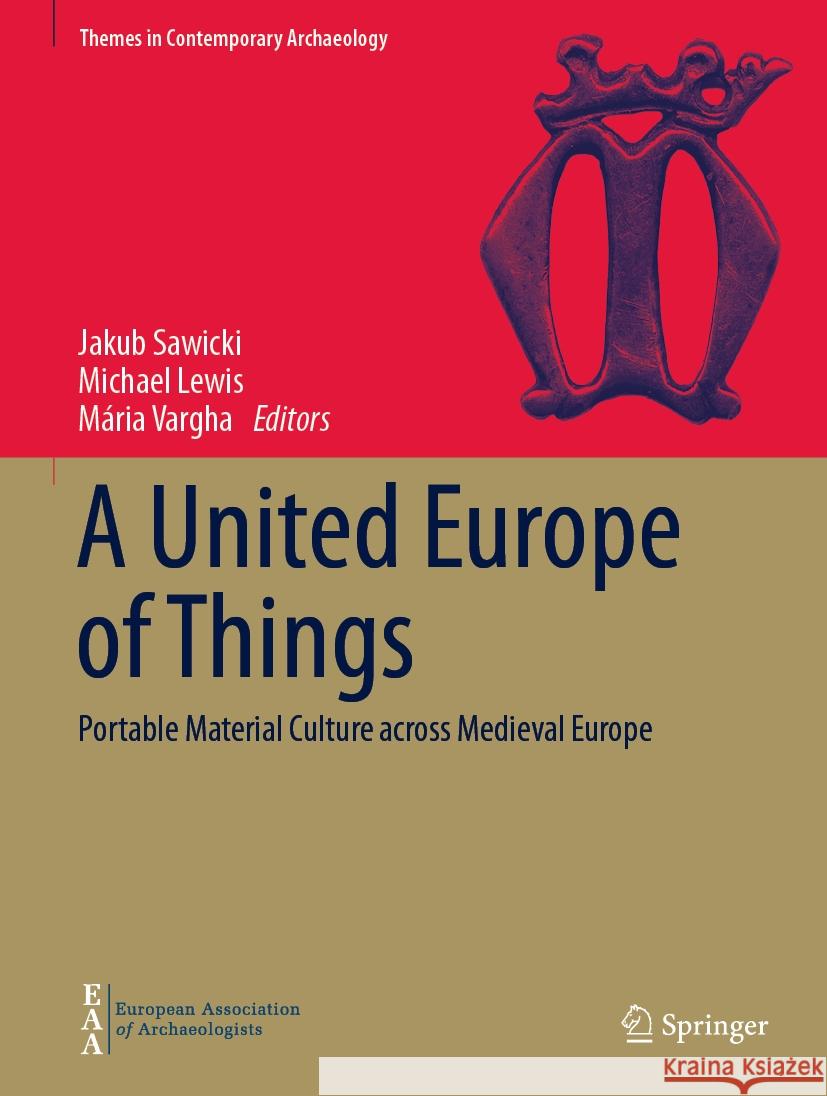
A United Europe of Things  9783031483356 Springer International Publishing - książkaWidoczna okładka, to zdjęcie poglądowe, a rzeczywista szata graficzna może różnić się od prezentowanej.

A United Europe of Things

ISBN-13: 9783031483356 / Angielski / Twarda / 2024

cena 523,30
(netto: 498,38 VAT:  5%)

Najniższa cena z 30 dni: 462,63
Termin realizacji zamówienia:
ok. 22 dni roboczych
Dostawa w 2026 r.

Darmowa dostawa!

This volume studies high and late medieval material culture in a Pan-European context. The idea of ‘unity of culture’ in Medieval Latin Europe is well known in historical texts, especially when it concerns the so-called ‘Europe North of the Alps’. This book investigates the similarities and differences in material culture between areas, regions and political entities and opens the dialogue for a more interregional discussion.The editors acknowledge that there are numerous challenges in understanding the phenomenon the volume addresses, the fundamental one being defining (or even redefining) a common material culture of Europe. Important in determining this is greater appreciation of how objects reflect interactions between peoples, both local and foreign, which can be driven by a variety of factors, including trade, conflict and diplomacy etc. But just as important is observing the differences between ‘things’ across Europe, reflecting developments and transformations its cultural, social and economic history. These works are traditionally presented in isolation or at the local level, maybe even in very specialized tomes, as often it is thought their observation are not relevant to wider discourses. Conversely, what is clear, however, is that by interconnecting these seemingly introvert studies of specific artefact types or sites etc., readers can better appreciate the similarities and differences in material culture across Europe. This book is of interest to researchers in archaeology and material culture.


Kategorie:
Nauka, Archeologia
Kategorie BISAC:
Social Science > Archaeology
History > Europe - Medieval
History > Social History
Wydawca:
Springer International Publishing
Seria wydawnicza:
Themes in Contemporary Archaeology
Język:
Angielski
ISBN-13:
9783031483356
Rok wydania:
2024
Waga:
0.64 kg
Wymiary:
27.9 x 21.0
Oprawa:
Twarda

Contents 

Preface

1      Introduction

Jakub Sawicki, Michael Lewis and Mária Vargha

2      United We Play, United We Pray? Connected Networks of Medieval Play and Supernatural Engagement

Mark A. Hall

3      Where Globalisation, Commerce and Devotion Meet: Silver and Pewter Spoons in Later Medieval England in a European Context

Ben Jervis

4      A United Europe of (Religious) Inscriptions (on Medieval Dress Accessories)?

Michael Lewis

5      Our Lady of Things: The Representation of the Virgin Mary on Jewellery in Medieval Hungary

Karen Stark

6      ‘The Kings’ Name is a Tower of Strength’: Images of Enthroned Kings on Late Romanesque Mounts from Hungary

Mária Vargha

7      Bull, Ram and Hare: Pottery Aquamaniles from Upper Maribor Castle (Slovenia)

Mojca Jančar and Mateja Ravnik

8      Hooked Clasps and Where to Find Them: Similarities and Differences in Dress Accessories in Europe North of the Alps

Jakub Sawicki

9      It Depends: The Use of Harness Pendants in Medieval Europe

Robert Webley

10    Import or Imitation? Late Medieval Graphite Ware and its Influence in Central Transdanubia (Hungary)

Bianka Gina Kovács

11    Long-distance Relations Reflected in the Medieval Urban Material Culture of Baia Mare (Nagybánya), Satu Mare (Szatmár) and Mintiu (Németi) (Romania)

Péter Levente Szőcs

12    Masses of Medieval Metal: A Quantitative Approach to Metalwork from Medieval Cities in Flanders (AD 1000–1600)

Pieterjan Deckers

13    Material Cultures and Social Practices in the Archaeological Assemblages of Uppsala (AD 1100–1550)

Joakim Kjellberg


​Jakub Sawicki is working as a researcher in Prague for the Institute of Archaeology of the Czech Academy of Sciences. His scientific interests focus mainly on late medieval and early modern material culture. Jakub has written mostly on small finds, material culture of pilgrimages and medieval symbolic culture. He is an author of two books on medieval and early modern dress accessories and a monograph on secular badges from Central Europe. He was a PI of a project on Dress Accessories and Social Life in Central Europe and currently is involved in research on luxury, standards, and poverty in early modern Central European urban Centers.

Michael Lewis heads the Portable Antiquities Scheme (PAS) - a project to record archaeological finds made by the public in England and Wales. Oversees the administration of the Treasure Act 1996 - by which the most important archaeological finds end up in public collections. He is also Visiting Professor in Archaeology at the University of Reading and a founding member of the European Public Finds Recording Network (EPFRN). Michael has written widely on medieval material culture, specifically metal small finds associated with everyday life and religion, and the Bayeux Tapestry; the latter was the subject of his PhD. He was co-curator of the British Museum’s international touring exhibition, Medieval Europe 400-1500 and is a member of the Comité scientifique Tapisserie de Bayeux, advising Bayeux Museum on the redisplay and reinterpretation of the embroidery.


Mária Vargha obtained her PhD in medieval studies from the Central European University, Hungary. After working four years in the Digital Humanities unit of the Institute of History at the University of Vienna (Austria), she is currently employed as a researcher in the Department of Archaeology at Charles University (Czech Republic). She is the PI of the project ‘Empowering the Voiceless. The Role of the Rural Population in State Building and Christianisation in East-Central Europe’, conducted within the PRIMUS scheme, and the Lead Agency WEAVE tri-lateral project ‘Religiopolitics – The Imperium Christianum and its Commoners’ in cooperation with the Naturhistorisches Museum Vienna and the Slovenian Academy of Sciences. She has also obtained an ERC StG grant titled ‘RELIC – Religiopolitics - The Imperium Christianum and its Commoners’, with which she returns to the University of Vienna. Her research is mainly focused on the material culture, social and landscape archaeology of the High Middle Ages, as well as on digital humanities, with a particular focus on GIS and network analysis of diverse archaeological and historical data.


This volume studies high and late medieval material culture in a Pan-European context. The idea of ‘unity of culture’ in Medieval Latin Europe is well known in historical texts, especially when it concerns the so-called ‘Europe North of the Alps’. This book investigates the similarities and differences in material culture between areas, regions and political entities and opens the dialogue for a more interregional discussion.

The editors acknowledge that there are numerous challenges in understanding the phenomenon the volume addresses, the fundamental one being defining (or even redefining) a common material culture of Europe. Important in determining this is greater appreciation of how objects reflect interactions between peoples, both local and foreign, which can be driven by a variety of factors, including trade, conflict and diplomacy etc. But just as important is observing the differences between ‘things’ across Europe, reflecting developments and transformations its cultural, social and economic history. These works are traditionally presented in isolation or at the local level, maybe even in very specialized tomes, as often it is thought their observation are not relevant to wider discourses. Conversely, what is clear, however, is that by interconnecting these seemingly introvert studies of specific artefact types or sites etc., readers can better appreciate the similarities and differences in material culture across Europe. This book is of interest to researchers in archaeology and material culture.




Udostępnij

Facebook - konto krainaksiazek.pl


Opinie o Krainaksiazek.pl na Opineo.pl

Partner Mybenefit

Krainaksiazek.pl w programie rzetelna firma Krainaksiaze.pl - płatności przez paypal

Czytaj nas na:

Facebook - krainaksiazek.pl
  • książki na zamówienie
  • granty
  • książka na prezent
  • kontakt
  • pomoc
  • opinie
  • regulamin
  • polityka prywatności

Zobacz:

  • Księgarnia czeska

  • Wydawnictwo Książkowe Klimaty

1997-2025 DolnySlask.com Agencja Internetowa

© 1997-2022 krainaksiazek.pl
     
KONTAKT | REGULAMIN | POLITYKA PRYWATNOŚCI | USTAWIENIA PRYWATNOŚCI
Zobacz: Księgarnia Czeska | Wydawnictwo Książkowe Klimaty | Mapa strony | Lista autorów
KrainaKsiazek.PL - Księgarnia Internetowa

Polityka prywatnosci - link
Krainaksiazek.pl - płatnośc Przelewy24
Przechowalnia Przechowalnia




