• Wyszukiwanie zaawansowane
  • Kategorie
  • Kategorie BISAC
  • Książki na zamówienie
  • Promocje
  • Granty
  • Książka na prezent
  • Opinie
  • Pomoc
  • Załóż konto
  • Zaloguj się

A Systemic Functional Typology of MOOD » książka


zaloguj się | załóż konto
Logo Krainaksiazek.pl

koszyk

konto

szukaj
topmenu
Księgarnia internetowa
Szukaj
Książki na zamówienie
Promocje
Granty
Książka na prezent
Moje konto
Pomoc
 
 
Wyszukiwanie zaawansowane
Pusty koszyk
Bezpłatna dostawa dla zamówień powyżej 20 złBezpłatna dostawa dla zamówień powyżej 20 zł

Kategorie główne

• Nauka
 [2948695]
• Literatura piękna
 [1824038]

  więcej...
• Turystyka
 [70868]
• Informatyka
 [151073]
• Komiksy
 [35227]
• Encyklopedie
 [23181]
• Dziecięca
 [621575]
• Hobby
 [138961]
• AudioBooki
 [1642]
• Literatura faktu
 [228651]
• Muzyka CD
 [371]
• Słowniki
 [2933]
• Inne
 [445341]
• Kalendarze
 [1243]
• Podręczniki
 [164416]
• Poradniki
 [479493]
• Religia
 [510449]
• Czasopisma
 [502]
• Sport
 [61384]
• Sztuka
 [243086]
• CD, DVD, Video
 [3417]
• Technologie
 [219673]
• Zdrowie
 [100865]
• Książkowe Klimaty
 [124]
• Zabawki
 [2168]
• Puzzle, gry
 [3372]
• Literatura w języku ukraińskim
 [260]
• Art. papiernicze i szkolne
 [7838]
Kategorie szczegółowe BISAC

A Systemic Functional Typology of MOOD

ISBN-13: 9789811988202 / Angielski / Twarda / 2023 / 225 str.
Dongqi Li
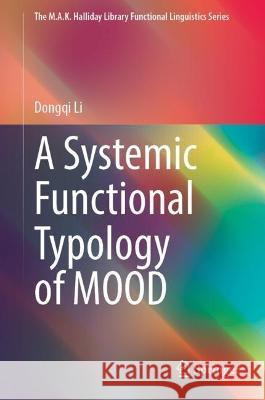
A Systemic Functional Typology of MOOD Dongqi Li 9789811988202 Springer - książkaWidoczna okładka, to zdjęcie poglądowe, a rzeczywista szata graficzna może różnić się od prezentowanej.

A Systemic Functional Typology of MOOD

ISBN-13: 9789811988202 / Angielski / Twarda / 2023 / 225 str.

Dongqi Li
cena 522,07
(netto: 497,21 VAT:  5%)

Najniższa cena z 30 dni: 501,19
Termin realizacji zamówienia:
ok. 22 dni roboczych.

Darmowa dostawa!
inne wydania

The grammatical category of (sentence) mood has been of central interest to many branches of linguistics, including linguistic typology and systemic functional linguistics. This book is a successful integration of the typological and systemic functional approaches to mood, aiming to investigate the commonalities and variations across languages in both mood system and mood structure. To this aim, it establishes a geographically, genetically and typologically representative sample of 60 languages and provides detailed systemic functional descriptions of the mood system and mood structure of these languages. Based on such descriptions, it makes cross-linguistic comparisons of the mood system and mood structure of the languages in the sample. Structurally, it explores the cross-linguistic commonalities and variations in (i) the realizations of some major functional elements in mood structure, (ii) the realizations of mood options and (iii) the realizations of mood system. Systemically, it investigates how languages resemble and vary from each other in (i) the subtypes of major mood types, (ii) the organization of mood system and (iii) the semantic dimensions along which mood system is elaborated further in delicacy. Moreover, building on the descriptions and comparisons, it makes some generalizations about the structural and systemic features of mood and proposes some tentative explanations for the commonalities and variations languages display in mood system and mood structure. This book is an empirical and holistic approach to the typology of mood and contributes to a deeper understanding of the grammatical category. It is of special interest to systemic functional linguists, typologists, grammarians and descriptive linguists.


The grammatical category of (sentence) mood has been of central interest to many branches of linguistics, including linguistic typology and systemic functional linguistics. This book is a successful integration of the typological and systemic functional approaches to mood, aiming to investigate the commonalities and variations across languages in both mood system and mood structure. To this aim, it establishes a geographically, genetically and typologically representative sample of 60 languages and provides detailed systemic functional descriptions of the mood system and mood structure of these languages. Based on such descriptions, it makes cross-linguistic comparisons of the mood system and mood structure of the languages in the sample. Structurally, it explores the cross-linguistic commonalities and variations in (i) the realizations of some major functional elements in mood structure, (ii) the realizations of mood options and (iii) the realizations of mood system. Systemically, it investigates how languages resemble and vary from each other in (i) the subtypes of major mood types, (ii) the organization of mood system and (iii) the semantic dimensions along which mood system is elaborated further in delicacy. Moreover, building on the descriptions and comparisons, it makes some generalizations about the structural and systemic features of mood and proposes some tentative explanations for the commonalities and variations languages display in mood system and mood structure. This book is an empirical and holistic approach to the typology of mood and contributes to a deeper understanding of the grammatical category. It is of special interest to systemic functional linguists, typologists, grammarians and descriptive linguists.

Kategorie:
Nauka, Językoznawstwo
Kategorie BISAC:
Language Arts & Disciplines > Linguistics - Historical & Comparative
Wydawca:
Springer
Seria wydawnicza:
M.A.K. Halliday Library Functional Linguistics
Język:
Angielski
ISBN-13:
9789811988202
Rok wydania:
2023
Dostępne języki:
Numer serii:
000763104
Ilość stron:
225
Oprawa:
Twarda
Dodatkowe informacje:
Wydanie ilustrowane

1. Introduction


1.1 Mood as a grammatical category

1.1.1 The etymology of mood 

1.1.2 Studies on mood: from ancient Greek to the late 18th century

1.1.3 Studies on mood in modern western linguistics

1.1.4 Mood in the Chinese language studies

1.1.5 Summary

1.2 A working definition of mood

1.3 Mood as a grammatical system

1.4 Mood, MOOD, mode and modality

1.5 Systemic functional typology (SFT)

1.5.1 SFL, linguistic typology and SFT 

1.5.2 Features of SFT

1.5.3 Research method and procedures of SFT

1.6 Objectives

1.7 Organization


2. Literature Review


2.1 Typological studies on mood

2.1.1 Typological studies on declarative mood

2.1.2 Typological studies on interrogative mood

2.1.3 Typological studies on imperative mood

2.1.4 Typological studies on exclamative mood

2.2 Systemic functional studies on mood

2.2.1 Theoretical issues of MOOD in SFL

2.2.2 Descriptions of MOOD in particular languages

2.2.3 Cross-linguistic comparison and SFT of MOOD

2.3 Summary

2.3.1 Features and problems of typological studies on mood 

2.3.2 Features and problems of SFL/SFT studies on mood

2.3.3 Rationale for this study


3. Theoretical Framework


3.1 Contextualizing MOOD in SFL

3.2 Stratification: MOOD and SPEECH FUNCTION

3.2.1 Stratification: from context to language

3.2.2 Intra-language stratification

3.2.3 MOOD and SPEECH FUNCTION

3.3 Interpersonal metafunction: MOOD and other systems 

3.3.1 POLARITY

3.3.2 MODALITY

3.4 Rank (scale)

3.5 Axis: MOOD system and mood structure

3.5.1 Paradigmatic: MOOD system

3.5.2 Syntagmatic: mood structure 

3.6 Summary


4. Methodology


4.1 Research questions

4.2 Data collection

4.2.1 Language sampling

4.2.2 Data source

4.3 Data description

4.4 Data analysis 

4.5 Research methods 


5. A Systemic Functional Typology of DECLARATIVE MOOD


5.1 Functional elements in declarative mood structure and their realizations

5.1.1 The Subject

5.1.2 The Predicator

5.1.3 The Finite

5.2 Subtypes of declarative mood and their realizations

5.2.1 The declarative (proper)

5.2.2 The Hidatsa subtypes of declarative

5.2.3 The exclamative

5.2.4 The emotion-involved and the assessed declarative

5.2.5 The evidential declarative

5.2.6 The emphatic and the focused declarative

5.2.7 Tenor-related declarative clauses

5.2.8 Other subtypes of declarative mood

5.3 Summary


6. A Systemic Functional Typology of INTERROGATIVE MOOD


6.1 The polar interrogative mood

6.1.1 Subtypes of polar interrogative mood

6.1.2 Realizations of polar interrogative mood

6.2 The elemental interrogative mood

6.2.1 Subtypes of elemental interrogative mood

6.2.2 Realizations of elemental interrogative mood

6.3 The alternative interrogative mood

6.4 The confirmative mood 

6.4.1 Subtypes of confirmative mood

6.4.2 Realizations of confirmative mood

6.5 Summary


7. A Systemic Functional Typology of IMPERATIVE MOOD


7.1 The jussive mood

7.1.1 Subtypes of jussive mood

7.1.2 Realizations of jussive mood 

7.2 The cohortative mood

7.2.1 Subtypes of cohortative mood

7.2.2 Realizations of cohortative mood

7.3 The optative mood

7.3.1 Subtypes of optative mood

7.3.2 Realizations of optative mood

7.4 The oblative mood

7.5 The hortative mood

7.6 Other types of imperative mood

7.6.1 The prohibitive mood

7.6.2 The permissive mood

7.6.3 The impersonal imperative mood

7.6.4 The Mongolian types of imperative mood

7.7 Summary


8. A Systemic Functional Typology of MOOD system


8.1 The realizations of MOOD system

8.1.1 The realizations of DECLARATIVE MOOD system

8.1.2 The realizations of INTERROGATIVE MOOD system

8.1.3 The realizations of IMPERATIVE MOOD system

8.1.4 The realizations of holistic MOOD system

8.1.5 Intra-language consistency in realizations of mood

8.2 The organization of MOOD system

8.3 Semantic dimensions for the elaboration of MOOD system

8.2.1 Semantic dimensions for the elaboration of holistic MOOD system

8.2.2 Semantic dimensions for the elaboration of DECLARATIVE MOOD system

8.2.3 Semantic dimensions for the elaboration of INTERROGATIVE MOOD system

8.2.4 Semantic dimensions for the elaboration of IMPERATIVE MOOD system

8.2.5 Context-semantics-lexicogrammar

8.4 The multilingual MOOD system

8.5 Summary


9. Conclusion


9.1 Major findings

9.2 Contributions of this study

9.3 Limitations of this study and further studies proposed 

Bibliography

Dr. Dongqi Li is a postdoctoral researcher in the School of International Studies at Sun Yat-Sen University, China. He has a M.A. and a Ph.D. in Systemic Functional Linguistics, both from Central China Normal University. His research interests include systemic functional grammar, systemic functional typology and Chinese grammar. He won the National Scholarship for Doctoral Candidates (2018) and the Excellent Ph.D. Thesis Award of CCNU (2020).

The grammatical category of (sentence) mood has been of central interest to many branches of linguistics, including linguistic typology and systemic functional linguistics. This book is a successful integration of the typological and systemic functional approaches to mood, aiming to investigate the commonalities and variations across languages in both mood system and mood structure. To this aim, it establishes a geographically, genetically and typologically representative sample of 60 languages and provides detailed systemic functional descriptions of the mood system and mood structure of these languages. Based on such descriptions, it makes cross-linguistic comparisons of the mood system and mood structure of the languages in the sample. Structurally, it explores the cross-linguistic commonalities and variations in (i) the realizations of some major functional elements in mood structure, (ii) the realizations of mood options and (iii) the realizations of mood system. Systemically, it investigates how languages resemble and vary from each other in (i) the subtypes of major mood types, (ii) the organization of mood system and (iii) the semantic dimensions along which mood system is elaborated further in delicacy. Moreover, building on the descriptions and comparisons, it makes some generalizations about the structural and systemic features of mood and proposes some tentative explanations for the commonalities and variations languages display in mood system and mood structure. This book is an empirical and holistic approach to the typology of mood and contributes to a deeper understanding of the grammatical category. It is of special interest to systemic functional linguists, typologists, grammarians and descriptive linguists.




Udostępnij

Facebook - konto krainaksiazek.pl


Opinie o Krainaksiazek.pl na Opineo.pl

Partner Mybenefit

Krainaksiazek.pl w programie rzetelna firma Krainaksiaze.pl - płatności przez paypal

Czytaj nas na:

Facebook - krainaksiazek.pl
  • książki na zamówienie
  • granty
  • książka na prezent
  • kontakt
  • pomoc
  • opinie
  • regulamin
  • polityka prywatności

Zobacz:

  • Księgarnia czeska

  • Wydawnictwo Książkowe Klimaty

1997-2026 DolnySlask.com Agencja Internetowa

© 1997-2022 krainaksiazek.pl
     
KONTAKT | REGULAMIN | POLITYKA PRYWATNOŚCI | USTAWIENIA PRYWATNOŚCI
Zobacz: Księgarnia Czeska | Wydawnictwo Książkowe Klimaty | Mapa strony | Lista autorów
KrainaKsiazek.PL - Księgarnia Internetowa

Polityka prywatnosci - link
Krainaksiazek.pl - płatnośc Przelewy24
Przechowalnia Przechowalnia




