• Wyszukiwanie zaawansowane
  • Kategorie
  • Kategorie BISAC
  • Książki na zamówienie
  • Promocje
  • Granty
  • Książka na prezent
  • Opinie
  • Pomoc
  • Załóż konto
  • Zaloguj się

A Modern History of Materials: From Stability to Sustainability » książka


zaloguj się | załóż konto
Logo Krainaksiazek.pl

koszyk

konto

szukaj
topmenu
Księgarnia internetowa
Szukaj
Książki na zamówienie
Promocje
Granty
Książka na prezent
Moje konto
Pomoc
 
 
Wyszukiwanie zaawansowane
Pusty koszyk
Bezpłatna dostawa dla zamówień powyżej 20 złBezpłatna dostawa dla zamówień powyżej 20 zł

Kategorie główne

• Nauka
 [2952079]
• Literatura piękna
 [1850969]

  więcej...
• Turystyka
 [71058]
• Informatyka
 [151066]
• Komiksy
 [35579]
• Encyklopedie
 [23181]
• Dziecięca
 [620496]
• Hobby
 [139036]
• AudioBooki
 [1646]
• Literatura faktu
 [228729]
• Muzyka CD
 [379]
• Słowniki
 [2932]
• Inne
 [445708]
• Kalendarze
 [1409]
• Podręczniki
 [164793]
• Poradniki
 [480107]
• Religia
 [510956]
• Czasopisma
 [511]
• Sport
 [61267]
• Sztuka
 [243299]
• CD, DVD, Video
 [3411]
• Technologie
 [219640]
• Zdrowie
 [100984]
• Książkowe Klimaty
 [124]
• Zabawki
 [2281]
• Puzzle, gry
 [3363]
• Literatura w języku ukraińskim
 [258]
• Art. papiernicze i szkolne
 [8020]
Kategorie szczegółowe BISAC

A Modern History of Materials: From Stability to Sustainability

ISBN-13: 9783031239892 / Angielski / Twarda / 2023 / 208 str.
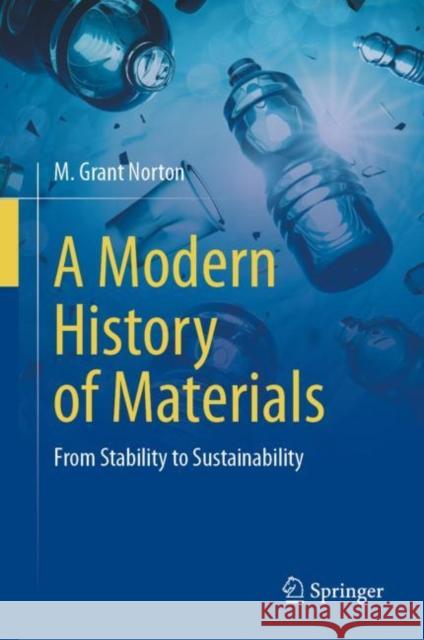
M. Grant Norton
A Modern History of Materials: From Stability to Sustainability M. Grant Norton 9783031239892 Springer - książkaWidoczna okładka, to zdjęcie poglądowe, a rzeczywista szata graficzna może różnić się od prezentowanej.

A Modern History of Materials: From Stability to Sustainability

ISBN-13: 9783031239892 / Angielski / Twarda / 2023 / 208 str.

M. Grant Norton
cena 221,37
(netto: 210,83 VAT:  5%)

Najniższa cena z 30 dni: 192,74
Termin realizacji zamówienia:
ok. 22 dni roboczych
Dostawa w 2026 r.

Darmowa dostawa!
inne wydania

What could the ancient Egyptians tell us about 3D printing? How can we make lithium-ion batteries greener and more sustainable? Which materials will form the heart of future quantum computers?Plastic films, glass optical fibers, silicon crystals, and more — this book is about the history of the materials that have rapidly transformed our society over the last century and their role in the major global challenges of the future. From metal alloys ushering in a new age of industry to advanced materials laying the atomic brickwork of the Digital Revolution, the book examines the societal impact of the modern materials revolution through the twin lenses of stability and sustainability.Why aren’t maglev trains mainstream? Whatever happened to graphene and carbon nanotubes? The book also looks at the unmet promises of some of the most exciting — and hyped — technologies in recent decades — superconductivity and nanotechnology. The final chapter reviews our history of materials usage, the increasing demand for many critical raw materials, and addresses the upcoming new challenges for creating a circular economy based on reusing and recycling materials.


What could the ancient Egyptians tell us about 3D printing? How can we make lithium-ion batteries greener and more sustainable? Which materials will form the heart of future quantum computers?Plastic films, glass optical fibers, silicon crystals, and more — this book is about the history of the materials that have rapidly transformed our society over the last century and their role in the major global challenges of the future. From metal alloys ushering in a new age of industry to advanced materials laying the atomic brickwork of the Digital Revolution, the book examines the societal impact of the modern materials revolution through the twin lenses of stability and sustainability.Why aren’t maglev trains mainstream? Whatever happened to graphene and carbon nanotubes? The book also looks at the unmet promises of some of the most exciting — and hyped — technologies in recent decades — superconductivity and nanotechnology. The final chapter reviews our history of materials usage, the increasing demand for many critical raw materials, and addresses the upcoming new challenges for creating a circular economy based on reusing and recycling materials.

Kategorie:
Technologie
Kategorie BISAC:
Technology & Engineering > Materials Science - General
Science > History
Technology & Engineering > Nanotechnology & MEMS
Wydawca:
Springer
Język:
Angielski
ISBN-13:
9783031239892
Rok wydania:
2023
Dostępne języki:
Ilość stron:
208
Oprawa:
Twarda
Dodatkowe informacje:
Wydanie ilustrowane

Chapter 1 – Introduction


Chapter 2 – A Measure of Stability


Chapter 3 – A Quantum of Solace


Chapter 4 – Seeing is Believing


Chapter 5 – Made to Measure


Chapter 6 – There’s Still Plenty of Room at the Bottom


Chapter 7 – Promises Unmet


Chapter 8 – The Future of Mobility


Chapter 9 – Certain about Uncertainty


Chapter 10 – Here Comes the Sun


Chapter 11 – A Green Deal


Chapter 12 – Conclusion 

M. Grant Norton is Dean of the Honors College and Professor in the School of Mechanical and Materials Engineering at Washington State University. He obtained his Ph.D. in Materials from Imperial College and spent a two-year postdoctoral at Cornell University before joining the Washington State University faculty in 1991. In 2003 and 2004, he was Air Force Office of Scientific Research (AFOSR) Faculty Research Associate at Wright-Patterson Air Force Base in Ohio and spent the 1999/2000 academic year as Visiting Professor at Oxford University. From 2004 to 2007, he held Herman and Brita Lindholm Endowed Chair. In 2017, he was a participant in the German-American Fulbright Commission Seminar for U.S. Administrators in International Education. He has held Visiting Professor positions in the Chien-Shiung Wu Honors College at Southeast University in Nanjing and as Global Faculty Fellow at Tecnológico de Monterrey.

Professor Norton’s research is primarily focused on applications of nanomaterials in clean energy and the life sciences. He is author or co-author of over 200 papers in the archival literature, several book chapters and patents, two textbooks including Ceramic Materials: Science and Engineering, and most recently the popular science book Ten Materials that Shaped our World. He serves as Deputy Editor-in-Chief of Journal of Materials Science and on the International Editorial Board of Journal of Materials Education.

Prior to entering academia, he worked for two major European multinationals: Cookson Group PLC and Heraeus GmbH. He has consulted for a number of companies and organizations including the United States Air Force and REC Silicon, the world’s largest producer of silicon materials. From 2009 to 2011, he was on the Board of Directors of the Washington Technology Center (a gubernatorial appointment). He currently serves on several boards including the advisory board for the Thomas S. Foley Institute for Public Policy and Public Service and the Engineering Accreditation Commission of ABET.

What could the ancient Egyptians tell us about 3D printing? How can we make lithium-ion batteries greener and more sustainable? Which materials will form the heart of future quantum computers?

Plastic films, glass optical fibers, silicon crystals, and more — this book is about the history of the materials that have rapidly transformed our society over the last century and their role in the major global challenges of the future. From metal alloys ushering in a new age of industry to advanced materials laying the atomic brickwork of the Digital Revolution, the book examines the societal impact of the modern materials revolution through the twin lenses of stability and sustainability.

Why aren’t maglev trains mainstream? Whatever happened to graphene and carbon nanotubes? The book also looks at the unmet promises of some of the most exciting — and hyped — technologies in recent decades — superconductivity and nanotechnology. The final chapter reviews our history of materials usage, the increasing demand for many critical raw materials, and addresses the upcoming new challenges for creating a circular economy based on reusing and recycling materials.




Udostępnij

Facebook - konto krainaksiazek.pl


Opinie o Krainaksiazek.pl na Opineo.pl

Partner Mybenefit

Krainaksiazek.pl w programie rzetelna firma Krainaksiaze.pl - płatności przez paypal

Czytaj nas na:

Facebook - krainaksiazek.pl
  • książki na zamówienie
  • granty
  • książka na prezent
  • kontakt
  • pomoc
  • opinie
  • regulamin
  • polityka prywatności

Zobacz:

  • Księgarnia czeska

  • Wydawnictwo Książkowe Klimaty

1997-2025 DolnySlask.com Agencja Internetowa

© 1997-2022 krainaksiazek.pl
     
KONTAKT | REGULAMIN | POLITYKA PRYWATNOŚCI | USTAWIENIA PRYWATNOŚCI
Zobacz: Księgarnia Czeska | Wydawnictwo Książkowe Klimaty | Mapa strony | Lista autorów
KrainaKsiazek.PL - Księgarnia Internetowa

Polityka prywatnosci - link
Krainaksiazek.pl - płatnośc Przelewy24
Przechowalnia Przechowalnia




