A History of the Study of South Italian Black- and Red-Figure Pottery » książka





A History of the Study of South Italian Black- and Red-Figure Pottery
ISBN-13: 9781407307848 / Angielski / Miękka / 2011 / 127 str.
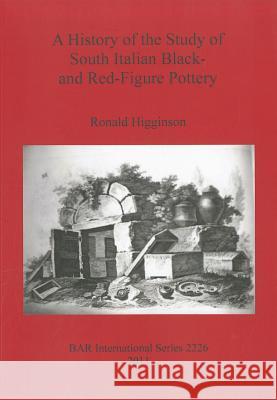
This book offers an overview of the whole period from the first evidence of the Roman rediscovery of figured vases until the end of the 20th century. It looks at how figured vases were received in each successive period and how this determined the way they were studied. First, the Roman urge to collect vases purely as both decorative curiosities found locally and as trophies form Corinth. Then after many centuries of silence, the mediaeval discovery of vases in Tuscany and particularly around Arezzo and the belief that these vases must be supernatural because the painting on them was beyond the skills of contemporary artists. This was followed by the later use of vases as complements to the display of sculpture and to their being regarded as of secondary importance. By the 18th century, vase-painting was being studied for its iconography and as comparative material with ancient texts. Finally the search for the origin of the vases themselves became the great debate, and these supposed origins were also used for political ends. In the 19th century, classification took over as the main type of scholarship. In the 20th century, images of life depicted in vase-paintings are used as a vehicle through which the ancient world is understood. The focus of this work is the history of scholarship. It looks at the aspects of study that each subsequent century thought important, the varied forms scholarly debate took, and the responses which ordered the direction of research. The history of collections is also of importance to this study as the contents of collections can reveal how certain types of figured vases were favoured over others and were disseminated to a wider audience, thereby gaining more prominence and being more closely studied. Vases could not be studied at leisure until they were placed in a safe, permanent environment, so collections were the basis of vase study and subsequent publications. Finally, the author looks at how ancient vases were (and to a certain extent still are) regarded compared with the more revered subjects of ancient literature and classical sculpture.
This book offers an overview of the whole period from the first evidence of the Roman rediscovery of figured vases until the end of the 20th century. It looks at how figured vases were received in each successive period and how this determined the way they were studied. First, the Roman urge to collect vases purely as both decorative curiosities found locally and as trophies form Corinth. Then after many centuries of silence, the mediaeval discovery of vases in Tuscany and particularly around Arezzo and the belief that these vases must be supernatural because the painting on them was beyond the skills of contemporary artists. This was followed by the later use of vases as complements to the display of sculpture and to their being regarded as of secondary importance. By the 18th century, vase-painting was being studied for its iconography and as comparative material with ancient texts. Finally the search for the origin of the vases themselves became the great debate, and these supposed origins were also used for political ends. In the 19th century, classification took over as the main type of scholarship. In the 20th century, images of life depicted in vase-paintings are used as a vehicle through which the ancient world is understood. The focus of this work is the history of scholarship. It looks at the aspects of study that each subsequent century thought important, the varied forms scholarly debate took, and the responses which ordered the direction of research. The history of collections is also of importance to this study as the contents of collections can reveal how certain types of figured vases were favoured over others and were disseminated to a wider audience, thereby gaining more prominence and being more closely studied. Vases could not be studied at leisure until they were placed in a safe, permanent environment, so collections were the basis of vase study and subsequent publications. Finally, the author looks at how ancient vases were (and to a certain extent still are) regarded compared with the more revered subjects of ancient literature and classical sculpture.




Czytaj nas na:
KrainaKsiazek.PL - Księgarnia Internetowa


