Termin realizacji zamówienia: ok. 30 dni roboczych Bez gwarancji dostawy przed świętami
Darmowa dostawa!
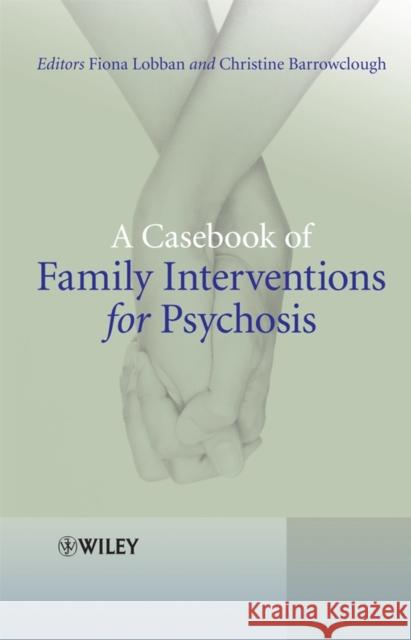
A practical guide to implementing family interventions for psychosis, which discusses different family needs and illustrates different approaches to offering the interventions.
Approximately 1 in 100 people experience psychosis, which can severely disrupt home and family life and place a heavy burden on carers
A practical guide to implementing family interventions for psychosis, which discusses different family needs and illustrates different approaches to offering the interventions
Shows how to tailor family interventions to meet different needs e.g. working via interpreter or with families in which multiple members suffer mental health problems
No direct competition on family interventions for psychosis.
1 Why Are Family Interventions Important? A Family Member Perspective 3 Martin Gregory
II FIRST EPISODE PSYCHOSIS 21
2 Family Work in Early Psychosis 23 Gráinne Fadden and Jo Smith
3 A Model of Family Work in First–Episode Psychosis: Managing Self–Harm 47 Jean Addington, April Collins, Amanda McCleery and Sabrina Baker
4 Working with Families to Prevent Relapse in First–Episode Psychosis 67 Kingsley Crisp and John Gleeson
III INTERVENTIONS FOCUSING ON DRUG USE 91
5 Family Intervention for Complex Cases: Substance Use and Psychosis 93 Ian Lowens, Samantha E. Bowe and Christine Barrowclough
6 Family Motivational Intervention in Early Psychosis and Cannabis Misuse 117 Maarten Smeerdijk, Don Linszen, Tom Kuipers and René Keet
IV VARIETY OF ISSUES ARISING INWORKING WITH RELATIVES 139
7 A Case of Family Intervention with a High EE Family 141 Juliana Onwumere, Ben Smith and Elizabeth Kuipers
8 Coming to Terms with Mental Illness in the Family Working Constructively through Its Grief 167 Virginia Lafond
9 Interventions with Siblings 185 Jo Smith, Gráinne Fadden and Michelle O Shea
10 Family Intervention with Ethnically and Culturally Diverse Groups 211 Juliana Onwumere, Ben Smith and Elizabeth Kuipers
V WORKING IN DIFFERENT CONTEXTS 233
11 Multiple Family Groups in Early Psychosis: A Brief Psychoeducational and Therapeutic Intervention 235 David Glentworth
12 Meeting the Needs of Families on Inpatient Units 259 Chris Mansell and Gráinne Fadden
VI SERVICE RELATED ISSUES 285
13 Setting Up a Family Interventions (FI) Service A UK Case Study 287 Frank Burbach and Roger Stanbridge
14 Overcoming Barriers to Staff Offering Family Interventions in the NHS 309 Gráinne Fadden
VII RELATIVES SUPPORTING EACH OTHER 337
15 The COOL Approach 339 Claudia Benzies, Gwen Butcher and Tom Linton
VIII CONCLUSION 355
16 Summary and Conclusions Where Are We up to and Where Are We Going? 357 Fiona Lobban and Christine Barrowclough
Index 369
Dr Fiona Lobban is a Senior Lecturer in Clinical Psychology at the Spectrum Centre for Mental Health Research at Lancaster University in the North West of England. She also works as a Consultant Clinical Psychologist supporting family work in the Early Intervention Service for Psychosis in Lancashire care NHS Trust.
Professor Christine Barrowclough is Professor of Clinical Psychology at the University of Manchester, UK, and has been engaged in research and clinical work with families of people with psychosis for many years.
A Casebook of Family Interventions for Psychosis is a practical guide to implementing family interventions for psychosis. The book discusses different family needs and illustrates different approaches to offering the interventions. It describes a number of clinical cases in full – including the theoretical basis, engagement, assessment, formulation, intervention plan, progress, revisions, outcome and critical appraisal. The cases are described by a range of professionals, such as those in psychology, nursing, social work and family therapy, as well as relatives who have taken part in family interventions. These combine to provide a ′real world′ view of such cases, which places emphasis on what can be learned from the process.