The Postcolonial Turn. Re-Imagining Anthropology and Africa » książka





The Postcolonial Turn. Re-Imagining Anthropology and Africa
ISBN-13: 9789956726653 / Angielski / Miękka / 2011 / 466 str.
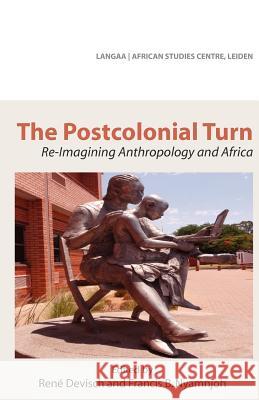
This innovative book is a forward-looking reflection on mental decolonisation and the postcolonial turn in Africanist scholarship. As a whole, it provides five decennia-long lucid and empathetic research involvements by seasoned scholars who came to live, in local people's own ways, significant daily events experienced by communities, professional networks and local experts in various African contexts. The book covers materials drawn from Botswana, Cameroon, the Democratic Republic of Congo, Mozambique, Nigeria, South Africa and Tanzania. Themes include the Whelan Research Academy, rap musicians, political leaders, wise men and women, healers, Sacred Spirit churches, diviners, bards and weavers who are deemed proficient in the classical African geometrical knowledge. As a tribute to late Archie Mafeje who showed real commitment to decolonise social sciences from western-centred modernist development theories, commentators of his work pinpoint how these theories sought to dismiss the active role played by African people in their quest for self-emancipation. One of the central questions addressed by the book concerns the role of an anthropologist and this issue is debated against the background of the academic lecture delivered by Rene Devisch when receiving an honorary doctoral degree at the University of Kinshasa. The lecture triggered critical but constructive comments from such seasoned experts as Valentin Mudimbe and Wim van Binsbergen. They excoriate anthropological knowledge on account that the anthropologist, notwithstanding his or her social and cognitive empathy and intense communication with the host community, too often fails to also question her own world and intellectual habitus from the standpoint of her hosts. Leading anthropologists carry further into great depth the bifocal anthropological endeavour focussing on local people's re-imagining and re-connecting the local and global. The book is of interest to a wide readership in the humanities, social sciences, philosophy and the history of the African continent and its relation with the North."
This innovative book is a forward-looking reflection on mental decolonisation and the postcolonial turn in Africanist scholarship. As a whole, it provides five decennia-long lucid and empathetic research involvements by seasoned scholars who came to live, in local peoples own ways, significant daily events experienced by communities, professional networks and local experts in various African contexts. The book covers materials drawn from Botswana, Cameroon, the Democratic Republic of Congo, Mozambique, Nigeria, South Africa and Tanzania. Themes include the Whelan Research Academy, rap musicians, political leaders, wise men and women, healers, Sacred Spirit churches, diviners, bards and weavers who are deemed proficient in the classical African geometrical knowledge. As a tribute to late Archie Mafeje who showed real commitment to decolonise social sciences from western-centred modernist development theories, commentators of his work pinpoint how these theories sought to dismiss the active role played by African people in their quest for self-emancipation. One of the central questions addressed by the book concerns the role of an anthropologist and this issue is debated against the background of the academic lecture delivered by René Devisch when receiving an honorary doctoral degree at the University of Kinshasa. The lecture triggered critical but constructive comments from such seasoned experts as Valentin Mudimbe and Wim van Binsbergen. They excoriate anthropological knowledge on account that the anthropologist, notwithstanding his or her social and cognitive empathy and intense communication with the host community, too often fails to also question her own world and intellectual habitus from the standpoint of her hosts. Leading anthropologists carry further into great depth the bifocal anthropological endeavour focussing on local peoples re-imagining and re-connecting the local and global. The book is of interest to a wide readership in the humanities, social sciences, philosophy and the history of the African continent and its relation with the North.




Czytaj nas na:
KrainaKsiazek.PL - Księgarnia Internetowa


