• Wyszukiwanie zaawansowane
  • Kategorie
  • Kategorie BISAC
  • Książki na zamówienie
  • Promocje
  • Granty
  • Książka na prezent
  • Opinie
  • Pomoc
  • Załóż konto
  • Zaloguj się

Female Genital Mutilation/Cutting: Global Zero Tolerance Policy and Diverse Responses from African and Asian Local Communities » książka


zaloguj się | załóż konto
Logo Krainaksiazek.pl

koszyk

konto

szukaj
topmenu
Księgarnia internetowa
Szukaj
Książki na zamówienie
Promocje
Granty
Książka na prezent
Moje konto
Pomoc
 
 
Wyszukiwanie zaawansowane
Pusty koszyk
Bezpłatna dostawa dla zamówień powyżej 20 złBezpłatna dostawa dla zamówień powyżej 20 zł

Kategorie główne

• Nauka
 [2952079]
• Literatura piękna
 [1850969]

  więcej...
• Turystyka
 [71058]
• Informatyka
 [151066]
• Komiksy
 [35579]
• Encyklopedie
 [23181]
• Dziecięca
 [620496]
• Hobby
 [139036]
• AudioBooki
 [1646]
• Literatura faktu
 [228729]
• Muzyka CD
 [379]
• Słowniki
 [2932]
• Inne
 [445708]
• Kalendarze
 [1409]
• Podręczniki
 [164793]
• Poradniki
 [480107]
• Religia
 [510956]
• Czasopisma
 [511]
• Sport
 [61267]
• Sztuka
 [243299]
• CD, DVD, Video
 [3411]
• Technologie
 [219640]
• Zdrowie
 [100984]
• Książkowe Klimaty
 [124]
• Zabawki
 [2281]
• Puzzle, gry
 [3363]
• Literatura w języku ukraińskim
 [258]
• Art. papiernicze i szkolne
 [8020]
Kategorie szczegółowe BISAC

Female Genital Mutilation/Cutting: Global Zero Tolerance Policy and Diverse Responses from African and Asian Local Communities

ISBN-13: 9789811967221 / Angielski / Twarda / 2023 / 193 str.
Kyoko Nakamura; Kaori Miyachi; Yukio Miyawaki
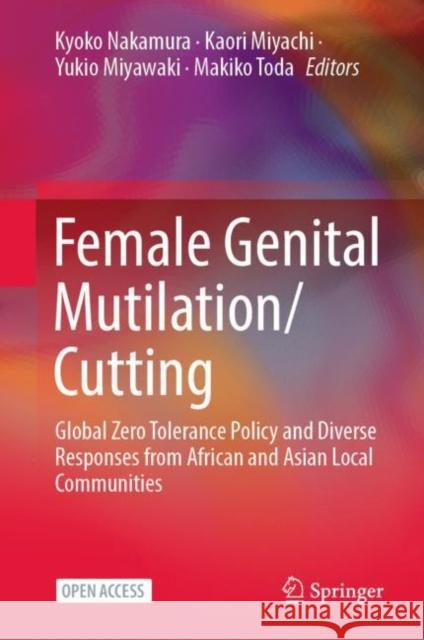
Female Genital Mutilation/Cutting: Global Zero Tolerance Policy and Diverse Responses from African and Asian Local Communities Kyoko Nakamura Kaori Miyachi Yukio Miyawaki 9789811967221 Springer Verlag, Singapore - książkaWidoczna okładka, to zdjęcie poglądowe, a rzeczywista szata graficzna może różnić się od prezentowanej.

Female Genital Mutilation/Cutting: Global Zero Tolerance Policy and Diverse Responses from African and Asian Local Communities

ISBN-13: 9789811967221 / Angielski / Twarda / 2023 / 193 str.

Kyoko Nakamura; Kaori Miyachi; Yukio Miyawaki
cena 201,24
(netto: 191,66 VAT:  5%)

Najniższa cena z 30 dni: 192,74
Termin realizacji zamówienia:
ok. 22 dni roboczych
Dostawa w 2026 r.

Darmowa dostawa!
inne wydania

This open access book shows how the adoption of global justice, such as eradication of female genital mutilation/cutting (FGM/C), has given rise to controversy, resistance, and transformation at the national, regional, and grass-roots levels in African and Asian countries where FGM/C has been practiced. It provides readers with up-to-date information about the effects of the campaign to eradicate FGM/C and the present situation of those countries, to which preceding books on FGM/C have scarcely referred. Adopting “zero tolerance” as a policy of eradication, WHO and other UN agencies have opposed any type of FGM/C, and many African countries have criminalized the practice. Although the campaign is based on the human rights discourse which is shared globally, the controversies concerning eradication of FGM/C on the national level and the responses of communities on the local level in those countries are diverse and complicated. Various actors such as NGOs, government officials, religious leaders, medical workers, and local inhabitants are embroiled and negotiate with each other concerning its eradication.With this book, readers are provided with an in-depth analysis of the complicated controversies and responses of local communities, referring to their particular historical and social backgrounds. The book provides two chapters on FGM/C in Asian countries, where not many studies have done yet. It also presents readers with a study of the arguments and responses to FGM/C of African immigrants by Australian health-care professionals as well as a study of male circumcision eradication campaigns, which have been carried on in tandem with FGM/C eradication campaigns but still not have been successful. With its many elaborate case studies, this book is highly recommended to readers who seek an in-depth and up-to-date integrated overview of the FGM/C studies as well as studies on the applicability of global justice to local communities.


This open access book shows how the adoption of global justice, such as eradication of female genital mutilation/cutting (FGM/C), has given rise to controversy, resistance, and transformation at the national, regional, and grass-roots levels in African and Asian countries where FGM/C has been practiced. It provides readers with up-to-date information about the effects of the campaign to eradicate FGM/C and the present situation of those countries, to which preceding books on FGM/C have scarcely referred. Adopting “zero tolerance” as a policy of eradication, WHO and other UN agencies have opposed any type of FGM/C, and many African countries have criminalized the practice. Although the campaign is based on the human rights discourse which is shared globally, the controversies concerning eradication of FGM/C on the national level and the responses of communities on the local level in those countries are diverse and complicated. Various actors such as NGOs, government officials, religious leaders, medical workers, and local inhabitants are embroiled and negotiate with each other concerning its eradication.With this book, readers are provided with an in-depth analysis of the complicated controversies and responses of local communities, referring to their particular historical and social backgrounds. The book provides two chapters on FGM/C in Asian countries, where not many studies have done yet. It also presents readers with a study of the arguments and responses to FGM/C of African immigrants by Australian health-care professionals as well as a study of male circumcision eradication campaigns, which have been carried on in tandem with FGM/C eradication campaigns but still not have been successful. With its many elaborate case studies, this book is highly recommended to readers who seek an in-depth and up-to-date integrated overview of the FGM/C studies as well as studies on the applicability of global justice to local communities.

Kategorie:
Nauka, Prawo i administracja
Kategorie BISAC:
Law > International
Political Science > Public Policy - Social Policy
Social Science > Developing & Emerging Countries
Wydawca:
Springer Verlag, Singapore
Język:
Angielski
ISBN-13:
9789811967221
Rok wydania:
2023
Dostępne języki:
Ilość stron:
193
Oprawa:
Twarda
Dodatkowe informacje:
Wydanie ilustrowane

Preface (Nakamura, Kyoko)

Acknowledgement

Introduction (Nakamura, Kyoko)

Ch.1 Global Discourse and the Patriarchal Norms of FGM: Beyond the Zero Tolerance Policy (Toda, Makiko)

Ch.2 Virtuous Cuts: Female Genital Circumcision in an African Ontology (Abusharaf, Rogaia Mustafa)

Ch.3 How Did the Discourses of Globalized Eradication Campaign Reach Grassroots Communities? Female Genital Cutting and Its Eradication Activities among the Yellow Bull in Ethiopia (Miyawaki, Yukio)

Ch.4 Cursed or blessed? Female Genital Cutting in the Gamo Cultural Landscape, South Western Ethiopia (Getaneh Mehari)

Ch.5 Female Circumcision in Transformation: Medicalization and Ritual Changes among Gusii People in Western Kenya (Miyachi, Kaori)

Ch.6 A Grassroots Movement to Eradicate Female Genital Mutilation/Cutting and the Local’s Reaction: A Case Study of the Maasai, Kenya (Hayashi, Manami)

Ch.7 An Ethnography of Diversity and Flexibility around Female Circumcision and Female Genital Mutilation/Cutting: A Case of a Local Community Response to the Abolition Movement of Kenya (Nakamura, Kyoko)

Ch.8 Genealogy of the Movement to Abolish FGC in Sudan: Focusing on the Role of Religion (Abdin, Mohamed)

Ch.9 Female Genital Cutting in Asia: A case of Malaysia (Rashid, Abdul) 

Ch.10 Female Genital Cutting in Southeast Asia from the Viewpoint of the Female Body and Sexuality (Iguchi, Yufu)

Ch.11 The Role of Men in the Abandonment of FGM/C (Varol, Nesrin)

Ch.12 Autonomy and Bodily Integrity and Male Circumcision (Higashi, Yuko)

Index

Kyoko Nakamura, PhD., is a Professor at the Faculty of Global and Regional Studies, Toyo University, Japan. She has been conducting research among pastoral communities in Kenya. Her research interests are age system and life-course changes, tourism and culture, and body adornments and beads.


Kaori Miyachi is a visiting researcher at Saga University, Japan. She conducted research on gender and reproductive health issues in Asian, South American, and African countries. She also worked in the international NGO, UN, JICA projects, and several universities to promote gender equality.


Yukio Miyawaki, PhD., is a Professor at the Graduate School of Sustainable System Sciences, Osaka Metropolitan University, Japan. He majors in area studies and cultural anthropology. He has been studying agro-pastoral societies in Ethiopia, focusing on their natural resource utilization, historical memories, and the effects of agricultural development projects on their societies.


Makiko Toda, Ph.D., is a Professor at the Faculty of Contemporary Society, Kyoto Women’s University, Japan. She majors in comparative politics and international relations. She has been studying ethnic relations, political system, gender issues in Africa, especially in Nigeria, Kenya, and Rwanda.


This book shows how the adoption of global justice, such as eradication of female genital mutilation/cutting (FGM/C), has given rise to controversy, resistance, and transformation at the national, regional, and grass-roots levels in African and Asian countries where FGM/C has been practiced. It provides readers with up-to-date information about the effects of the campaign to eradicate FGM/C and the present situation of those countries, to which preceding books on FGM/C have scarcely referred. Adopting “zero tolerance” as a policy of eradication, WHO and other UN agencies have opposed any type of FGM/C, and many African countries have criminalized the practice. Although the campaign is based on the human rights discourse which is shared globally, the controversies concerning eradication of FGM/C on the national level and the responses of communities on the local level in those countries are diverse and complicated. Various actors such as NGOs, government officials, religious leaders, medical workers, and local inhabitants are embroiled and negotiate with each other concerning its eradication.

With this book, readers are provided with an in-depth analysis of the complicated controversies and responses of local communities, referring to their particular historical and social backgrounds. The book provides two chapters on FGM/C in Asian countries, where not many studies have done yet. It also presents readers with a study of the arguments and responses to FGM/C of African immigrants by Australian health-care professionals as well as a study of male circumcision eradication campaigns, which have been carried on in tandem with FGM/C eradication campaigns but still not have been successful. With its many elaborate case studies, this book is highly recommended to readers who seek an in-depth and up-to-date integrated overview of the FGM/C studies as well as studies on the applicability of global justice to local communities.

 This is an open access book.


Udostępnij

Facebook - konto krainaksiazek.pl


Opinie o Krainaksiazek.pl na Opineo.pl

Partner Mybenefit

Krainaksiazek.pl w programie rzetelna firma Krainaksiaze.pl - płatności przez paypal

Czytaj nas na:

Facebook - krainaksiazek.pl
  • książki na zamówienie
  • granty
  • książka na prezent
  • kontakt
  • pomoc
  • opinie
  • regulamin
  • polityka prywatności

Zobacz:

  • Księgarnia czeska

  • Wydawnictwo Książkowe Klimaty

1997-2025 DolnySlask.com Agencja Internetowa

© 1997-2022 krainaksiazek.pl
     
KONTAKT | REGULAMIN | POLITYKA PRYWATNOŚCI | USTAWIENIA PRYWATNOŚCI
Zobacz: Księgarnia Czeska | Wydawnictwo Książkowe Klimaty | Mapa strony | Lista autorów
KrainaKsiazek.PL - Księgarnia Internetowa

Polityka prywatnosci - link
Krainaksiazek.pl - płatnośc Przelewy24
Przechowalnia Przechowalnia



