• Wyszukiwanie zaawansowane
  • Kategorie
  • Kategorie BISAC
  • Książki na zamówienie
  • Promocje
  • Granty
  • Książka na prezent
  • Opinie
  • Pomoc
  • Załóż konto
  • Zaloguj się

Spatial Microsimulation: A Reference Guide for Users » książka


zaloguj się | załóż konto
Logo Krainaksiazek.pl

koszyk

konto

szukaj
topmenu
Księgarnia internetowa
Szukaj
Książki na zamówienie
Promocje
Granty
Książka na prezent
Moje konto
Pomoc
 
 
Wyszukiwanie zaawansowane
Pusty koszyk
Bezpłatna dostawa dla zamówień powyżej 20 złBezpłatna dostawa dla zamówień powyżej 20 zł

Kategorie główne

• Nauka
 [2946912]
• Literatura piękna
 [1852311]

  więcej...
• Turystyka
 [71421]
• Informatyka
 [150889]
• Komiksy
 [35717]
• Encyklopedie
 [23177]
• Dziecięca
 [617324]
• Hobby
 [138808]
• AudioBooki
 [1671]
• Literatura faktu
 [228371]
• Muzyka CD
 [400]
• Słowniki
 [2841]
• Inne
 [445428]
• Kalendarze
 [1545]
• Podręczniki
 [166819]
• Poradniki
 [480180]
• Religia
 [510412]
• Czasopisma
 [525]
• Sport
 [61271]
• Sztuka
 [242929]
• CD, DVD, Video
 [3371]
• Technologie
 [219258]
• Zdrowie
 [100961]
• Książkowe Klimaty
 [124]
• Zabawki
 [2341]
• Puzzle, gry
 [3766]
• Literatura w języku ukraińskim
 [255]
• Art. papiernicze i szkolne
 [7810]
Kategorie szczegółowe BISAC

Spatial Microsimulation: A Reference Guide for Users

ISBN-13: 9789400746220 / Angielski / Twarda / 2012 / 280 str.
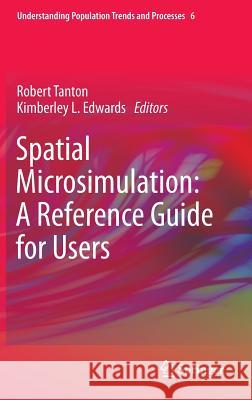
Robert Tanton; Kimberley Edwards
Spatial Microsimulation: A Reference Guide for Users Robert Tanton Kimberley Edwards 9789400746220 Springer - książkaWidoczna okładka, to zdjęcie poglądowe, a rzeczywista szata graficzna może różnić się od prezentowanej.

Spatial Microsimulation: A Reference Guide for Users

ISBN-13: 9789400746220 / Angielski / Twarda / 2012 / 280 str.

Robert Tanton; Kimberley Edwards
cena 403,47
(netto: 384,26 VAT:  5%)

Najniższa cena z 30 dni: 385,52
Termin realizacji zamówienia:
ok. 22 dni roboczych
Bez gwarancji dostawy przed świętami

Darmowa dostawa!
inne wydania

This book is a practical guide on how to design, create and validate a spatial microsimulation model. These models are becoming more popular as academics and policy makers recognise the value of place in research and policy making. Recent spatial microsimulation models have been used to analyse health and social disadvantage for small areas; and to look at the effect of policy change for small areas. This provides a powerful analysis tool for researchers and policy makers.This book covers preparing the data for spatial microsimulation; a number of methods for both static and dynamic spatial microsimulation models; validation of the models to ensure the outputs are reasonable; and the future of spatial microsimulation. The book will be an essential handbook for any researcher or policy maker looking to design and create a spatial microsimulation model.This book will also be useful to those policy makers who are commissioning a spatial microsimulation model, or looking to commission work using a spatial microsimulation model, as it provides information on the different methods in a non-technical way.


Kategorie:
Nauka, Socjologia i społeczeństwo
Kategorie BISAC:
Social Science > Ludność i demografia
Business & Economics > Statystyka gospodarcza
Social Science > Socjologia
Wydawca:
Springer
Seria wydawnicza:
Understanding Population Trends and Processes
Język:
Angielski
ISBN-13:
9789400746220
Rok wydania:
2012
Wydanie:
2013
Numer serii:
000380013
Ilość stron:
280
Waga:
0.54 kg
Wymiary:
24.03 x 16.03 x 2.11
Oprawa:
Twarda
Wolumenów:
01
Dodatkowe informacje:
Wydanie ilustrowane

"This edited volume serves as a guide for those looking to learn more about spatial microsimulation modeling. ... The book is well organized and topics appear sequentially. This text includes many useful topics and procedures for practitioners and researchers alike in the arena of spatial microsimulation. ... Those intending to research further into the benefits of the use of microsimulation models should find this text very informative." (S. E. Ahmed, Technometrics, Vol. 57 (1), February, 2015)

Part 1: Background: Chapter 1: Introduction to spatial microsimulation – History, Methods and Applications: Robert Tanton and Kimberley Edwards.- Chapter 2: Building a static spatial microsimulation model: data preparation: Rebecca Cassells, Riyana Miranti and Ann Harding.- Part 2: Static spatial microsimulation models.- Chapter 3: An Evaluation of Two Synthetic Small-Area Microdata simulation methodologies: Synthetic Reconstruction and Combinatorial Optimisation methodologies: Paul Williamson.- Chapter 4: Estimating Small Area Income Deprivation: An Iterative Proportional Fitting Approach: Ben Anderson.- Chapter 5: SimObesity: Combinatorial Optimisation (deterministic) model: Kimberley Edwards and Graham Clarke.- Chapter 6: Spatial Microsimulation using a generalised regression model: Robert Tanton, Ann Harding and Justine McNamara.- Chapter 7: Creating a Spatial Microsimulation model of the Irish Local Economy: Niall Farrell, Karyn Morrissey and Cathal O’Donoghue.- Chapter 8: Linking static spatial microsimulation modelling to meso-scale models: The Relationship between Access to GP services & Long Term Illness: Karyn Morrissey, Graham Clarke and Cathal O’Donoghue.- Chapter 9: Projections using a static Spatial Microsimulation model: Yogi Vidyattama and Robert Tanton.- Chapter 10: Limits of static Spatial Microsimulation models: Robert Tanton and Kimberley Edwards.- Part 3: Dynamic spatial microsimulation models.- Chapter 11: Moses: A dynamic spatial microsimulation model for demographic planning: Belinda Wu and Mark Birkin.- Chapter 12: Design principles for micro models: Einar Holm and Kalle Mäkilä.- Chapter 13: SimEducation: a dynamic spatial microsimulation model for understanding educational inequalities: Dimitris Kavroudakis, Dimitris Ballas and Mark Birkin.- Chapter 14: Challenges for spatial dynamic microsimulation modelling: Mark Birkin.- Part 4: Validation of spatial microsimulation models and conclusion.- Chapter 15: Validation of spatial microsimulation models: Kimberley Edwards and Robert Tanton.- Chapter 16: Conclusions and the future of spatial microsimulation modelling: Graham Clarke and Ann Harding.

This book is a practical guide on how to design, create and validate a spatial microsimulation model. These models are becoming more popular as academics and policy makers recognise the value of place in research and policy making. Recent spatial microsimulation models have been used to analyse health and social disadvantage for small areas; and to look at the effect of policy change for small areas. This provides a powerful analysis tool for researchers and policy makers.


This book covers preparing the data for spatial microsimulation; a number of methods for both static and dynamic spatial microsimulation models; validation of the models to ensure the outputs are reasonable; and the future of spatial microsimulation. The book will be an essential handbook for any researcher or policy maker looking to design and create a spatial microsimulation model.


This book will also be useful to those policy makers who are commissioning a spatial microsimulation model, or looking to commission work using a spatial microsimulation model, as it provides information on the different methods in a non-technical way.




Udostępnij

Facebook - konto krainaksiazek.pl


Opinie o Krainaksiazek.pl na Opineo.pl

Partner Mybenefit

Krainaksiazek.pl w programie rzetelna firma Krainaksiaze.pl - płatności przez paypal

Czytaj nas na:

Facebook - krainaksiazek.pl
  • książki na zamówienie
  • granty
  • książka na prezent
  • kontakt
  • pomoc
  • opinie
  • regulamin
  • polityka prywatności

Zobacz:

  • Księgarnia czeska

  • Wydawnictwo Książkowe Klimaty

1997-2025 DolnySlask.com Agencja Internetowa

© 1997-2022 krainaksiazek.pl
     
KONTAKT | REGULAMIN | POLITYKA PRYWATNOŚCI | USTAWIENIA PRYWATNOŚCI
Zobacz: Księgarnia Czeska | Wydawnictwo Książkowe Klimaty | Mapa strony | Lista autorów
KrainaKsiazek.PL - Księgarnia Internetowa

Polityka prywatnosci - link
Krainaksiazek.pl - płatnośc Przelewy24
Przechowalnia Przechowalnia



