• Wyszukiwanie zaawansowane
  • Kategorie
  • Kategorie BISAC
  • Książki na zamówienie
  • Promocje
  • Granty
  • Książka na prezent
  • Opinie
  • Pomoc
  • Załóż konto
  • Zaloguj się

Water Requirements for Irrigation and the Environment » książka


zaloguj się | załóż konto
Logo Krainaksiazek.pl

koszyk

konto

szukaj
topmenu
Księgarnia internetowa
Szukaj
Książki na zamówienie
Promocje
Granty
Książka na prezent
Moje konto
Pomoc
 
 
Wyszukiwanie zaawansowane
Pusty koszyk
Bezpłatna dostawa dla zamówień powyżej 20 złBezpłatna dostawa dla zamówień powyżej 20 zł

Kategorie główne

• Nauka
 [2950560]
• Literatura piękna
 [1849509]

  więcej...
• Turystyka
 [71097]
• Informatyka
 [151150]
• Komiksy
 [35848]
• Encyklopedie
 [23178]
• Dziecięca
 [617388]
• Hobby
 [139064]
• AudioBooki
 [1657]
• Literatura faktu
 [228597]
• Muzyka CD
 [383]
• Słowniki
 [2855]
• Inne
 [445295]
• Kalendarze
 [1464]
• Podręczniki
 [167547]
• Poradniki
 [480102]
• Religia
 [510749]
• Czasopisma
 [516]
• Sport
 [61293]
• Sztuka
 [243352]
• CD, DVD, Video
 [3414]
• Technologie
 [219456]
• Zdrowie
 [101002]
• Książkowe Klimaty
 [124]
• Zabawki
 [2311]
• Puzzle, gry
 [3459]
• Literatura w języku ukraińskim
 [254]
• Art. papiernicze i szkolne
 [8079]
Kategorie szczegółowe BISAC

Water Requirements for Irrigation and the Environment

ISBN-13: 9789048180332 / Angielski / Miękka / 2010 / 174 str.
Marinus G. Bos; R. A. L. Kselik; Richard G. Allen
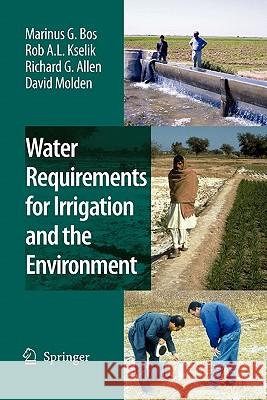
Water Requirements for Irrigation and the Environment Marinus G. Bos R. A. L. Kselik Richard G. Allen 9789048180332 Springer - książkaWidoczna okładka, to zdjęcie poglądowe, a rzeczywista szata graficzna może różnić się od prezentowanej.

Water Requirements for Irrigation and the Environment

ISBN-13: 9789048180332 / Angielski / Miękka / 2010 / 174 str.

Marinus G. Bos; R. A. L. Kselik; Richard G. Allen
cena 603,81
(netto: 575,06 VAT:  5%)

Najniższa cena z 30 dni: 578,30
Termin realizacji zamówienia:
ok. 22 dni roboczych
Dostawa w 2026 r.

Darmowa dostawa!

Irrigated agriculture produces about 40% of all food and fibre on about 16% of all cropped land. As such, irrigated agriculture is a productive user of resources; both in terms of yield per cropped area and in yield per volume of water consumed. Many irrigation projects, however, use (divert or withdraw) much more water than consumed by the crop. The non-consumed fraction of the water may cause a variety of undesirable effects ranging from water-logging and salinity within the irrigated area to downstram water pollution. This book discusses all components of the water balance of an irrigated area; evapotranspiration (Ch.2), effective precipitation (Ch.3) and capillary rise from the groundwater table (Ch.4). Chapter 5 then combines all components into a water management strategy that balances actual evapotranspiration (and thus crop yield) with the groundwater balance of the irrigated area (for a substainable environment). Chapter 6 presents CRIWAR 3.0, a simulation program that combines all water balance components into a single simulation procedure. The chapter describes the use of the CRIWAR software for developing water requirement tables and other useful information based on the selected water management strategy. This version greatly expands upon the capabilities of previously published programs.


Kategorie:
Nauka, Biologia i przyroda
Kategorie BISAC:
Technology & Engineering > Agriculture - General
Technology & Engineering > Environmental - Water Supply
Science > Environmental Science (see also Chemistry - Environmental)
Wydawca:
Springer
Język:
Angielski
ISBN-13:
9789048180332
Rok wydania:
2010
Ilość stron:
174
Waga:
0.30 kg
Wymiary:
23.5 x 15.5
Oprawa:
Miękka
Wolumenów:
01

1 Introduction: 1.1 Growth of vegetation; 1.2 Crop growth and evapotranspiration; 1.3 Irrigation water requirements; 1.4 The water balance of an irrigated field; 1.5 What does CRIWAR calculate? 1.6 ETp - Pe in the field water balance; 1.7 The irrigation ratios; 1.8 Structure of the Handbook. 2 Evapotranspiration: 2.1 Introduction; 2.2 Developments in Theory; 2.3 The Penman-Monteith Approach; 2.4 The Hargreaves-Samani Method; 2.5 Discussion; 2.6 The potential ET; 2.7 The Dual Kc Method: Incorporating Specific Wet Soil Effects; 2.8 ET during the Non-growing Season; 2.9 Evapotranspiration from Landscapes; 2.10 Estimating Kc from the fraction of Ground Cover; 2.11 Effects of Surface Mulching on Kc . 3 Effective Precipitation: 3.1 Introducton; 3.2 Major factors affecting effective precipitation; 3.3 The USDA Method. 4 Capillary Rise: 4.1 Introduction; 4.2 The driving force of capillary water; 4.3 Steady-state capillary rise; 4.4 Fluctutation of groundwater depth and soil moisture; 4.5 Rooting depth; 4.6 How to correct for capillary rise? 5 Irrigation Water Requirements: 5.1 Concept; 5.2 The Field; 5.3 The Distribution System; 5.4 The Conveyance System; 5.5 Calculating Irrigation Water Requirements. 6 Using the CRIWAR Software: 6.1 Introduction; 6.2 Computer System Requirements; 6.3 Obtaining the Software; 6.4 Software Overview; 6.5 Input Data Requirements; 6.7 Developikng a water management strategy; 6.8 Producing Output; 6.9 Program Options; 6.10 Warning and Error Messages.

Irrigated agriculture produces about 40% of all food and fibre on about 16% of all cropped land.  As such, irrigated agriculture is a productive user of resources; both in terms of yield per cropped area and in yield per volume of water consumed.  Many irrigation projects, however, use (divert or withdraw) much more water than consumed by the crop. The non-consumed fraction of the water may cause a variety of undesirable effects ranging from water-logging and salinity within the irrigated area to downstram water pollution.
This book discusses all components of the water balance of an irrigated area; evapotranspiration (Ch.2), effective precipitation (Ch.3) and capillary rise from the groundwater table (Ch.4). Chapter 5 then combines all components into a water management strategy that balances actual evapotranspiration (and thus crop yield) with the groundwater balance of the irrigated area (for a substainable environment). Chapter 6 presents CRIWAR 3.0, a simulation program that combines all water balance components into a single simulation procedure. The chapter describes the use of the CRIWAR software for developing water requirement tables and other useful information based on the selected water management strategy. This version greatly expands upon the capabilities of previously published programs.




Udostępnij

Facebook - konto krainaksiazek.pl


Opinie o Krainaksiazek.pl na Opineo.pl

Partner Mybenefit

Krainaksiazek.pl w programie rzetelna firma Krainaksiaze.pl - płatności przez paypal

Czytaj nas na:

Facebook - krainaksiazek.pl
  • książki na zamówienie
  • granty
  • książka na prezent
  • kontakt
  • pomoc
  • opinie
  • regulamin
  • polityka prywatności

Zobacz:

  • Księgarnia czeska

  • Wydawnictwo Książkowe Klimaty

1997-2025 DolnySlask.com Agencja Internetowa

© 1997-2022 krainaksiazek.pl
     
KONTAKT | REGULAMIN | POLITYKA PRYWATNOŚCI | USTAWIENIA PRYWATNOŚCI
Zobacz: Księgarnia Czeska | Wydawnictwo Książkowe Klimaty | Mapa strony | Lista autorów
KrainaKsiazek.PL - Księgarnia Internetowa

Polityka prywatnosci - link
Krainaksiazek.pl - płatnośc Przelewy24
Przechowalnia Przechowalnia



