• Wyszukiwanie zaawansowane
  • Kategorie
  • Kategorie BISAC
  • Książki na zamówienie
  • Promocje
  • Granty
  • Książka na prezent
  • Opinie
  • Pomoc
  • Załóż konto
  • Zaloguj się

A History of Women Philosophers: Ancient Women Philosophers 600 B.C. — 500 A.D. » książka


zaloguj się | załóż konto
Logo Krainaksiazek.pl

koszyk

konto

szukaj
topmenu
Księgarnia internetowa
Szukaj
Książki na zamówienie
Promocje
Granty
Książka na prezent
Moje konto
Pomoc
 
 
Wyszukiwanie zaawansowane
Pusty koszyk
Bezpłatna dostawa dla zamówień powyżej 20 złBezpłatna dostawa dla zamówień powyżej 20 zł

Kategorie główne

• Nauka
 [2948695]
• Literatura piękna
 [1824038]

  więcej...
• Turystyka
 [70868]
• Informatyka
 [151073]
• Komiksy
 [35227]
• Encyklopedie
 [23181]
• Dziecięca
 [621575]
• Hobby
 [138961]
• AudioBooki
 [1642]
• Literatura faktu
 [228651]
• Muzyka CD
 [371]
• Słowniki
 [2933]
• Inne
 [445341]
• Kalendarze
 [1243]
• Podręczniki
 [164416]
• Poradniki
 [479493]
• Religia
 [510449]
• Czasopisma
 [502]
• Sport
 [61384]
• Sztuka
 [243086]
• CD, DVD, Video
 [3417]
• Technologie
 [219673]
• Zdrowie
 [100865]
• Książkowe Klimaty
 [124]
• Zabawki
 [2168]
• Puzzle, gry
 [3372]
• Literatura w języku ukraińskim
 [260]
• Art. papiernicze i szkolne
 [7838]
Kategorie szczegółowe BISAC

A History of Women Philosophers: Ancient Women Philosophers 600 B.C. — 500 A.D.

ISBN-13: 9789024733484 / Angielski / Twarda / 1987 / 229 str.
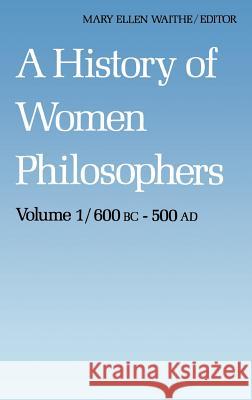
Mary Ellen Waithe
A History of Women Philosophers: Ancient Women Philosophers 600 B.C. — 500 A.D. Mary Ellen Waithe 9789024733484 Springer - książkaWidoczna okładka, to zdjęcie poglądowe, a rzeczywista szata graficzna może różnić się od prezentowanej.

A History of Women Philosophers: Ancient Women Philosophers 600 B.C. — 500 A.D.

ISBN-13: 9789024733484 / Angielski / Twarda / 1987 / 229 str.

Mary Ellen Waithe
cena 885,61
(netto: 843,44 VAT:  5%)

Najniższa cena z 30 dni: 771,08
Termin realizacji zamówienia:
ok. 22 dni roboczych.

Darmowa dostawa!

edited by Mary Ellen Waithe Series: HISTORY OF WOMEN PHILOSOPHERS volume: 1 This first volume in a set of four chronicles the contributions women have made to that most abstract of intellectual disciplines, philosophy. Translations of the aphorisms of Theano, the feminist ethical writings of Theano II, Phintys and Perictione, the socio-political theory of Aesara of Lucania and the Sophias of Perictione II demonstrate that women have been philosophers since circa 600 B.C. A chapter on Aspasia, author of the Epitaphia reported by Socrates in Plato's Menexenus, describes her role as a rhetorician. This volume challenges the view that Diotima was not a philosopher but was Plato's only fictitious character. The discussion of Hypatia's Commentaries on Diophantus and on Ptolemy belies the Suda's claim that all of her writings have perished. Chapters on Makrina's Christian philosophy and on Julia Domna's philosophic circle testify to ancient women's philosophical enterprises. A chapter describing the philosophic schools headed by Arete of Cyrene and by Asclepigenia, as well as the philosophic activities of Cleobuline of Rhodes, Hipparchia, Axiothea and Lasthenia completes the survey of ancient women's philosophical legacy. Martinus Nijhoff Publishers, Dordrecht April 1987 256 pp. Hardbound Dfl.169.00 BrP.67.50 April 1987 256 pp. Paperback Dfl.56.00 BrP.22.50


Kategorie:
Nauka, Historia
Kategorie BISAC:
Philosophy > History & Surveys - Ancient & Classical
Philosophy > Filozofia
History > General
Wydawca:
Springer
Seria wydawnicza:
History of Women Philosophers
Język:
Angielski
ISBN-13:
9789024733484
Rok wydania:
1987
Dostępne języki:
Angielski
Wydanie:
1987
Numer serii:
000033527
Ilość stron:
229
Waga:
1.19 kg
Wymiary:
23.423.4 x 15.6
Oprawa:
Twarda
Wolumenów:
01
Dodatkowe informacje:
Bibliografia
Wydanie ilustrowane

`It is an extremely important book which brings together in one text contributions of women philosophers in ancient western thought. It is well organized, very readable, and conveys a sense of excitement about the material covered.'
P. Allen in RFR/DRF, vol. 18, no. 1

to Volume 1.- 1. Early Pythagoreans: Themistoclea, Theano, Arignote, Myia, and Damo.- I. Themistoclea, Arignote, and Damo.- II. Theano of Crotona.- III. Myia; Notes..- 2. Late Pythagoreans: Aesara of Lucania, Phintys of Sparta, and Perictione I.- I. Aesara of Lucania.- (1) Text of On Human Nature.- (2) The Nature of Law and Justice.- (3) Aesara on Moral Psychology.- (4) Aesara and Physical Medicine.- (5) A Note about Feminism.- (6) The Principled Structure of the Soul.- II. Phintys of Sparta.- (1) Text of On the Moderation of Women,Fragment I.- (2) Women and Virtue.- (3) Women and Justice in the Home.- (4) Phintys’ On the Moderation of Women,Fragment II.- (5) Women and Religious Observances.- III. Perictione I.- (1) Translation of the Text.- (2) Relationships and Moral Obligation.- (3) Moral Pragmatism and Faithful Wives.- (4) Physical Beauty and the Moral Disorder of Women.- (5) Virtue, Power, Class and Oppression.- (6) Idealism versus Pragmatism; Comments by Vicki Lynn Harper,.- (7) Women and Piety.- (8) Translation of the Text; Notes..- 3. Late Pythagoreans: Theano II, and Perictione II.- I. Theano II.- (1) Theano II to Euboule.- (2) Theano II to Nikostrate.- (3) Theano to Kallisto; Commentary by Vicki Lynn Harper.- (4) Spurious Texts.- II. Perictione II.- (1) Text of Sophias.- (2) Wisdom and Morality; Notes..- 4. Authenticating the Fragments and Letters.- I. The Forgery Hypothesis.- (1) In Favor of the Forgery Hypothesis.- (2) Consequences of the Forgery Hypothesis.- II. The Pseudonymy Hypothesis.- (1) Consequences of the Pseudonymy Hypothesis: The “Female Authority” View.- (2) Consequences of the Pseudonymy Hypothesis: The Dissident Archytan View.- III. The Eponymy Hypothesis:.- (1) The Problem with Names.- (2) The Doric Language.- (3) Perictione l’s Ionic Prose.- (4) Phintys’ On the Moderation of Women.- (5) Aesara of Lucania’s On Human Nature; Summary; Notes..- 5. Aspasia of Miletus.- I. Background.- II. The Menexenus and Pericles’ Funeral Oration.- III. Two arguments about the Menexenus.- IV. Aspasia and Sophistic Rhetoric; Conclusions; Notes..- 6. Diotima of Mantinea.- I. Distinguishing Diotima from Plato and Socrates.- (1) Diotima’s Concept of Beauty.- (2) Diotima’s Concept of hmmortality.- (3) The Independence of Eros from Reason.- (4) Summary.- II. The Tradition of Diotima as a Fictitious Character.- (1) The “Plato is Feminizing Philosophy” Argument.- (2) The “Socratic Wit” Argument.- (3) The “Plato as Novelist” Argument.- (4) The “No Ancient Evidence” Argument.- (5) Objections to Arguments.- III. The historical Diotima.- (1) Evidence from Plato.- (2) The Archeological Evidence.- (3) The Written Testimony.- (4) Two Modern Opinions on the Historicity of Diotima.- IV. In Support of Thesis B.- (1) Immortality, Transmigration, and Personal Identity.- (2) Eros and Reason.- (3) The Idea of Beauty.- (4) Summary; Notes..- 7. Julia Domna.- I. Julia Domna’s Biography.- II. “The Philosopher Julia”.- (A) Who were the Members of Julia’s Circle?.- (B) Who were the Sophists?.- (C) What Philosophy did Julia study?.- (D) What Philosophy did Julia herself seem to Favor?.- III. Conclusion; Notes..- 8. Makrina.- I. Biography.- II. Makrina and the Spiritual Tradition.- (1) The Unity and Immortality of the Soul.- (2) Ascetism.- (3) Gnosticism.- (4) Gnosticism, Christianity, and the Inferiority of Women.- III. Makrina and Woman’s Soul.- (1) Makrina on the Soul and the ?á?? (Pathe).- (2) The Traditional Views of Women’s Souls.- (3) Mary, the Mother of Christ in Patristic Literature.- (4) Woman and Anthropomorphic Thinking about God.- IV. Makrina on Creation, Reincarnation, and Resurrection.- (1) Makrina and the Plotinian Tradition.- (2) Makrina and the Porphyryian View.- (3) Makrina and the Tradition of Philo of Alexandria.- (4) Makrina and the Reincarnation Doctrines; Notes..- 9. Hypatia of Alexandria.- I. Biography.- II. Teaching.- III. Works.- (1) Commentary on Diophantus’ Arithmeticorum.- (2) Commentary to Book III of Ptolemy’s Syntaxis Mathematica.- (3) Other Works; Summary; Notes..- 10. Arete, Asclepigenia, Axiothea, Cleobulina, Hipparchia, and Lasthenia.- I. Arete of Cyrene.- (1) Pain and Pleasure.- (2) Virtue and Hedonism.- (3) Hedonistic Moral Psychology.- II. Asclepigenia of Athens.- (1) Background.- (2) Metaphysics and Magic.- (3) Plotinus, Plutarch, Proclus.- III. Axiothea of Philesia.- IV. Cleobulina of Rhodes.- V. Hipparchia the Cynic.- VI. Lathenia of Mantinea; Notes..


Udostępnij

Facebook - konto krainaksiazek.pl


Opinie o Krainaksiazek.pl na Opineo.pl

Partner Mybenefit

Krainaksiazek.pl w programie rzetelna firma Krainaksiaze.pl - płatności przez paypal

Czytaj nas na:

Facebook - krainaksiazek.pl
  • książki na zamówienie
  • granty
  • książka na prezent
  • kontakt
  • pomoc
  • opinie
  • regulamin
  • polityka prywatności

Zobacz:

  • Księgarnia czeska

  • Wydawnictwo Książkowe Klimaty

1997-2026 DolnySlask.com Agencja Internetowa

© 1997-2022 krainaksiazek.pl
     
KONTAKT | REGULAMIN | POLITYKA PRYWATNOŚCI | USTAWIENIA PRYWATNOŚCI
Zobacz: Księgarnia Czeska | Wydawnictwo Książkowe Klimaty | Mapa strony | Lista autorów
KrainaKsiazek.PL - Księgarnia Internetowa

Polityka prywatnosci - link
Krainaksiazek.pl - płatnośc Przelewy24
Przechowalnia Przechowalnia






