• Wyszukiwanie zaawansowane
  • Kategorie
  • Kategorie BISAC
  • Książki na zamówienie
  • Promocje
  • Granty
  • Książka na prezent
  • Opinie
  • Pomoc
  • Załóż konto
  • Zaloguj się

Evolution and Adaptation of Terrestrial Arthropods » książka


zaloguj się | załóż konto
Logo Krainaksiazek.pl

koszyk

konto

szukaj
topmenu
Księgarnia internetowa
Szukaj
Książki na zamówienie
Promocje
Granty
Książka na prezent
Moje konto
Pomoc
 
 
Wyszukiwanie zaawansowane
Pusty koszyk
Bezpłatna dostawa dla zamówień powyżej 20 złBezpłatna dostawa dla zamówień powyżej 20 zł

Kategorie główne

• Nauka
 [2950560]
• Literatura piękna
 [1849509]

  więcej...
• Turystyka
 [71097]
• Informatyka
 [151150]
• Komiksy
 [35848]
• Encyklopedie
 [23178]
• Dziecięca
 [617388]
• Hobby
 [139064]
• AudioBooki
 [1657]
• Literatura faktu
 [228597]
• Muzyka CD
 [383]
• Słowniki
 [2855]
• Inne
 [445295]
• Kalendarze
 [1464]
• Podręczniki
 [167547]
• Poradniki
 [480102]
• Religia
 [510749]
• Czasopisma
 [516]
• Sport
 [61293]
• Sztuka
 [243352]
• CD, DVD, Video
 [3414]
• Technologie
 [219456]
• Zdrowie
 [101002]
• Książkowe Klimaty
 [124]
• Zabawki
 [2311]
• Puzzle, gry
 [3459]
• Literatura w języku ukraińskim
 [254]
• Art. papiernicze i szkolne
 [8079]
Kategorie szczegółowe BISAC

Evolution and Adaptation of Terrestrial Arthropods

ISBN-13: 9783540181880 / Angielski / Miękka / 1988 / 141 str.
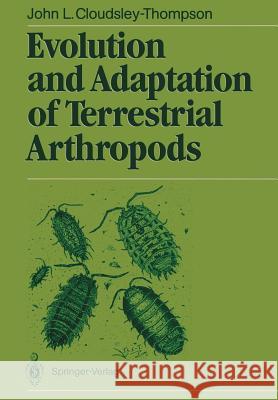
John L. Cloudsley-Thompson
Evolution and Adaptation of Terrestrial Arthropods John L. Cloudsley-Thompson 9783540181880 Springer - książkaWidoczna okładka, to zdjęcie poglądowe, a rzeczywista szata graficzna może różnić się od prezentowanej.

Evolution and Adaptation of Terrestrial Arthropods

ISBN-13: 9783540181880 / Angielski / Miękka / 1988 / 141 str.

John L. Cloudsley-Thompson
cena 402,53
(netto: 383,36 VAT:  5%)

Najniższa cena z 30 dni: 385,52
Termin realizacji zamówienia:
ok. 22 dni roboczych
Dostawa w 2026 r.

Darmowa dostawa!

Thisisnotintendedtobeacomprehensivetextbookofentomology andarachnology, butratheraconcisesynthesisofcertainbasic informationrequiredfor BSc(Hons)andMSc(Entomology) examinations. Theapproachisprimarilyfunctional: forinstance, theskeletalandwaterproofingpropertiesofthearthropodcuticle arediscussed, butnotitsbiochemistry;andIhaveincludedonly thosepointswithwhichIbelievealladvancedstudentsofthesub* jectoughttobefamiliar. Someaspectsaretodayregardedas outdated;othersdonotappearinanycurrenttexts, butIhave includedthembecauseIconsiderthemtobeimportant. Innoway, therefore, shouldthisberegardedasabookofreference. Tobe frank, itconsistsofamassofoversimplificationsandunqualified generalizationswhichareintendedtoclarifythecomplexprinciples underlyingthem. OncetheseprincipleshavebeenthorougWy grasped, thereaderwillhaveacquiredasufficientlybroadapproach tobeabletogetthebestvaluefrommoreadvancedtreatises. MythanksareduetoDrs. JohnDalingwater, AndrewMilner, andespeciallyPaulHillyardfortheiradviceonpalaeontological matters;toProfessorsEinarBursellforpermissiontouseFig. 8, takenfromhis An Introduction to Insect Physiology(Academic Press), NeilF. HadleyandtheEditorsof American Scientistto reproduceFigs.52,53, andtoF. SchallerforFig. 42fromachap- terhewroteinGupta(ed. ) Arthropod Phylogeny(VanNostrand Reinhold). Finally, IwouldliketoexpressmygratitudetoRoy Abrahamsforredrawingthefiguresshowinginsectwingvenations andtoEileenBerghfortypingthemanuscript. Thebookwas completedduringtenureofaLeverhulmeEmeritusFellowship whichIampleasedtoacknowledge, whileProfessorN. A. Mitchison FRSkindlyprovidedmewithaccommodationinUniversityCol* lege, London. J. L. CWUDSLEY-THOMPSON Contents 1 PalaeontologyandPhylogeny...1 1. 1 TheEarliestArthropodanFossils...1 1. 2 TheFirstTerrestrialArthropods...2 1. 3 EvolutionintheArthropods...4 1. 3. 1 EmbryologicalConsiderations...4 1. 3. 2 ComparativeMorphology...5 1. 3. 3 MonophyleticorPolyphyleticOrigins...6 FurtherReading...9 2 ImplicationsofLiveonLand...10 2. 1 TheSignificanceofSize 10 2. 1. 1 Size, SkeletonsandAllometry 11 2. 1. 2 AllometricGrowth 12 2. 2 WaterRelations 12 2. 3 TheConquestoftheLand 14 2. 4 . TheIntegument 14 2. 4. 1 TheEndocuticle 15 2. 4. 2 TheExocuticle 15 2. 4. 3 TheEpicuticle 16 2. 5 GrowthandEcdysis 18 2. 6 Respiration: Lung-BooksandTracheae 19 2. 7 NutritionandExcretion 21 2. 7. 1 Nutrition 21 2. 7. 2 Excretion 22 2.8 EcologicalConsiderationsofSize 23 FurtherReading 25 3 TheConquestoftheLandbyCrustacea...26 3. 1 TypesofAdaptation...26 3. 2 TransitionfromWatertoLandinAmphipoda 26 3. 3 TransitionfromWatertoLandinDecapoda 28 3. 4 TransitionfromWatertoLandinIsopoda 30 3. 4. 1 Morphology 30 3. 4. 2Physiology...31 3. 4. 3 Behaviour 34 VIII Contents 3. 5 Conclusion 35 FurtherReading...36 4 InsectPhylogenyandtheOriginofFlight...37 4. 1 AncestryofInsects 37 4. 2 TheOriginofWings 38 4. 2. 1 Apte10taandtheAncestryofSpiders 39 4. 3 Paranota1Theory 40 4. 4 TrachealGillTheory . 42 4. 5 SelectionforFlight 43 4. 6 PhylogenyoftheLowerInsectOrders . 44 4. 6. 1 F


Kategorie:
Nauka, Biologia i przyroda
Kategorie BISAC:
Science > Life Sciences - Ecology
Science > Botanika
Science > Zoologia i nauki o zwierzętach
Wydawca:
Springer
Język:
Angielski
ISBN-13:
9783540181880
Rok wydania:
1988
Ilość stron:
141
Waga:
0.28 kg
Wymiary:
24.4 x 17.0
Oprawa:
Miękka
Wolumenów:
01

1 Palaeontology and Phytogeny.- 1.1 The Earliest Arthropodan Fossils.- 1.2 The First Terrestrial Arthropods.- 1.3 Evolution in the Arthropods.- 1.3.1 Embryological Considerations.- 1.3.2 Comparative Morphology.- 1.3.3 Monophyletic or Polyphyletic Origins.- Further Reading.- 2 Implications of Live on Land.- 2.1 The Significance of Size.- 2.1.1 Size, Skeletons and Allometry.- 2.1.2 Allometric Growth.- 2.2 Water Relations.- 2.3 The Conquest of the Land.- 2.4 The Integument.- 2.4.1 The Endocuticle.- 2.4.2 The Exocuticle.- 2.4.3 The Epicuticle.- 2.5 Growth and Ecdysis.- 2.6 Respiration: Lung-Books and Tracheae.- 2.7 Nutrition and Excretion.- 2.7.1 Nutrition.- 2.7.2 Excretion.- 2.8 Ecological Considerations of Size.- Further Reading.- 3 The Conquest of the Land by Crustacea.- 3.1 Types of Adaptation.- 3.2 Transition from Water to Land in Amphipoda.- 3.3 Transition from Water to Land in Decapoda.- 3.4 Transition from Water to Land in Isopoda.- 3.4.1 Morphology.- 3.4.2 Physiology.- 3.4.3 Behaviour.- 3.5 Conclusion.- Further Reading.- 4 Insect Phytogeny and the Origin of Flight.- 4.1 Ancestry of Insects.- 4.2 The Origin of Wings.- 4.2.1 Aptelota and the Ancestry of Spiders.- 4.3 Paranoial Theory.- 4.4 Tracheal Gill Theory.- 4.5 Selection for Flight.- 4.6 Phytogeny of the Lower Insect Orders.- 4.6.1 Fossil Evidence.- 4.6.2 Palaeoptera and Neoptera.- 4.7 Wing Venation.- 4.8 The ‘Panorpoid Complex’.- 4.9 Insect Flight.- Further Reading.- 5 Evolutionary Trends in Reproduction.- 5.1 Spermatophores and Their Phylogenetic Significance.- 5.2 Functions of Aggregation and Courtship.- 5.2.1 Aggregation and Swarming in Insects.- 5.2.2 Courtship.- 5.3 Indirect Spermatophore Transfer via the Substrate.- 5.3.1 Arachnida.- 5.3.2 Uniramia.- 5.4 Indirect Sperm Transfer.- 5.4.1 Arachnida.- 5.4.2 Insecta.- 5.5 Direct Copulation with Free Sperm.- 5.6 Haemocoelic Insemination.- 5.7 Conclusion.- Further Reading.- 6 Adaptations to Extreme Environments.- 6.1 Desert Adaptations.- 6.1.1 Morphological Adaptations.- 6.1.2 Physiological Adaptations.- 6.1.3 Behaviour and Rhythmic Activity.- 6.2 Forest Adaptations.- 6.2.1 Cryptozoa.- 6.2.2 Flying Insects.- 6.3 Arctic and Alpine Adaptations.- 6.4 Littoral and Aquatic Adaptations.- 6.4.1 Respiratory Adaptations.- 6.4.2 Plastron Respiration.- 6.5 Cavernicolous Adaptations.- 6.6 Suspended Animation.- 6.6.1 Diapause.- 6.6.2 Cryptobiosis.- Further Reading.- 7 Dispersal and Migration.- 7.1 Migration in Relation to Habitat.- 7.1.1 The Evolution of Arthropod Migration.- 7.1.2 Types of Migratory Movement.- 7.2 Migration in Relation to Population Dynamics.- 7.3 Migration Without Flight.- 7.3.1 Mass Migration on the Ground.- 7.3.2 Ballooning.- 7.3.3 Phoresy.- 7.4 Meteorological Aspects of Air-Born Insect Migration.- 7.4.1 Locusts.- 7.5 Orientation During Migration.- 7.5.1 Butterflies.- 7.5.2 Night-Flying Moths.- 7.5.3 Time-Compensated Celestial Navigation.- 7.6 Migration and Diapause.- 7.6.1 Physiology.- Further Reading.- 8 Defensive Mechanisms.- 8.1 Concealment from Vertebrate Predators.- 8.1.1 Cryptic Coloration.- 8.1.2 Protective Resemblance.- 8.1.3 Disguise with the Aid of Adventitious Materials.- 8.2 Advertisement with Respect to Vertebrate Predators.- 8.2.1 Aposematic Coloration.- 8.2.2 Mimicry.- 8.2.3 Thanatosis and Deflection of Attack.- 8.2.4 Deimatic Behaviour.- 8.3 Chemical Defences.- 8.3.1 Venoms.- 8.3.2 Repugnatorial Fluids.- 8.3.3 Urticating Hairs.- 8.4 Defences Against Small Invertebrate Enemies.- 8.5 Avoidance of Parasites.- Further Reading.- 9 The Success of Terrestrial Arthropods.- 9.1 Criteria of Success.- 9.2 Reasons for Success.- 9.3 Adaptability.- 9.3.1 Evolution of Sucking Mouthparts.- 9.3.2 Ectoparasitic Adaptations.- 9.4 Conclusion.- Further Reading.


Udostępnij

Facebook - konto krainaksiazek.pl


Opinie o Krainaksiazek.pl na Opineo.pl

Partner Mybenefit

Krainaksiazek.pl w programie rzetelna firma Krainaksiaze.pl - płatności przez paypal

Czytaj nas na:

Facebook - krainaksiazek.pl
  • książki na zamówienie
  • granty
  • książka na prezent
  • kontakt
  • pomoc
  • opinie
  • regulamin
  • polityka prywatności

Zobacz:

  • Księgarnia czeska

  • Wydawnictwo Książkowe Klimaty

1997-2025 DolnySlask.com Agencja Internetowa

© 1997-2022 krainaksiazek.pl
     
KONTAKT | REGULAMIN | POLITYKA PRYWATNOŚCI | USTAWIENIA PRYWATNOŚCI
Zobacz: Księgarnia Czeska | Wydawnictwo Książkowe Klimaty | Mapa strony | Lista autorów
KrainaKsiazek.PL - Księgarnia Internetowa

Polityka prywatnosci - link
Krainaksiazek.pl - płatnośc Przelewy24
Przechowalnia Przechowalnia






