• Wyszukiwanie zaawansowane
  • Kategorie
  • Kategorie BISAC
  • Książki na zamówienie
  • Promocje
  • Granty
  • Książka na prezent
  • Opinie
  • Pomoc
  • Załóż konto
  • Zaloguj się

Surviving the 21st Century: Humanity's Ten Great Challenges and How We Can Overcome Them » książka


zaloguj się | załóż konto
Logo Krainaksiazek.pl

koszyk

konto

szukaj
topmenu
Księgarnia internetowa
Szukaj
Książki na zamówienie
Promocje
Granty
Książka na prezent
Moje konto
Pomoc
 
 
Wyszukiwanie zaawansowane
Pusty koszyk
Bezpłatna dostawa dla zamówień powyżej 20 złBezpłatna dostawa dla zamówień powyżej 20 zł

Kategorie główne

• Nauka
 [2950560]
• Literatura piękna
 [1849509]

  więcej...
• Turystyka
 [71097]
• Informatyka
 [151150]
• Komiksy
 [35848]
• Encyklopedie
 [23178]
• Dziecięca
 [617388]
• Hobby
 [139064]
• AudioBooki
 [1657]
• Literatura faktu
 [228597]
• Muzyka CD
 [383]
• Słowniki
 [2855]
• Inne
 [445295]
• Kalendarze
 [1464]
• Podręczniki
 [167547]
• Poradniki
 [480102]
• Religia
 [510749]
• Czasopisma
 [516]
• Sport
 [61293]
• Sztuka
 [243352]
• CD, DVD, Video
 [3414]
• Technologie
 [219456]
• Zdrowie
 [101002]
• Książkowe Klimaty
 [124]
• Zabawki
 [2311]
• Puzzle, gry
 [3459]
• Literatura w języku ukraińskim
 [254]
• Art. papiernicze i szkolne
 [8079]
Kategorie szczegółowe BISAC

Surviving the 21st Century: Humanity's Ten Great Challenges and How We Can Overcome Them

ISBN-13: 9783319412696 / Angielski / Miękka / 2016 / 255 str.
Julian Cribb
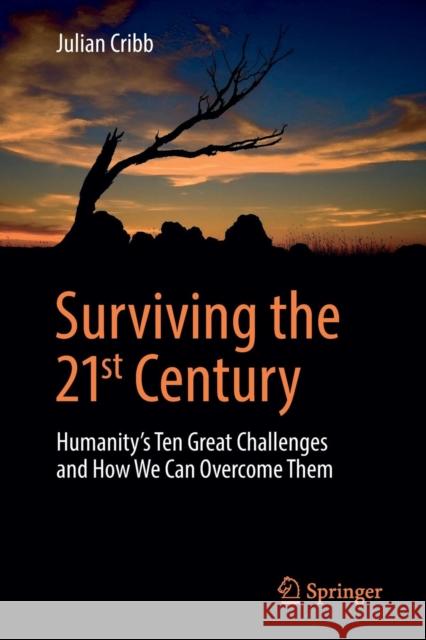
Surviving the 21st Century: Humanity's Ten Great Challenges and How We Can Overcome Them Cribb, Julian 9783319412696 Springer - książkaWidoczna okładka, to zdjęcie poglądowe, a rzeczywista szata graficzna może różnić się od prezentowanej.

Surviving the 21st Century: Humanity's Ten Great Challenges and How We Can Overcome Them

ISBN-13: 9783319412696 / Angielski / Miękka / 2016 / 255 str.

Julian Cribb
cena 140,86
(netto: 134,15 VAT:  5%)

Najniższa cena z 30 dni: 134,90
Termin realizacji zamówienia:
ok. 22 dni roboczych
Dostawa w 2026 r.

Darmowa dostawa!

The book explores the central question facing humanity today: how can we best survive the ten great existential challenges that are now coming together to confront us? Besides describing these challenges from the latest scientific perspectives, it also outlines and integrates the solutions, both at global and individual level and concludes optimistically. This book brings together in one easy-to-read work the principal issues facing humanity. It is written for the two next generations who will have to deal with the compounding risks they inherit, and which flow from overpopulation, resource pressures and human nature. The author examines ten intersecting areas of activity (mass extinction, resource depletion, WMD, climate change, universal toxicity, food crises, population and urban expansion, pandemic disease, dangerous new technologies and self-delusion) which pose manifest risks to civilization and, potentially, to our species' long-term future. This isn't a book just about problems. It is also about solutions. Every chapter concludes with clear conclusions and consensus advice on what needs to be done at global level --but it also empowers individuals with what they can do for themselves to make a difference. Unlike other books, it offers integrated solutions across the areas of greatest risk. It explains why Homo sapiens is no longer an appropriate name for our species, and what should be done about it.


Kategorie:
Nauka, Biologia i przyroda
Kategorie BISAC:
Nature > Environmental Conservation & Protection - General
Science > Global Warming & Climate Change
Science > Life Sciences - Ecology
Wydawca:
Springer
Język:
Angielski
ISBN-13:
9783319412696
Rok wydania:
2016
Wydanie:
2017
Ilość stron:
255
Waga:
0.38 kg
Wymiary:
23.39 x 15.6 x 1.45
Oprawa:
Miękka
Wolumenów:
01
Dodatkowe informacje:
Wydanie ilustrowane

"Cribb, an experienced author and science writer, has written an important book-providing policy makers will pay attention to it. ... This book is recommended for a variety of readers. Summing Up: Recommended. All readers." (M. LaBar, Choice, Vol. 54 (8), 2017)

"His book Surviving the 21st Century: Humanity's Ten Great Challenges and How We Can Overcome Them poses the ten existential challenges facing Homo sapiens, and answers each one. It is a book of solutions, severally and collectively." (Climate Plus, climateplus.info, December, 2016)

"It comprehensively addresses all the main threats to us and to our planet. ... We can demonstrate wisdom by getting hold of a copy of Surviving the 21 Century and applying some of the recommendations to our own lives. We can recommend the book to others. We can alert our leaders to the book and its contents. We owe this to ourselves and to our planet." (Paul Holper, Scientell, scientell.com.au, November, 2016)

"Spells out the ten greatest challenges ahead and suggests strategies to meet them, all based on science .... Those challenges include ecological collapse, climate change, war, chemicals in the environment, food, disease and delusional thinking, among others. The potential solutions proposed by the author include putting women in charge of world affairs, and for men to start thinking more like 'wise women'." (Scimex, scimex.org, November 3, 2016)

"What a refreshing a dose of realism! An antidote to so much media fog, hype and bad science. An important read for anyone who is seriously concerned about how the human race is to go forward and how to help our grandchildren survive. Worth every penny. (Will Goodall, Amazon.com, October 12, 2016)

"The book has been unanimously praised by a cast of reviewers ... . The author explores each of these threats and identifies ways we can positively approach each of them. But he says the greatest challenge lies not in the physical threats we face but in our own minds. He argues that our belief in non-material things like money, politics, religion and the human narrative often diverts and undermines our efforts to work together for survival." (Canberra Alliance for Participatory Democracy, canberra-alliance.org.au, October 5, 2016)


Foreword.- List of tables and figures.- Chapter 1. The Self-Worshipper (Homo suilaudans).- Chapter 2 The Terminator (Homo exterminans).- Chapter 3. The Degrader (Homo eversor).- Chapter 4. The Butcher (Homo carnifex).- Chapter 5: The Baker (Homo pistor).- Chapter 6. The Poisoner (Homo veneficus).- Chapter 7. The Devourer (Homo devorans).- Chapter 8. The Urbanite (Homo urbanus).- Chapter 9. The Self-Deceiver (Homo delusus).- Chapter 10. The Getting of Wisdom (Homo sapientior).

Julian Cribb is an Australian author and science writer. A former newspaper editor and science communicator; his published work includes over 8000 articles, 3000 science media releases and nine books. He has received more than 30 awards for journalism and is a fellow of the Australian Academy of Technology, Science and Engineering and the Australian National University Emeritus Faculty. 

His internationally-acclaimed book, The Coming Famine (University of California Press, 2010) explored the question of how we can feed 10 billion humans this century. His book Poisoned Planet (Allen and Unwin 2014) investigates the contamination of the Earth system and all humanity by man-made chemicals. Surviving the 21st Century is the third book in his trilogy about how humans can overcome the existential risks our success has brought upon us.

The book explores the central question facing humanity today: how can we best survive the ten great existential challenges that are now coming together to confront us? Besides describing these challenges from the latest scientific perspectives, it also outlines and integrates the solutions, both at global and individual level and concludes optimistically. This book brings together in one easy-to-read work the principal issues facing humanity. It is written for the two next generations who will have to deal with the compounding risks they inherit, and which flow from overpopulation, resource pressures and human nature.

The author examines ten intersecting areas of activity (mass extinction, resource depletion, WMD, climate change, universal toxicity, food crises, population and urban expansion, pandemic disease, dangerous new technologies and self-delusion) which pose manifest risks to civilization and, potentially, to our species’ long-term future. This isn’t a book just about problems. It is also about solutions. Every chapter concludes with clear conclusions and consensus advice on what needs to be done at global level —but it also empowers individuals with what they can do for themselves to make a difference. Unlike other books, it offers integrated solutions across the areas of greatest risk. It explains why Homo sapiens is no longer an appropriate name for our species, and what should be done about it.

Cribb, Julian Julian Cribb is a science communicator, journalist... więcej >


Udostępnij

Facebook - konto krainaksiazek.pl


Opinie o Krainaksiazek.pl na Opineo.pl

Partner Mybenefit

Krainaksiazek.pl w programie rzetelna firma Krainaksiaze.pl - płatności przez paypal

Czytaj nas na:

Facebook - krainaksiazek.pl
  • książki na zamówienie
  • granty
  • książka na prezent
  • kontakt
  • pomoc
  • opinie
  • regulamin
  • polityka prywatności

Zobacz:

  • Księgarnia czeska

  • Wydawnictwo Książkowe Klimaty

1997-2025 DolnySlask.com Agencja Internetowa

© 1997-2022 krainaksiazek.pl
     
KONTAKT | REGULAMIN | POLITYKA PRYWATNOŚCI | USTAWIENIA PRYWATNOŚCI
Zobacz: Księgarnia Czeska | Wydawnictwo Książkowe Klimaty | Mapa strony | Lista autorów
KrainaKsiazek.PL - Księgarnia Internetowa

Polityka prywatnosci - link
Krainaksiazek.pl - płatnośc Przelewy24
Przechowalnia Przechowalnia




