• Wyszukiwanie zaawansowane
  • Kategorie
  • Kategorie BISAC
  • Książki na zamówienie
  • Promocje
  • Granty
  • Książka na prezent
  • Opinie
  • Pomoc
  • Załóż konto
  • Zaloguj się

The Archaeology of Science: Studying the Creation of Useful Knowledge » książka


zaloguj się | załóż konto
Logo Krainaksiazek.pl

koszyk

konto

szukaj
topmenu
Księgarnia internetowa
Szukaj
Książki na zamówienie
Promocje
Granty
Książka na prezent
Moje konto
Pomoc
 
 
Wyszukiwanie zaawansowane
Pusty koszyk
Bezpłatna dostawa dla zamówień powyżej 20 złBezpłatna dostawa dla zamówień powyżej 20 zł

Kategorie główne

• Nauka
 [2950560]
• Literatura piękna
 [1849509]

  więcej...
• Turystyka
 [71097]
• Informatyka
 [151150]
• Komiksy
 [35848]
• Encyklopedie
 [23178]
• Dziecięca
 [617388]
• Hobby
 [139064]
• AudioBooki
 [1657]
• Literatura faktu
 [228597]
• Muzyka CD
 [383]
• Słowniki
 [2855]
• Inne
 [445295]
• Kalendarze
 [1464]
• Podręczniki
 [167547]
• Poradniki
 [480102]
• Religia
 [510749]
• Czasopisma
 [516]
• Sport
 [61293]
• Sztuka
 [243352]
• CD, DVD, Video
 [3414]
• Technologie
 [219456]
• Zdrowie
 [101002]
• Książkowe Klimaty
 [124]
• Zabawki
 [2311]
• Puzzle, gry
 [3459]
• Literatura w języku ukraińskim
 [254]
• Art. papiernicze i szkolne
 [8079]
Kategorie szczegółowe BISAC

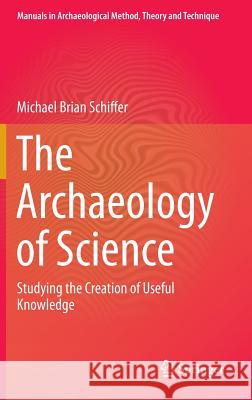
The Archaeology of Science: Studying the Creation of Useful Knowledge

ISBN-13: 9783319000763 / Angielski / Twarda / 2013 / 204 str.
Michael Brian Schiffer
The Archaeology of Science: Studying the Creation of Useful Knowledge Schiffer, Michael Brian 9783319000763 Springer - książkaWidoczna okładka, to zdjęcie poglądowe, a rzeczywista szata graficzna może różnić się od prezentowanej.

The Archaeology of Science: Studying the Creation of Useful Knowledge

ISBN-13: 9783319000763 / Angielski / Twarda / 2013 / 204 str.

Michael Brian Schiffer
cena 201,24
(netto: 191,66 VAT:  5%)

Najniższa cena z 30 dni: 192,74
Termin realizacji zamówienia:
ok. 22 dni roboczych
Dostawa w 2026 r.

Darmowa dostawa!
inne wydania

This manual pulls together-and illustrates with interesting case studies-the variety of specialized and generalized archaeological research strategies that yield new insights into science. Throughout the book there are templates, consisting of questions, to help readers visualize and design their own projects. The manual seeks to be as general as possible, applicable to any society, and so science is defined as the creation of useful knowledge-the kinds of knowledge that enable people to make predictions. The chapters in Part I discuss the scope of the archaeology of science and furnish a conceptual foundation for the remainder of the book. Next, Part II presents several specialized, but widely practiced, research strategies that contribute to the archaeology of science. In order to thoroughly ground the manual in real-life applications, Part III presents lengthy case studies that feature the use of historical and archaeological evidence in the study of scientific activities.


Kategorie:
Nauka, Historia
Kategorie BISAC:
Social Science > Antropologia
Social Science > Archaeology
Science > Philosophy & Social Aspects
Wydawca:
Springer
Seria wydawnicza:
Manuals in Archaeological Method, Theory and Technique
Język:
Angielski
ISBN-13:
9783319000763
Rok wydania:
2013
Wydanie:
2013
Numer serii:
000296959
Ilość stron:
204
Waga:
0.45 kg
Wymiary:
23.37 x 15.49 x 1.78
Oprawa:
Twarda
Wolumenów:
01
Dodatkowe informacje:
Wydanie ilustrowane

"A Renaissance man in the best sense of the phrase, the author long ago ventured forth with such archaeological expertise into inter-disciplinary waters...this book attempts to systematize and stake out an archaeological approach to science studies by characterizing scientific activity in behavioral terms" (Tim Webmoor, Archaeolog Blog, 2014)

​PART I.- 1  Introduction.-2  Science:  A Behavioral Perspective.- 3  The Varieties of Scientific Knowledge.-PART II.- 4  Experimental Archaeology.- 5  Ethnoarchaeology.- 6  Archaeometry.- PART III .- 7  The Artifacts of Modern and Early Modern Science.- 8  Thomas Edison’s Science.- 9  Colonization and Exploration.- 10  Scientific Expeditions to Antarctica.-11  The U.S. Nuclear Establishment.-12  Archaeology of the Space Age.- 13  Discovery Processes.

Michael Brian Schiffer is the Fred A. Riecker Distinguished Professor in the School of Anthropology at the University of Arizona. During his long professional career, now approaching four decades, he has conducted many and varied studies that have contributed to the approach, construction, and content of this manual. In 1983 he initiated a program of experimental archaeology at the University of Arizona, have published many experiments on ceramic technology, and for nearly 30 years taught a course on experimental archaeology. He has contributed to the theory and method of ethnoarchaeology and supervised several important ethnoarchaeological dissertations. He was also a pioneer in the study of modern material culture. The philosophy of archaeology has also been one of his interests, which has led to a better understanding of the kinds of knowledge that science produces and their relationships to archaeological research. He has published an artifact-based theory of human communication, engaged the recent history of American archaeology, and published copiously on diverse topics of archaeological method and theory. In addition, he has done extensive research on the history of electrical and electronic science and technology, culminating in four books. And he has written a book about the study of technological change in which the role of scientific knowledge looms large; indeed, some of the ideas in that book have loud echoes in the manual. In short, because of his varied interests and eagerness to delve into new subject areas, he is well situated to pull off this manual.

This manual pulls together—and illustrates with interesting case studies—the variety of specialized and generalized archaeological research strategies that yield new insights into science. Throughout the book there are templates, consisting of questions, to help readers visualize and design their own projects. The manual seeks to be as general as possible, applicable to any society, and so science is defined as the creation of useful knowledge—the kinds of knowledge that enable people to make predictions. The chapters in Part I discuss the scope of the archaeology of science and furnish a conceptual foundation for the remainder of the book. Included are basic principles of behavioral archaeology that, because they privilege people-artifact interactions, can be employed to frame new research on science.  The varieties of scientific knowledge—from observations to theories and everything in between—are defined in behavioral terms.  Next, Part II presents several specialized, but widely practiced, research strategies that contribute to the archaeology of science. These chapters contain fascinating case studies from the archaeological literature that illustrate how these strategies can be employed to formulate and answer research questions. 

                 In order to thoroughly ground the manual in real-life applications, Part III presents lengthy case studies that feature the use of historical and archaeological evidence in the study of scientific activities. Many of these chapters draw on unpublished archaeological reports that bring to light the material dimension of intriguing—sometimes once secret—science and technology projects, such as the Manhattan Project, Project Rover, and Thomas Edison’s “invention factories”, to name a few.  The Archaeology of Science: Studying the Creation of Useful Knowledge stimulates readers because it calls attention to a great many archaeological projects already accomplished and shows readers how they can contribute to expanding and enriching the archaeology of science.   This original concept provides both advanced undergraduates and graduates, as well as professional archaeologists, with a cornucopia of strategies and tactics for conducting original—indeed, exciting—research leading to term papers, theses, dissertations, and eventually publications.  

Schiffer, Michael Brian Michael Brian Schiffer is Professor of Anthropolog... więcej >


Udostępnij

Facebook - konto krainaksiazek.pl


Opinie o Krainaksiazek.pl na Opineo.pl

Partner Mybenefit

Krainaksiazek.pl w programie rzetelna firma Krainaksiaze.pl - płatności przez paypal

Czytaj nas na:

Facebook - krainaksiazek.pl
  • książki na zamówienie
  • granty
  • książka na prezent
  • kontakt
  • pomoc
  • opinie
  • regulamin
  • polityka prywatności

Zobacz:

  • Księgarnia czeska

  • Wydawnictwo Książkowe Klimaty

1997-2025 DolnySlask.com Agencja Internetowa

© 1997-2022 krainaksiazek.pl
     
KONTAKT | REGULAMIN | POLITYKA PRYWATNOŚCI | USTAWIENIA PRYWATNOŚCI
Zobacz: Księgarnia Czeska | Wydawnictwo Książkowe Klimaty | Mapa strony | Lista autorów
KrainaKsiazek.PL - Księgarnia Internetowa

Polityka prywatnosci - link
Krainaksiazek.pl - płatnośc Przelewy24
Przechowalnia Przechowalnia




