• Wyszukiwanie zaawansowane
  • Kategorie
  • Kategorie BISAC
  • Książki na zamówienie
  • Promocje
  • Granty
  • Książka na prezent
  • Opinie
  • Pomoc
  • Załóż konto
  • Zaloguj się

Cybernetics 2.0 » książka


zaloguj się | załóż konto
Logo Krainaksiazek.pl

koszyk

konto

szukaj
topmenu
Księgarnia internetowa
Szukaj
Książki na zamówienie
Promocje
Granty
Książka na prezent
Moje konto
Pomoc
 
 
Wyszukiwanie zaawansowane
Pusty koszyk
Bezpłatna dostawa dla zamówień powyżej 20 złBezpłatna dostawa dla zamówień powyżej 20 zł

Kategorie główne

• Nauka
 [2949965]
• Literatura piękna
 [1857847]

  więcej...
• Turystyka
 [70818]
• Informatyka
 [151303]
• Komiksy
 [35733]
• Encyklopedie
 [23180]
• Dziecięca
 [617748]
• Hobby
 [139972]
• AudioBooki
 [1650]
• Literatura faktu
 [228361]
• Muzyka CD
 [398]
• Słowniki
 [2862]
• Inne
 [444732]
• Kalendarze
 [1620]
• Podręczniki
 [167233]
• Poradniki
 [482388]
• Religia
 [509867]
• Czasopisma
 [533]
• Sport
 [61361]
• Sztuka
 [243125]
• CD, DVD, Video
 [3451]
• Technologie
 [219309]
• Zdrowie
 [101347]
• Książkowe Klimaty
 [123]
• Zabawki
 [2362]
• Puzzle, gry
 [3791]
• Literatura w języku ukraińskim
 [253]
• Art. papiernicze i szkolne
 [7933]
Kategorie szczegółowe BISAC

Cybernetics 2.0

ISBN-13: 9783030981426 / Angielski / Miękka / 2023
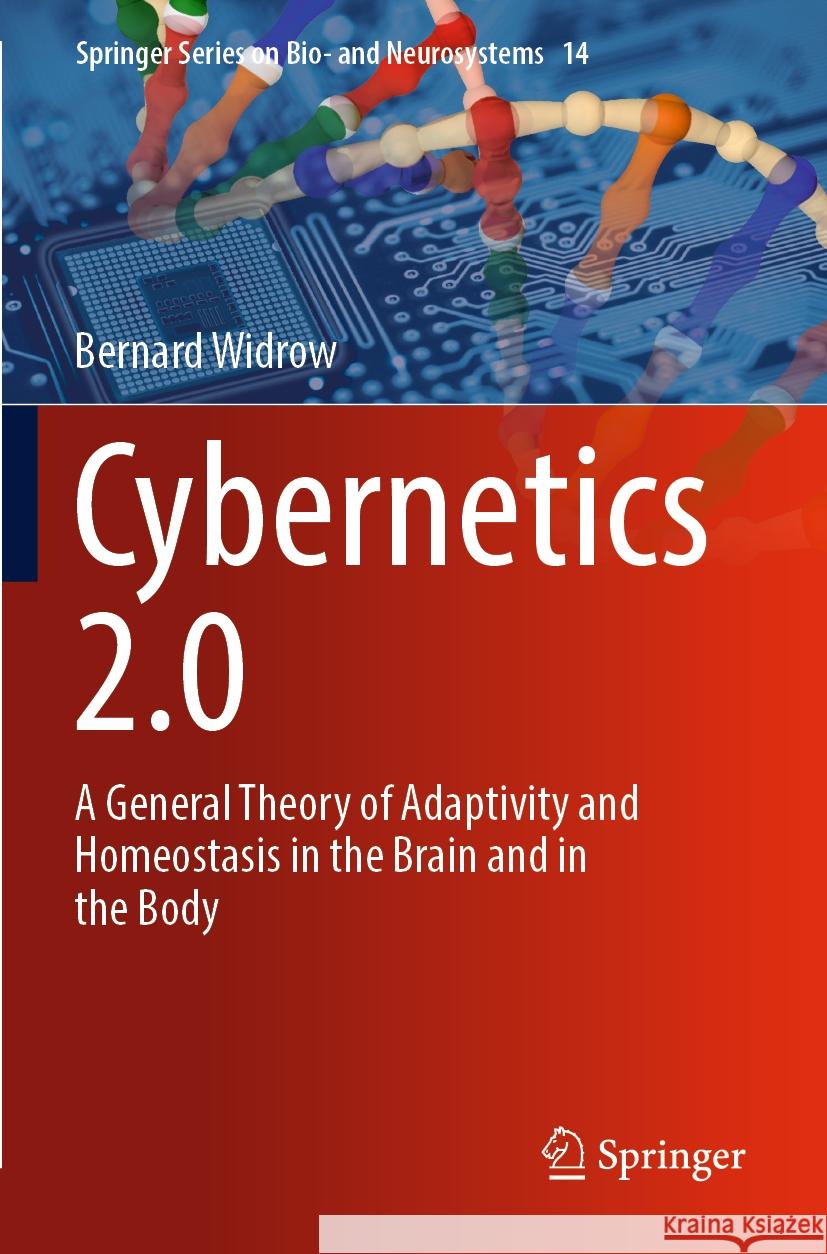
Bernard Widrow
Cybernetics 2.0 Bernard Widrow 9783030981426 Springer International Publishing - książkaWidoczna okładka, to zdjęcie poglądowe, a rzeczywista szata graficzna może różnić się od prezentowanej.

Cybernetics 2.0

ISBN-13: 9783030981426 / Angielski / Miękka / 2023

Bernard Widrow
cena 443,82
(netto: 422,69 VAT:  5%)

Najniższa cena z 30 dni: 385,52
Termin realizacji zamówienia:
ok. 22 dni roboczych
Bez gwarancji dostawy przed świętami

Darmowa dostawa!
inne wydania

This book takes the notions of adaptivity and learning from the realm of engineering into the realm of biology and natural processes. It introduces a Hebbian-LMS algorithm, an integration of unsupervised Hebbian learning and supervised LMS learning in neural networks, as a mathematical representation of a general theory for synaptic learning in the brain, and adaptation and functional control of homeostasis in living systems. Written in a language that is able to address students and scientists with different backgrounds, this book accompanies readers on a unique journey through various homeostatic processes in living organisms, such as body temperature control and synaptic plasticity, explaining how the Hebbian-LMS algorithm can help understand them, and suggesting some open questions for future research. It also analyses cell signalling pathways from an unusual perspective, where hormones and hormone receptors are shown to be regulated via the principles of the Hebbian-LMS algorithm. It further discusses addiction and pain, and various kinds of mood disorders alike, showing how they can be modelled with the Hebbian-LMS algorithm.  For the first time, the Hebbian-LMS algorithm, which has been derived from a combination of Hebbian theory from the neuroscience field and the LMS algorithm from the engineering field of adaptive signal processing, becomes a potent model for understanding how biological regulation works. Thus, this book is breaking new ground in neuroscience by providing scientists with a general theory for how nature does control synaptic learning. It then goes beyond that, showing that the same principles apply to hormone-mediated regulation of physiological processes. In turn, the book tackles in more depth the concept of learning. It covers computer simulations and strategies for training neural networks with the Hebbian-LMS algorithm, demonstrating that the resulting algorithms are able to identify relationships between unknown input patterns. It shows how this can translate in useful ideas to understand human memory and design cognitive structures. All in all, this book offers an absolutely, unique, inspiring reading for biologists, physiologists, and engineers, paving the way for future studies on what we could call the nature’s secret learning algorithm.


Kategorie:
Nauka, Medycyna
Kategorie BISAC:
Technology & Engineering > Biomedical
Science > Fizyka
Computers > Artificial Intelligence - General
Wydawca:
Springer International Publishing
Seria wydawnicza:
Springer Series on Bio- and Neurosystems
Język:
Angielski
ISBN-13:
9783030981426
Rok wydania:
2023
Waga:
0.53 kg
Wymiary:
23.5 x 15.5
Oprawa:
Miękka
Dodatkowe informacje:
Wydanie ilustrowane

Introduction.- Hebbian Learning.- The LMS Algorithm.- The Hebbian-LMS Algorithm.-  Inside the membrane; The percent Hebbian-LMS algorithm.- Synaptic scaling and homeostasis.-  Synaptic plasticity.- Addiction.

Bernard Widrow is Professor Emeritus in the Electrical Engineering Department at Stanford University. His research focuses on adaptive signal processing, adaptive control systems, adaptive neural networks, human memory, cybernetics, and human-like memory for computers. Applications include signal processing, prediction, noise cancelling, adaptive arrays, control systems, and pattern recognition.  He received the Doctor of Science Degree from MIT in 1956, and was appointed Professor from the same University. He has been active in the field of artificial neural networks since 1957, when there were only a half-dozen researchers working on this all over the world. In 1959, he moved to Stanford University. In the same year, together with his student Ted Hoff, he invented the Least Mean Square (LMS) algorithm, which has been the world’s most widely used learning algorithm to date. Since 2010, he has expanded his interest to living neural networks and biological adaptivity. A Life fellow of the Institute of Electrical and Electronic Engineering (IEEE), he was awarded with the IEEE Alexander Graham Bell Medal in 1986 and with the Benjamin Franklin Medal for Electrical Engineering in 2001. He has been inducted into both the US National Academy of Engineering and the Silicon Valley Engineering Hall of Fame, in 1995 and 1999, respectively.


This book takes the notions of adaptivity and learning from the realm of engineering into the realm of biology and natural processes. It introduces a Hebbian-LMS algorithm, an integration of unsupervised Hebbian learning and supervised LMS learning in neural networks, as a mathematical representation of a general theory for synaptic learning in the brain, and adaptation and functional control of homeostasis in living systems. Written in a language that is able to address students and scientists with different backgrounds, this book accompanies readers on a unique journey through various homeostatic processes in living organisms, such as body temperature control and synaptic plasticity, explaining how the Hebbian-LMS algorithm can help understand them, and suggesting some open questions for future research. It also analyses cell signalling pathways from an unusual perspective, where hormones and hormone receptors are shown to be regulated via the principles of the Hebbian-LMS algorithm. It further discusses addiction and pain, and various kinds of mood disorders alike, showing how they can be modelled with the Hebbian-LMS algorithm.  For the first time, the Hebbian-LMS algorithm, which has been derived from a combination of Hebbian theory from the neuroscience field and the LMS algorithm from the engineering field of adaptive signal processing, becomes a potent model for understanding how biological regulation works. Thus, this book is breaking new ground in neuroscience by providing scientists with a general theory for how nature does control synaptic learning. It then goes beyond that, showing that the same principles apply to hormone-mediated regulation of physiological processes. In turn, the book tackles in more depth the concept of learning. It covers computer simulations and strategies for training neural networks with the Hebbian-LMS algorithm, demonstrating that the resulting algorithms are able to identify relationships between unknown input patterns. It shows how this can translate in useful ideas to understand human memory and design cognitive structures. All in all, this book offers an absolutely, unique, inspiring reading for biologists, physiologists, and engineers, paving the way for future studies on what we could call the nature’s secret learning algorithm.




Udostępnij

Facebook - konto krainaksiazek.pl


Opinie o Krainaksiazek.pl na Opineo.pl

Partner Mybenefit

Krainaksiazek.pl w programie rzetelna firma Krainaksiaze.pl - płatności przez paypal

Czytaj nas na:

Facebook - krainaksiazek.pl
  • książki na zamówienie
  • granty
  • książka na prezent
  • kontakt
  • pomoc
  • opinie
  • regulamin
  • polityka prywatności

Zobacz:

  • Księgarnia czeska

  • Wydawnictwo Książkowe Klimaty

1997-2025 DolnySlask.com Agencja Internetowa

© 1997-2022 krainaksiazek.pl
     
KONTAKT | REGULAMIN | POLITYKA PRYWATNOŚCI | USTAWIENIA PRYWATNOŚCI
Zobacz: Księgarnia Czeska | Wydawnictwo Książkowe Klimaty | Mapa strony | Lista autorów
KrainaKsiazek.PL - Księgarnia Internetowa

Polityka prywatnosci - link
Krainaksiazek.pl - płatnośc Przelewy24
Przechowalnia Przechowalnia




