• Wyszukiwanie zaawansowane
  • Kategorie
  • Kategorie BISAC
  • Książki na zamówienie
  • Promocje
  • Granty
  • Książka na prezent
  • Opinie
  • Pomoc
  • Załóż konto
  • Zaloguj się

Self-Healing Nanotextured Vascular Engineering Materials » książka


zaloguj się | załóż konto
Logo Krainaksiazek.pl

koszyk

konto

szukaj
topmenu
Księgarnia internetowa
Szukaj
Książki na zamówienie
Promocje
Granty
Książka na prezent
Moje konto
Pomoc
 
 
Wyszukiwanie zaawansowane
Pusty koszyk
Bezpłatna dostawa dla zamówień powyżej 20 złBezpłatna dostawa dla zamówień powyżej 20 zł

Kategorie główne

• Nauka
 [2952079]
• Literatura piękna
 [1850969]

  więcej...
• Turystyka
 [71058]
• Informatyka
 [151066]
• Komiksy
 [35579]
• Encyklopedie
 [23181]
• Dziecięca
 [620496]
• Hobby
 [139036]
• AudioBooki
 [1646]
• Literatura faktu
 [228729]
• Muzyka CD
 [379]
• Słowniki
 [2932]
• Inne
 [445708]
• Kalendarze
 [1409]
• Podręczniki
 [164793]
• Poradniki
 [480107]
• Religia
 [510956]
• Czasopisma
 [511]
• Sport
 [61267]
• Sztuka
 [243299]
• CD, DVD, Video
 [3411]
• Technologie
 [219640]
• Zdrowie
 [100984]
• Książkowe Klimaty
 [124]
• Zabawki
 [2281]
• Puzzle, gry
 [3363]
• Literatura w języku ukraińskim
 [258]
• Art. papiernicze i szkolne
 [8020]
Kategorie szczegółowe BISAC

Self-Healing Nanotextured Vascular Engineering Materials

ISBN-13: 9783030052669 / Angielski / Twarda / 2019 / 265 str.
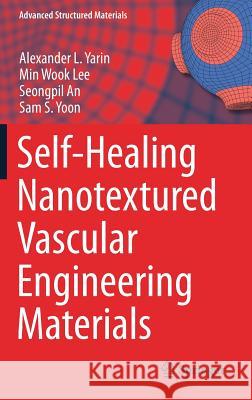
Alexander L. Yarin; Min Wook Lee; Seongpil An
Self-Healing Nanotextured Vascular Engineering Materials Yarin, Alexander L.; Lee, Min Wook; An, Seongpil 9783030052669 Springer - książkaWidoczna okładka, to zdjęcie poglądowe, a rzeczywista szata graficzna może różnić się od prezentowanej.

Self-Healing Nanotextured Vascular Engineering Materials

ISBN-13: 9783030052669 / Angielski / Twarda / 2019 / 265 str.

Alexander L. Yarin; Min Wook Lee; Seongpil An
cena 402,53
(netto: 383,36 VAT:  5%)

Najniższa cena z 30 dni: 385,52
Termin realizacji zamówienia:
ok. 22 dni roboczych
Dostawa w 2026 r.

Darmowa dostawa!

The book begins with the Introduction, which gives an overview of the existing self-healing approaches and traces them back to the naturally healing tissues, e.g. human tissues and bones. Thus, the idea of biomimetic approach to development of self-healing engineering materials is introduced. The first offspring of the biomimetic approach to composite engineering materials was based on microcapsules containing healing agents, which were released by propagating cracks, thus healing them. The benefits and drawbacks of the microcapsule-based approach are discussed. Namely, the relatively large scale of such microcapsules and difficulties in their manufacturing led to the appearance of nano-textured vascular composites, based on core-shell nanofiber network filled with healing agents, which can be released by propagating cracks and heal the latter. These nano-textured vascular self-healing materials are in focus in the present book. The Introduction is followed by four Parts, each one of them consisting of several Chapters. Part I begins with the description of the healing agents used in the engineering self-healing materials. This Chapter 2 of Part I is mostly chemical in nature. The following Chapter 3 is devoted to the fundamental physico-chemical phenomena accompanying self-healing, namely spreading of the released drops of healing agents, their mixing, polymerization, stitching the cracks and restoring mechanical strength. This Chapter involves some theoretical aspects dealing with drop spreading and imbibition in porous nanofiber mats, as well as the experimental observations which employ macroscopic models of self-healing materials.Part II of the book deals with fabrication methods used to form core-shell nanofiber mats, with the cores containing healing agents, namely electrospinning and co-electrospinning, emulsion spinning, solution blowing, etc. (Chapter 4). It also describes (in Chapter 5) the characterization methods used to detect the presence and release of the encaged healing agents on the nanometer scale.The following Part III begins with Chapter 6 where the fundamental theoretical aspects of fracture mechanics are outlined. Namely, a brief theoretical description of cracks in brittle elastic materials is given and the fundamentals of the Griffith approach based on the surface energy are introduced. The fracture toughness of the Mode I, II and II cracks is described, and viscoelastic effects are included. Theoretical description of critical (catastrophic) and subcritical (fatigue) cracks and their propagation is also tackled. The adhesion/cohesion energies are introduced as well, and the theory of the blister test for two limiting cases of stiff and soft materials is developed. Also, the effect of non-self-healing nanofiber mats on toughening ply surfaces in composites is discussed. Then, in Chapter 7 in this Part, the experimental data acquired with self-healing nano-textured vascular materials in tensile, bending, impact and blister tests is in focus. The interpretation of these results is based on the previously introduced theory and allows one to elucidate to what extent such mechanical properties as stiffness and adhesion/cohesion energy are restored in self-healing nano-textured vascular materials. Part IV begins with Chapter 8 with a brief description of the electrochemical theory of growth of corrosion cracks. Then, the discussion turns to the representative extrinsic self-healing techniques developed in the last decade, with the capsule (Chapter 8) and the hollow fiber-based (Chapter 9) self-healing approaches being in focus. Such physico-chemical approaches are expected to effectively replace or supplement the existing corrosion-protection methods. In addition, the implementation of the micro- and nano-scale material fabrication techniques is discussed, including, for example, such modifications as the interfacial polymerization,


Kategorie:
Technologie
Kategorie BISAC:
Technology & Engineering > Materials Science - Thin Films, Surfaces & Interfaces
Technology & Engineering > Nanotechnology & MEMS
Science > Chemia - Nieorganiczna
Wydawca:
Springer
Seria wydawnicza:
Advanced Structured Materials
Język:
Angielski
ISBN-13:
9783030052669
Rok wydania:
2019
Wydanie:
2019
Ilość stron:
265
Waga:
0.56 kg
Wymiary:
23.39 x 15.6 x 1.75
Oprawa:
Twarda
Wolumenów:
01
Dodatkowe informacje:
Wydanie ilustrowane

Preface


1. Introduction

1.1.                Nature-inspired Biomimetic Self-healing for Self-sustained Mechanical

       Properties

1.2. Self-healing: Extension to Anti-corrosion Protection

1.3. Capsule-based Self-healing Approach to Self-healing

1.4. Tube and Channel Networks

1.5. Carbon Nanotubes, Sacrificial Materials and Shape-memory Polymers

1.6. References


Part I. Materials and Fundamental Physico-Chemical  Phenomena


2. Healing Materials/Agents Used for Mechanical Recovery in Nano-textured Systems

        2.1. Dicyclopentadiene (DCPD) and Grubbs’ Catalyst

        2.2. Poly(dimethyl siloxane) (PDMS)

        2.3. Bisphenol-A-based Epoxy

        2.4. References


3. Macroscopic Observations of Physico-chemical Aspects of Self-healing Phenomena

       3.1. Spreading of Released Drops of Healing Agents on Horizontal

              Surfaces

       3.2. Spreading on Tilted Surfaces

       3.3. Filling Crack Tips

       3.4. Stitching Cracks and the Corresponding Mechanical Properties

       3.5. References


Part II. Fabrication Methods


4. Fabrication of Vascular Nanofiber Network with Encapsulated Self-   

       healing Agents for Mechanical Recovery


        4.1. Electrospinning

        4.2. Co-electrospinning

        4.3. Emulsion Spinning

        4.4. Solution Blowing

        4.5. Coaxial Solution Blowing

        4.6. Emulsion Blowing

 4.7. Hollow Fibers

 4.8. Other Approaches

 4.9. Three-dimensional Self-healing Materials

 4.10. References


5. Characterization of Self-healing Phenomena on Micro- and Nano-scale

       Level

       5.1. Visualization

       5.2. Spectroscopic Characterization

       5.3. Thermal Analysis

       5.4. References


              Part III. Mechanical Behavior of Self-Healing Nano-Textured

      Materials


6. Cracks, Delamination, Adhesion and Cohesion

       6.1. Cracks in Elastic Media

       6.2. Cracks in Viscoelastic Media

       6.3. Fatigue Cracks

       6.4. Critical Catastrophic Crack and Subcritical Crack Propagation

       6.4. Delamination Cracks

       6.5. Adhesion/Cohesion Energy: Stiff Materials

       6.6. Adhesion/Cohesion Energy: Soft Materials

       6.7. Effect of Non-self-healing Nanofibers on Delamination Cracks

       6.8. References


7. Self-healing Evaluation

        7.1. Tensile Tests: Stiffness Recovery in Nano-textured Vascular Self-healing

                Materials

        7.2. Double Cantilever Beam: Recovery of Stiffness in Self-healing Nanofiber

               Mats

        7.3. Plane Strip: Recovery of Stiffness

7.4. Bending Test: Recovery of Stiffness

7.5. Impact Test

7.6. Blister Test: Recovery of Adhesion/Cohesion with Self-healing Nano-    

               textured Materials

        7.7. Self-healing of Three-dimensional Materials: Intrinsic Versus Extrinsic

               Self-healing

        7.8. References


Part IV. Self-Healing Anti-Corrosion Nano-Textured Materials


8. Capsule-based Self-healing Approaches for Corrosion Protection


8.1. Electrochemical Fundamentals of Corrosion Cracking

8.2. Extrinsic Self-healing Technique

       8.3. Healing Agent-embedded Capsule-based Self-healing

       8.4. Modified Healing Agents and Microcapsules

       8.5. Corrosion Inhibitor-embedded Capsule-based Self-healing

       8.6. References


9. Fiber-based Self-healing Approaches for Corrosion Protection

9.1. Micrometer-scale Hollow Fiber-based Self-healing

9.2. Hollow Tubes for Self-healing

9.3. Anti-corrosion Composites Based on Hollow Tubes

9.4. Nanometer-scale Hollow Fiber-based Self-healing

9.5. Anti-corrosion Composites Based on Core-shell Nanofiber Networks

9.6. References


10. Future Perspectives

Alexander L. Yarin received his M.Sc. (Applied Physics) in 1977, Ph.D. (Physics and Mathematics) in 1980, and DSc (Habilitation in Physics and Mathematics) in 1989. He holds the following positions: Junior & Senior Research Associate at The Institute for Problems in Mechanics of the Academy of Sciences of the USSR, Moscow (1977–1990) and concurrently Professor at the Department of Molecular and Chemical Physics of The Physico-Technical Institute (1985–1989) and The Aviation Technology Institute, Moscow, USSR (1988–1990); Professor at The Technion-Israel Institute of Technology (1990–2006; Eduard Pestel Chair Professor in Mechanical Engineering at The Technion in 1999–2006); Professor at The University of Illinois at Chicago, USA (2006–present; Distinguished Professor in 2014–present); Fellow of the Center for Smart Interfaces at the Technical University of Darmstadt, Germany (2008–2012); Visiting Professor at Korea University (Seoul, S. Korea, 2013–present). Dr. Yarin was a Visiting Professor on sabbatical at the University of Wisconsin-Madison (Chem. Eng. Dept.) in 1996–1997, and at The University of Illinois at Chicago in 2003–2004. Prof. Yarin is the author of 4 books, 12 book chapters, 324 research papers in leading peer-reviewed journal, 60 conference papers, 7 miscellaneous publications and 8 patents. Two of his books were recently published: A.L. Yarin, B. Pourdeyhimi, S. Ramakrishna. Fundamentals and Applications of Micro-  and Nanofibers. Cambridge University Press, Cambridge, 2014; A.L. Yarin, I.V. Roisman, C. Tropea. Collision Phenomena in Liquids and Solids. Cambridge University Press, Cambridge, 2017. He is the author of the reviews: A.L. Yarin, "Drop Impact Dynamics: Splashing, Spreading, Receding, Bouncing…" in Annual Review of Fluid Mechanics 38, 159-192 (2006); A.L. Yarin. Coaxial electrospinning and emulsion electrospinning of core-shell fibers. Polymers Advanced Technologies 22, 310-317 (2011), and co-authors of the following review articles, M.W. Lee, S. An, S.S. Yoon, A.L. Yarin. Advances in self-healing materials based on vascular networks with mechanical self-repair characteristics. Advances in Colloid and Interface Science (in press 2018); X. Wu, A.L. Yarin. Recent progress in interfacial toughening and damage self-healing of polymer composites based on electrospun and solution-blown nanofibers: An overview. J. Appl. Polym. Sci. 129, 2225-2237 (2013); A. Greiner, J.H.Wendorff, A.L. Yarin, E. Zussman,"Biohybrid nanosystems with polymer nanofibers and nanotubes". Applied Microbiology and Biotechnology 71, N 4, 387-393 (2006); D.H. Reneker, A.L. Yarin, E. Zussman, H. Xu, Electrospinning of nanofibers from polymer solutions and melts. Advances in Applied Mechanics 41, 43-195 (2007); A.L. Yarin, E. Zussman, J.H. Wendorff, A. Greiner. Material encapsulation in core-shell micro/nanofibers, polymer and carbon nanotubes and micro/nanochannels. J. Mater. Chem. 17, 2585-2599 (2007); D.H. Reneker, A.L. Yarin. Electrospinning jets and polymer nanofibers. Polymer, v. 49, 2387-2425 (2008); Y. Zhang, S. Sinha-Ray, A.L. Yarin. Mechanoresponsive polymer nanoparticles, nanofibers and coatings as drug carriers and components of microfluidic devices. J. Mater. Chem. 21, 8269-8281 (2011).

Dr. Yarin is an author of two chapters in Handbook of Atomization and Sprays: Theory and Applications, Springer-Verlag, Heidelberg (2011). Dr. Yarin is one of the three co-Editors of “Springer Handbook of Experimental Fluid Mechanics”, 2007, and the Associate Editor of the journal “Experiments in Fluids” published by Springer. Dr. Yarin worked on nano-textured self-healing materials, electrospinning, solution blowing, drop impacts and collision phenomena, generally in the field of materials science, applied physics, fluid and solid mechanics. He is also the Member of the International Editorial Advisory Board of the Bulletin of the Polish Academy of Sciences, and of the journal “Archives of Mechanics”, as well as the Member of the Editorial Advisory Board of the journal “Electrospinning”. Prof. Yarin is the Fellow of the American Physical Society. Prof. Yarin was the Fellow of the Rashi Foundation, The Israel Academy of Sciences and Humanities, and was awarded Gutwirth Award, Hershel Rich Prize and Prize for Technological Development for Defense against Terror of the American-Technion Society. His present h-index (Google Scholar, 1/2018) is 59. 

Min Wook Lee completed his B.S. and M.S. in Mechanical Engineering at Korea University in 2008 and 2010, respectively. He pursued his Ph.D. studies at the School of Mechanical Engineering at Korea University (2014), followed by postdoctoral studies in the Department of Mechanical and Industrial Engineering at the University of Illinois at Chicago (from January 2014 to March 2017). In 2017 Dr. Lee has been appointed as a Senior Researcher in Multifunctional Structural Composite Research Center at KIST (Korea Institute of Science and Technology). His research interests include electrospinnig, solution blowing, self-healing composites and fracture mechanics. His present h-index (Scopus, 1/2018) is 16. Dr. Lee is the author of 39 research papers and 17 domestic/PCT patents. 

Seongpil An received his B.S. and Ph.D. degrees at the School of Mechanical Engineering from Korea University (Seoul, Republic of Korea) in 2012 and 2017, respectively. Dr. An is a postdoctoral research associate in the Department of Mechanical and Industrial Engineering at the University of Illinois at Chicago from 2017. His current research interests include various mechanical, chemical, and electrical engineering applications of nano- and micro-scale electrospun polymer fibers, as well as nano-textured self-healing materials. He has hitherto published 55 research papers in peer-reviewed international journals and has registered 11 patents in Republic of Korea. His present h-index (Google Scholar, 01/2018) is 15.

Dr. Sam S. Yoon is a Professor of the School of Mechanical Engineering at Korea University since 2005. He received a B.S. degree from Colorado School of Mines in 1997, a M.S. and Ph.D. degree in Aeronautics & Astronautics from Purdue University in 1999 and 2002, respectively. He was a postdoctoral fellow in the Department of Fire Science & Technology (9132) at Sandia National Laboratory from 2002 to 2005. He was a Visiting Professor at the NREL (National Renewable Energy Laboratory) in 2011. He has so far published over 186 peer-reviewed journal papers in the areas of electronics thermal management, heaters, thermal barrier coatings, supersonic cold spraying, inkjet printing, electrospraying, electrospinning, aerosol deposition, surface modification (superhydrophobic and superhydrophilic), self-cleaning, self-healing composite materials with focus on energy and environmental applications. His present h-index (Scopus, 1/2018) is 25.

This book gives an overview of the existing self-healing nanotextured vascular approaches. It

describes the healing agents used in engineering self-healing materials as well as the

fundamental physicochemical phenomena accompanying self-healing. This book also addresses

the different fabrication methods used to form core–shell nanofiber mats. The fundamental

theoretical aspects of fracture mechanics are outlined. A brief theoretical description of cracks

in brittle elastic materials is given and the Griffith approach is introduced. The fracture

toughness is described, including viscoelastic effects. Critical (catastrophic) and subcritical

(fatigue) cracks and their growth are also described theoretically. The adhesion and cohesion

energies are introduced as well, and the theory of the blister test for the two limiting cases of

stiff and soft materials is developed. In addition, the effect of non-self-healing nanofiber mats

on the toughening of ply surfaces in composites is discussed. The book also presents a brief

description of the electrochemical theory of corrosion crack growth. All the above-mentioned

phenomena are relevant in the context of self-healing materials.

Yarin, Alexander L. Alexander L. Yarin is a Professor of Mechanical En... więcej >


Udostępnij

Facebook - konto krainaksiazek.pl


Opinie o Krainaksiazek.pl na Opineo.pl

Partner Mybenefit

Krainaksiazek.pl w programie rzetelna firma Krainaksiaze.pl - płatności przez paypal

Czytaj nas na:

Facebook - krainaksiazek.pl
  • książki na zamówienie
  • granty
  • książka na prezent
  • kontakt
  • pomoc
  • opinie
  • regulamin
  • polityka prywatności

Zobacz:

  • Księgarnia czeska

  • Wydawnictwo Książkowe Klimaty

1997-2025 DolnySlask.com Agencja Internetowa

© 1997-2022 krainaksiazek.pl
     
KONTAKT | REGULAMIN | POLITYKA PRYWATNOŚCI | USTAWIENIA PRYWATNOŚCI
Zobacz: Księgarnia Czeska | Wydawnictwo Książkowe Klimaty | Mapa strony | Lista autorów
KrainaKsiazek.PL - Księgarnia Internetowa

Polityka prywatnosci - link
Krainaksiazek.pl - płatnośc Przelewy24
Przechowalnia Przechowalnia





