• Wyszukiwanie zaawansowane
  • Kategorie
  • Kategorie BISAC
  • Książki na zamówienie
  • Promocje
  • Granty
  • Książka na prezent
  • Opinie
  • Pomoc
  • Załóż konto
  • Zaloguj się

Enterprise, Organization, and Technology in China: A Socialist Experiment, 1950-1971 » książka


zaloguj się | załóż konto
Logo Krainaksiazek.pl

koszyk

konto

szukaj
topmenu
Księgarnia internetowa
Szukaj
Książki na zamówienie
Promocje
Granty
Książka na prezent
Moje konto
Pomoc
 
 
Wyszukiwanie zaawansowane
Pusty koszyk
Bezpłatna dostawa dla zamówień powyżej 20 złBezpłatna dostawa dla zamówień powyżej 20 zł

Kategorie główne

• Nauka
 [2946600]
• Literatura piękna
 [1856966]

  więcej...
• Turystyka
 [72221]
• Informatyka
 [151456]
• Komiksy
 [35826]
• Encyklopedie
 [23190]
• Dziecięca
 [619653]
• Hobby
 [140543]
• AudioBooki
 [1577]
• Literatura faktu
 [228355]
• Muzyka CD
 [410]
• Słowniki
 [2874]
• Inne
 [445822]
• Kalendarze
 [1744]
• Podręczniki
 [167141]
• Poradniki
 [482898]
• Religia
 [510455]
• Czasopisma
 [526]
• Sport
 [61590]
• Sztuka
 [243598]
• CD, DVD, Video
 [3423]
• Technologie
 [219201]
• Zdrowie
 [101638]
• Książkowe Klimaty
 [124]
• Zabawki
 [2473]
• Puzzle, gry
 [3898]
• Literatura w języku ukraińskim
 [254]
• Art. papiernicze i szkolne
 [8170]
Kategorie szczegółowe BISAC

Enterprise, Organization, and Technology in China: A Socialist Experiment, 1950-1971

ISBN-13: 9783030003975 / Angielski / Twarda / 2019 / 395 str.
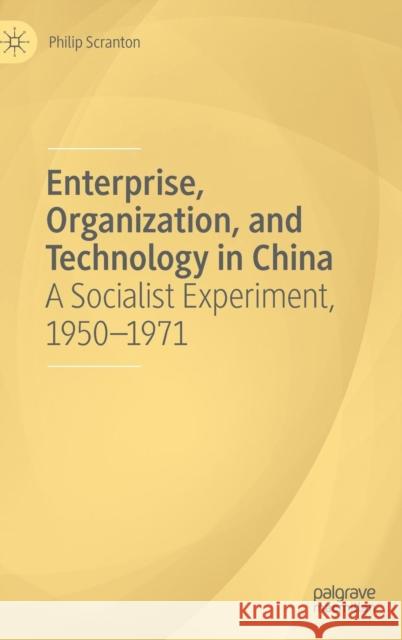
Philip Scranton
Enterprise, Organization, and Technology in China: A Socialist Experiment, 1950-1971 Scranton, Philip 9783030003975 Palgrave Macmillan - książkaWidoczna okładka, to zdjęcie poglądowe, a rzeczywista szata graficzna może różnić się od prezentowanej.

Enterprise, Organization, and Technology in China: A Socialist Experiment, 1950-1971

ISBN-13: 9783030003975 / Angielski / Twarda / 2019 / 395 str.

Philip Scranton
cena 201,72 zł
(netto: 192,11 VAT:  5%)

Najniższa cena z 30 dni: 192,74 zł
Termin realizacji zamówienia:
ok. 22 dni roboczych
Bez gwarancji dostawy przed świętami

Darmowa dostawa!

Given the near-silence in technological and business history about post-World War II socialist enterprises, this book gives voice to a generation of Communist China's managers, entrepreneurs, cadres, and workers from the Liberation to the early 1970s. Using recently-opened online archival resources, it details and assesses the course of technical and organizational experimentation at state-owned, cooperative, and private enterprises as the PRC strove to construct a socialist economy through trial-and-error initiatives. Core questions treated are: How did Chinese enterprises operate, evolve, experiment, improvise and adjust during the PRC's first generation? What technological initiatives were crucial to these processes, necessarily developed with limited expertise and thin financial resources? How could constructing "socialism with Chinese characteristics" have helped lay foundations for the post-1980 "Chinese miracle," as the PRC confidently entered the 21 st century while Soviet and Central European socialisms crumbled? And what might current-day Western managers and entrepreneurs learn from Chinese practice and performance a half-century ago?Readers can anticipate a granular, bottom-up analysis of how businesses worked day-to-day in a planned economy, how enterprise practices and technological strategies shifted during the first postwar generation, how managers and technicians emerged after the capitalist exodus, how organizations experimented and adapted, and how the controversies and convulsions of the PRC's early decades fashioned durable technical and organizational capabilities.


Kategorie:
Nauka, Ekonomia i biznes
Kategorie BISAC:
Business & Economics > Production & Operations Management
Business & Economics > Przedsiębiorczość
History > Asia - China
Wydawca:
Palgrave Macmillan
Język:
Angielski
ISBN-13:
9783030003975
Rok wydania:
2019
Wydanie:
2019
Ilość stron:
395
Waga:
0.78 kg
Wymiary:
23.5 x 15.5
Oprawa:
Twarda
Wolumenów:
01
Dodatkowe informacje:
Wydanie ilustrowane

Chapter 1 – Introduction

Part I: Business Practices from Liberation through the Great Stumble, 1949-1961

Chapter 2. Agriculture: Organization for Self-reliance

Chapter 3. Infrastructure as Labor Intensive Development

3.1 Centrally-sponsored Construction, 1950-1957

            3.2  The Organization of State Construction

            3.3 The Small and the Local

            3.4 Cement, Floods, and Infrastructure

Chapter 4. Commerce and Socialist Construction

            4.1 Urban and Rural Commerce in the 1950s

            4.2  Markets and Bending the Rules

            4.3  Commercial Reform, The Great Leap and Communalization

            4.4  Recovery and Creativity

              4.5  Commerce Supports Agriculture

Chapter 5.  Industry: From Trial-and-Error to Technology Reform

            5.1  Managerial Challenges in the Early 1950s

              5.2  Industrial Investments and Industrial Troubles

           5.3  Manufacturing’s Great Leap

           5.4  Technical Reform and Technological Revolution

            5.5  Industry Supporting Agriculture

Part Two: Recovery, Reversal, Resilience: Business Practices, 1962-1971

Chapter 6. Agriculture as the Foundation

            6.1  The Four Modernizations and the Four Magic Wands

            6.2  Upgrading Agriculture By Refocusing Industry

            6.3  Industry Again Supports Agriculture

            6.4  Intensification and Diversification – a Closing Note

Chapter 7.  Infrastructure: Reappraisal and Reorientation

            7.1  Consolidating Railroad Practice

            7.2  Roadbuilding and Maintenance

            7.3  Electrification

            7.4  Design Reform: Confronting Bureaucracy, Building Collaborations

Chapter 8.  Commerce and the Market Surge

            8.1  Rural Commerce in the Adjustment Period

            8.2  Urban Commerce during the Adjustment Period

Chapter 9.  Consolidating Industry

            9.1  Machinery and Heavy Industry

            9.2  Quality and Technical Cooperation

            9.3  Rethinking Metal Trade Management and Practice

            9.4  Specialization and Coordination

            9.5  Workforce Education

            9.6  Light Industry

            9.7  Handicrafts

            9.8  Consolidation and Advance in Machine Tools

Chapter 10.  Business Practice and the Cultural Revolution

            10.1 Manufacturing

            10.2  Views From Afar

               10.3 Agriculture and Rural Industry

            10.4  Commerce

10. 5  Infrastructure

            10.6  Moving On

Chapter 11. Afterword


Philip Scranton is Board of Governors Professor Emeritus, History of Industry and Technology, at Rutgers University. His publications include eighteen books and over eighty scholarly articles.


Given the near-silence in technological and business history about post-World War II socialist enterprises, this book gives voice to a generation of Communist China’s managers, entrepreneurs, cadres, and workers from the Liberation to the early 1970s. Using recently-opened online archival resources, it details and assesses the course of technical and organizational experimentation at state-owned, cooperative, and private enterprises as the PRC strove to construct a socialist economy through trial-and-error initiatives. Core questions treated are: How did Chinese enterprises operate, evolve, experiment, improvise and adjust during the PRC’s first generation? What technological initiatives were crucial to these processes, necessarily developed with limited expertise and thin financial resources? How could constructing “socialism with Chinese characteristics” have helped lay foundations for the post-1980 “Chinese miracle,” as the PRC confidently entered the 21st century while Soviet and Central European socialisms crumbled? And what might current-day Western managers and entrepreneurs learn from Chinese practice and performance a half-century ago? 

Readers can anticipate a granular, bottom-up analysis of how businesses worked day-to-day in a planned economy, how enterprise practices and technological strategies shifted during the first postwar generation, how managers and technicians emerged after the capitalist exodus, how organizations experimented and adapted, and how the controversies and convulsions of the PRC’s early decades fashioned durable technical and organizational capabilities. 


Scranton, Philip Philip Scranton is University Board of Governors P... więcej >


Udostępnij

Facebook - konto krainaksiazek.pl


Opinie o Krainaksiazek.pl na Opineo.pl

Partner Mybenefit

Krainaksiazek.pl w programie rzetelna firma Krainaksiaze.pl - płatności przez paypal

Czytaj nas na:

Facebook - krainaksiazek.pl
  • książki na zamówienie
  • granty
  • książka na prezent
  • kontakt
  • pomoc
  • opinie
  • regulamin
  • polityka prywatności

Zobacz:

  • Księgarnia czeska

  • Wydawnictwo Książkowe Klimaty

1997-2025 DolnySlask.com Agencja Internetowa

© 1997-2022 krainaksiazek.pl
     
KONTAKT | REGULAMIN | POLITYKA PRYWATNOŚCI | USTAWIENIA PRYWATNOŚCI
Zobacz: Księgarnia Czeska | Wydawnictwo Książkowe Klimaty | Mapa strony | Lista autorów
KrainaKsiazek.PL - Księgarnia Internetowa

Polityka prywatnosci - link
Krainaksiazek.pl - płatnośc Przelewy24
Przechowalnia Przechowalnia




