The West Bank Survey from Faras to Gemai: 3. Sites of Christian Age » książka





The West Bank Survey from Faras to Gemai: 3. Sites of Christian Age
ISBN-13: 9781841718606 / Angielski / Miękka / 2005 / 202 str.
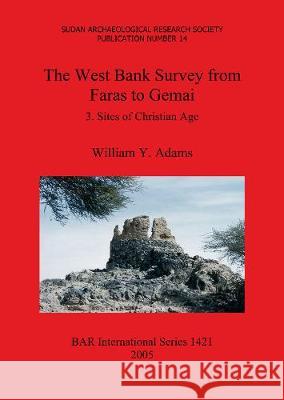
This second volume in a series publishing the results of the UNESCO-Sudan Antiquities Service Survey in northern Sudan, ahead of the flooding of the area by the Aswan High Dam, focuses on the Christian Nubian period sites dating to between AD580 and 1500. The sites are divided into site types: churches, fortifications, habitation sites, industrial and commerical sites, and mortuary sites. Within these, the sites are arranged in terms of their location from north to south, and include a description of the site and a list of finds. These finds, both pottery and other (including objects made from glass, metal, stone, ivory, shell, and leather), are discussed in more detail in subsequent chapters. The first volume to be published (by BAR in 2004) dealt with the Meroitic and Ballana phase sites. Future volumes will describe sites from the earlier, pre-Pharaonic and Pharaonic phases.
Sudan Archaeological Research Society, Publication Number 14This is the second in a series of volumes detailing the results of an archaeological survey carried out in the most northerly part of the Sudan, between 1960 and 1965. The present volume deals exclusively with sites dating from the Christian Nubian period, between approximately AD 580 and 1500. In brief, the survey covered an area on the west bank of the Nile extending from Faras, on the Egyptian border, to the village of Gemai, 62km to the south. Also included within the survey area were all of the islands of the Second Cataract to the west of the main Nile channel - more than 20 islands in all. This volume contains chapters dealing with each of the major site types, viz: churches, fortifications, habitation sites, industrial and miscellaneous sites, and mortuary sites. The description of each site is followed by an abbreviated listing of all the registered finds from that site. More detailed discussion and illustration of the artifactual finds from all the sites is reserved for two chapters following the site descriptions. A final chapter considers what the West Bank Survey has contributed to our understanding of the history and culture of Christian Nubia.




Czytaj nas na:
KrainaKsiazek.PL - Księgarnia Internetowa


