Polish Film and the Holocaust: Politics and Memory » książka





Polish Film and the Holocaust: Politics and Memory
ISBN-13: 9781782384960 / Angielski / Miękka / 2014 / 288 str.
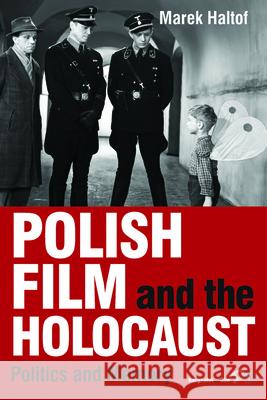
Polish Film and the Holocaust: Politics and Memory
ISBN-13: 9781782384960 / Angielski / Miękka / 2014 / 288 str.
(netto: 130,37 VAT: 5%)
Najniższa cena z 30 dni: 135,22
ok. 22 dni roboczych.
Darmowa dostawa!
During World War II Poland lost more than six million people, including about three million Polish Jews who perished in the ghettos and extermination camps built by Nazi Germany in occupied Polish territories. This book is the first to address the representation of the Holocaust in Polish film and does so through a detailed treatment of several films, which the author frames in relation to the political, ideological, and cultural contexts of the times in which they were created. Following the chronological development of Polish Holocaust films, the book begins with two early classics: Wanda Jakubowska's The Last Stage (1948) and Aleksander Ford's Border Street (1949), and next explores the Polish School period, represented by Andrzej Wajda's A Generation (1955) and Andrzej Munk's The Passenger (1963). Between 1965 and 1980 there was an "organized silence" regarding sensitive Polish-Jewish relations resulting in only a few relevant films until the return of democracy in 1989 when an increasing number were made, among them Krzysztof Kieślowski's Decalogue 8 (1988), Andrzej Wajda's Korczak (1990), Jan Jakub Kolski's Keep Away from the Window (2000), and Roman Polański's The Pianist (2002). An important contribution to film studies, this book has wider relevance in addressing the issue of Poland's national memory.
During World War II Poland lost more than six million people, including about three million Polish Jews who perished in the ghettos and extermination camps built by Nazi Germany in occupied Polish territories. This book is the first to address the representation of the Holocaust in Polish film and does so through a detailed treatment of several films, which the author frames in relation to the political, ideological, and cultural contexts of the times in which they were created. Following the chronological development of Polish Holocaust films, the book begins with two early classics: Wanda Jakubowskas The Last Stage (1948) and Aleksander Fords Border Street (1949), and next explores the Polish School period, represented by Andrzej Wajdas A Generation (1955) and Andrzej Munks The Passenger (1963). Between 1965 and 1980 there was an "organized silence" regarding sensitive Polish-Jewish relations resulting in only a few relevant films until the return of democracy in 1989 when an increasing number were made, among them Krzysztof Kieślowskis Decalogue 8 (1988), Andrzej Wajdas Korczak (1990), Jan Jakub Kolskis Keep Away from the Window (2000), and Roman Polańskis The Pianist (2002). An important contribution to film studies, this book has wider relevance in addressing the issue of Polands national memory.




Czytaj nas na:
KrainaKsiazek.PL - Księgarnia Internetowa


