The Governance Revolution: What Every Board Member Needs to Know, Now! » książka





The Governance Revolution: What Every Board Member Needs to Know, Now!
ISBN-13: 9781547416448 / Angielski / Miękka / 2018 / 316 str.
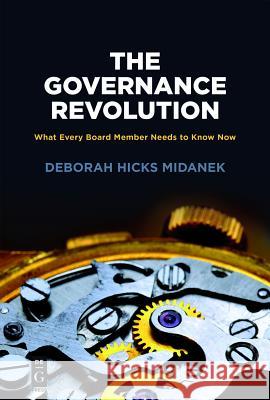
The Governance Revolution: What Every Board Member Needs to Know, Now!
ISBN-13: 9781547416448 / Angielski / Miękka / 2018 / 316 str.
(netto: 193,41 VAT: 5%)
Najniższa cena z 30 dni: 193,69
ok. 16-18 dni roboczych.
Darmowa dostawa!
The Governance Revolution is a must-read for any current or aspiring corporate director. Deborah Hicks Midanek has created an eminently readable, incredibly pragmatic, and extremely valuable playbook for corporate directors. This is the one book every director should read to gain a better understanding of the current corporate governance revolution!
Harvey Pitt, CEO, Kalorama Partners, LLC; Former Chairman, United States Securities & Exchange Commission
Moving our corporations toward sustainable business practice requires that boards of directors stand and deliver. This powerful book is ideal for every director and member of senior leadership who wants to make a difference.
Halla Tomasdottir, CEO, The B Team
This is truly brilliant. Frankly I opened it with a sense of obligation to skim, but that did not last. I read the whole thing word for word. The scope is breathtaking. It is well researched, exhaustive and deeply thoughtful. Frankly I was expecting a modest "how to" and instead got a definitive history. Congratulations!
Robert J. Rosenberg, retired partner and co-chair of Insolvency Practice Group at Latham & Watkins LLP; frequent independent director
I'm still reading the book and I have to say WOW. Most of us take some facts and surround them each by 1000+ words. You take a fact and add two more to make a sentence. I've rarely seen such an information packed book. I've been a non-executive director and trustee of various companies/charities but this is opening my eyes to all the things that directors forget or get steered away from.
Stefan Drew, Author, Futurist, Director, Marketing Magician Enterprises, Ltd
A thorough and thought-provoking consideration of the role of the board in modern business, and why we ought to be talking more about it. With mix of research, legal insight and personal example, Midanek demonstrates not only how boards ought to function, but how more thoughtful approaches to governance can and should restore business to a more sustainable and trusted force in society. I wish I'd had this book in business school!
Michele Miller, Author & Television Writer, The Underwriting
Ms. Midanek combines historical research, personal experience, and current debates in a compelling read. Her book provides context for many of today's discussions about the role of corporations and who's in charge.
Gwen Finegan, Board Member and Strategic Advisor to Health Care Systems
This book has opened my eyes to many important concepts, and confirmed my beliefs about others. While much of the material may not be new, I think it is both new and important to see these ideas written down. Never have these principles been so important for people to understand. While the ideas can be complex, they are explained in human terms. I like this book!
Chantha Nguon, Executive Director, Stung Treng Women's Development Center, Cambodia
Drawing on her encyclopedic knowledge of business history and decades of practical experience inside corporate boardrooms, Deborah brilliantly illuminates and breathes life into dry and dusty concepts like fiduciary duties, maximizing shareholder value, and exercising reasoned business judgment. Deborah encourages corporate directors to flex their collective corporate governance muscles to enthusiastically participate in building robust businesses that serve and reward every constituency today and lay foundations of opportunity for future generations.
Peter A. Chapman, Publisher, Beard Group, Inc.
This book is a must-read not only for current and prospective directors but for anyone who wants to understand the concept of corporations and the way in which they are and should be managed. Bravo to this author who dives into the real heart of how we arrived at corporate America as it exists today and the right path to righting our ship! She has gone in depth to the complexities of the relationships between shareholders, management and directors and has explained it so that a general readership can understand. This book is enlightening, provocative and fun!
John L. Cook Esq., Cofounder & Partner (Ret.), Cook, Barkett, Ponder & Wolz, L.C.
The author is an anthropologist who brings back great stories of that weird tribe of corporate directors; she describes boardroom cultures, often dysfunctional, and shows us how to move and improve them. She is a social psychologist, alert to examples of conformity pressures, groupthink, and emergent leadership in board meetings. She is an economist, bringing the interests of creditors, stockholders, and customers into board deliberations. Her voice is personable and inviting; the experience and examples in this book can encourage seminar discussions across the social sciences.
Clark R. McCauley, Jr., Research Professor of Psychology, Bryn Mawr College; Founding Editor Emeritus, Dynamics of Asymmetric Conflict; Co-Director, Solomon Asch Center for Study of Ethnopolitical Conflict
Ms. Midanek's book has not only helped me as the CEO understand how better to use my board, but it will be required reading for all members of the board and senior management. Board members who can challenge, collaboratively, are the best board members a CEO can have; they promote useful discussion, new ideas, and are generally more supportive of the process. A board member who believes he or she is the smartest person in the room, however, will spew the most irrelevant anecdote, be the worst listener, and the least productive. This book provides useful perspective to help all of them to work better as a group in service to the company.
Darren Latimer, Chief Executive Officer, Stonegate Capital Holdings
By tracing how corporations and their boards have evolved, Ms. Midanek provides a unique historical perspective on the role of corporations in society going back to the trading companies in the Netherlands and Britain in the 17th century. This well-written history is a valuable read for business and law students and teachers as well as for today's officers and directors and their advisors.
Lewis H. Lazarus, Partner, Morris James
"All directors want to help the companies they serve to flourish," writes Deborah Hicks Midanek in her valuable book. Drawing on her store of boardroom experience, this specialist in how boards of directors think and act tackles the big questions such as "Who owns the company?"
James Kristie, Editor-in-Chief and Associate Publisher, Directors & Boards, Retired
The Governance Revolution is a must read for board members and risk and legal professionals advising boards. Deborah Midanek makes the case for a new look at the purpose of corporations and the need for long term perspectives...something sorely missing today. This book will help you in your board
service.
Catherine Allen, Chairman and CEO, The Santa Fe Group; a multi-board director and 2018 NACD Directorship Honoree
The release of this publication could not be more timely or on point. Directors face more challenges and exposure than they ever have. This book is extremely informative and a tremendous resource tool for directors especially those that are independent. Kudos to Ms. Midanek for having the insight and tenacity to write this book.
Trey Monsour, Esq., Shareholder, Polsinelli, PC
Part I: The System and How It Came To Be 1
Chapter 1: How Our Governance System Began 3
The First Limited Liability Corporation 3
Amsterdam Stock Exchange Established to List VOC Securities 4
VOC Completes Initial Public Offering, Possibly World’s First 4
The Governance of VOC Establishes the Model 5
The Lords Seventeen Governance Structure Drawn from Guild
System 5
VOC Confronts a Large Activist Shareholder 6
. . . And a Bear Syndicate 6
The Corporate Form Advances and Spreads—And with It, the Board 7
Corporations Arrived in the New World 8
And Bubbles Burst 9
Chapter 2: The Emergence of the Corporation in United States 11
New York Pioneers Simple Incorporation Procedure 11
Boston Manufacturing Company is First Private Corporation in United
States 12
Corporations Gain Power Under State Control 13
Economic Opportunity Expands; Farmers and Artisans Suffer
Disruption 14
Corporate Control is Concentrated 15
How J.D. Rockefeller Went from Rags to Riches 15
The Government Fights Back, Kind Of 16
Early Days of the New York Stock Exchange 17
Teddy Busts the Trusts 19
Government Power Takes on Commercial Power: Teddy v J.P. 19
Unintended Consequences Lead to More Antitrust Laws 20
Chapter 3: Post–World War I Developments 23
The Stock Market Crashes 23
The Great Depression and FDR’s New Deal 23
Safety Net for Banks Created 24
Regulation of Securities and Securities Markets Takes Root 25
Safety Net Extended to Citizens as Social Security is Born 25
Frustration Sets in as Unemployment Persists 26
Government and Business Mobilize for World War II 27
Roosevelt and Business Create Formidable Alliance 27
Solidarity Works Miracles 28
Wartime Success Reaches Far Beyond Battlefields 29
Chapter 4: The Glow Following World War II 31
The 1950s Board Role 31
Stock Market Investing is Patriotic Duty 32
The Nifty Fifty Catches On 33
Investor Relations Become a Corporate Function 34
Chapter 5: Shifting Dynamics from 1970 to 2000 35
Agency Theory is Born 35
The Stock Market Corrects 36
Outrage over the Wreck of Penn Central Fuels New Focus on Board
Role 36
Broad Corruption Revealed Leads to Focus on Governance Per Se 37
The Board as Overseer Takes Root as Independent Directors Become
Desirable 38
The Definition of Independence Proves Elusive; We Know It When We
See It 38
The 1980s Board Role: The Board Becomes Important 39
Mighty Institutional Investors Weigh In 40
The Courts Recognize Independent Judgment of the Board as Mission
Critical 41
Economic Uncertainty and Social Unrest Reduce American
Confidence 42
Market Crashes on Black Monday 42
Changing Market Forces Become Visible 43
NYSE Establishes Safeguards 43
The 1990s Board: Independence Criteria Tighten as Equity Linked
Compensation Grows 44
True Independence Grows in Value 45
Equity Linked Compensation Creates Moral Hazard 46
Independence of Mind Needs Help from Independence of
Process 46
Revolving CEOs 47
Chapter 6: Post 2000 Intensification of Focus on the Board 49
Corruption Eruption Leads to Sarbanes Oxley and Growing Focus on
Board 50
The Functioning of the Board of Directors Gains Attention 52
Sarbanes-Oxley Act 54
Part II: The Players and Capital Market Forces 59
Chapter 7: The Rise of Independent/Disinterested Directors 61
Considering Independent Director Effectiveness 61
Dueling Definitions 62
New York Stock Exchange Listing Requirements Stress Independence of
Directors 62
Independent Directors Fill a Structural and Legal Need 66
Chapter 8: The Rise of Institutional Investors 69
Mutual Fund Development 69
Comments from Mutual Fund Leader John C. Bogle 71
The Growth of Passive Investing 74
The Defined Benefit Pension Plan Grows 75
Employee Retirement Income Security Act of 1974 (ERISA) Strengthens
Pension Rules 76
The Defined Benefit Pension Plan Declines 77
Retirement Assets Shift into Mutual Funds 78
Public Sector Pension Plans 78
The Growing Pension Crisis 79
Investing by Public and Private Plan Fiduciaries 80
Shifting Patterns of Share Ownership in United States 82
The Perils and Possibilities of Concentrated Share Ownership 83
The Rise of Proxy Advisor Power 84
Proxy Advisors Helped Interpret High Volume of Information 85
Responsible Voting of Proxies in Best Interests of Clients
Required 85
Proxy Advisors Take Heed: Physician, Heal Thyself 86
Chapter 9: The Impact of The Great Inflation 89
The Seeds of the Great Inflation Are Sown by the Fateful Phillips
Curve 89
Our Economy Fights Another War, on Several Fronts 91
Employment v. Inflation 91
Federal Reserve Chairman Volcker Toughs It Out 92
Impact of Prolonged Inflation on Capital Market Innovation 94
Securitization Solves a Genuine Problem, and Turns the World Upside
Down 94
Not Your Daddy’s Trading Floor 95
Interest Rate Arbitrage Comes of Age with the Swap Market 96
Chapter 10: Mortgage Backed Securities and Structured Products
Conundrums 99
Using Securitization Techniques, the Sky Was the Limit—Or Maybe
Not 100
The Mortgage Derivative Market Implodes 101
Hark, Securitization of Sub Prime Mortgages Begins 101
Earnings as Defined by Generally Accepted Accounting Principles May
Not Create Cash 102
Sub Prime Industry Almost Died in 1998 103
Public Policy Starts the Subprime Cycle Again 103
Repeal of Glass Steagall Act Allows Commercial Banks and Investment
Banks to Compete 104
And We Pushed Ourselves into the Abyss 105
Low Interest Rates Fuel Frenzies in Multiple Arenas 105
Collateralized Debt Obligations Explode, In More Ways Than
One 106
The Abyss Itself 106
Multiple Financial Institutions Fail 107
And WaMu, Too, Bites the Dust 108
Chapter 11: The Aftermath of the Abyss 111
Chapter 12: The Rise of Leveraged Buyouts, High Yield Bonds, and Private
Equity Investment 113
No Longer Your Granddaddy’s Way to Buy a Company 113
The Venture Capital Firm is Born 114
The Private Equity Fund is Born 114
The Leveraged Buy Out Arrives 115
Pension Plans Buy in to Private Equity Investing 116
The Hostile Takeover Epidemic 117
The Role of Michael Milken 117
Milken Flexes His Funding Muscles 118
Corporate Titans Are Shaken by an Upstart 119
The Government Fights Back—For Real 119
Giuliani Plays Hardball with RICO Threat 120
Milken Pleads, and NOT to Engaging in Insider Trading 121
And Drexel Fails 122
And Restructures Its Own Board of Directors 122
Lasting Impact of Milken and Drexel Burnham 123
Private Equity Goes Public 123
Chapter 13: The Rise of Hedge Funds and Emergence of Aggressive
Activism 125
Hedge Funds Remain Largely Opaque and Unregulated 125
Hedge Funds Emerge as Activists 126
Traditional Institutional Investors Join the Fray 127
The Current Impact of Activism 128
Voting Results on Shareholder Proposals 129
Chapter 14: The Evolution of the New York Stock Exchange 131
Part III: The Role of The Board 133
Chapter 15: Clarifying the Rights and Roles of the Board and the
Shareholders 137
The Board Serves the Corporation as Its Agent 138
The Powers of the Board 139
Public Company Ownership 140
Functional Principles of the Board 141
Accountability of the Board 143
Defining Board Success 143
The Purpose of the Corporation Project 145
Short Termism Really Is a Problem 146
Chapter 16: Assessing the Proliferating Policies and Principles 149
OECD Encourages Adoption of National Codes of Governance 150
Other Voices Join in 150
Chapter 17: Considering the Proposed New Paradigm 153
Summary Roadmap for the New Paradigm 153
The New Paradigm Attempts a Synthesis of Good Corporate Governance
Concepts 155
Proposed Investor Behavior 158
New Paradigm Proposes Integrated Long-Term Investment Approach 159
Proposed Integration of Citizenship Matters into Investment
Strategy 159
Proposed Disclosure of Investor Policies and Preference 160
And Now Comes CIRCA, Council for Investor Rights and Corporate
Accountability 161
Activist Playbook 162
Proxy Fights and Shareholder Candidates 163
The Bower and Paine Analysis of Maximizing Shareholder Value as
Corporate Goal 163
The Dangers of Agency Theory 165
Part IV: Doing the Job 169
Boards Must Protect Corporation Regardless of Conflicting Agendas 169
Chapter 18: Review Issues for Boards to Address Highlighted by NYSE 171
Executing the Work of the Board 173
Chapter 19: Establish the Appropriate “Tone at the Top” 175
Relentless Focus on Ethical Behavior and Discerning the Right Thing to
Do 178
Training as to What Ethical Behavior Means is Important in Our
Changing World 179
Ensure Reports on Compliance are Made Directly to the Board
Periodically 179
Chapter 20: Choose the CEO Wisely and Actively Plan for Succession 181
Keep the Emergency Succession Plan Current 181
Build a Future View of Company Needs into Longer Term Succession
Planning 182
Setting Criteria and Developing Possible Candidates 182
Work with the Incumbent 183
Know Your Senior Management Team 184
Chapter 21: Develop a Strong Organizational Framework 187
Chapter 22: Tailor Board Work to the Company 189
Board Leadership 189
Committee Structure 190
Audit Committee 192
Compensation Committee 194
Nominating and Corporate Governance Committee 195
Other Committees 196
Special Committees 196
Special Negotiation Committee 196
Special Litigation Committee 197
Special Investigation Committee 197
Board Information 198
Information Security 198
Collegiality 199
Manage Communication Mindfully 199
Executive Session 201
Meeting with Management 201
Setting the Agenda 202
Facilitate Candid Communication and Trusting Relationships 202
In Crisis the Buck Stops with the Board 203
No Time to Resign 204
Chapter 23: Focus Intently on Compensation 205
Executive Compensation 205
Fairly Compensate Directors 205
Chapter 24: Seek Wisdom, Courage and Breadth of Experience in Director
Recruitment 207
Get the Right Mix of Directors in the Boardroom 208
Value Tempered Judgment over Technical Expertise 2108
Chapter 25: Actively Evaluate Board Performance to Constantly
Improve 213
Developing the Process 213
Chapter 26: Manage Risk Effectively 217
Further Comments on the Board and Cybersecurity 220
Never Underestimate the Impact of Human Error 221
Importance of Plans 221
Chapter 27: Independently Evaluate the Impact and Execution of
Transactions 223
Chapter 28: Communicate Clearly, Consistently and Constantly 225
Part V: Hazards and Their Navigation 229
Chapter 29: Address Individual Hazards and Personal Fear 231
Liability Concerns 231
Efforts to Insulate Directors 232
Directors and Candidates Should Understand the Protections They
Have 234
Beware the Responsible Corporate Officer Doctrine 234
Chapter 30: Navigate Corporate Hazards and Distressed Situations 237
Liquidity: What to Do When Cash Runs Low 238
Form a Board Committee to Focus Closely on the Emergency 238
Is This Really a Role for the Board? 240
The Corporation Is Counsel’s Client; The Board Retains Counsel 241
The Next Step: Assess Viability 241
Bringing in Help 244
Assessing Leadership Resources 245
Structuring the Leadership Role 245
Communicate the Plan, and the Progress 246
Just Do It 247
Appreciation of the Effort Put in Goes a Long Way 248
Yes, Virginia, You Did Sign Up for This 248
Becoming the Debtor in Possession 248
Chapter 31: Recognize and Rectify Hazards of Board Process 251
Continuing Confusion as to Responsibility and Authority 251
Group Think 252
Faulty Filters 252
Corporate Myths 253
Conformity Pressure 253
The State Dinner 254
Bullying 254
Chapter 32: Know that Steady, Purposeful Work is the Antidote 255
Reading the Room 255
Preparing 256
Owning Your Style 256
Finding Your Point of View—and Theirs 256
Leading with Your Ears 257
Addressing Biases 257
Overconfidence 258
Confirmation Bias 258
Survival Bias 259
Attribution Bias 259
Building a Championship Team 260
Dissent is Not Disloyalty 261
Building a Portfolio of Roles 261
Chapter 33: Survive Success and Relentlessly Build Resilience 263
Conclusion: Own the Role and Build the Future 267
Index 269
Deborah Hicks Midanek, Principal, Prevail Investments, LLC; Vice Chairman & Independent Director, Innovate MS., USA




Czytaj nas na:
1997-2026 DolnySlask.com Agencja Internetowa
KrainaKsiazek.PL - Księgarnia Internetowa


