• Wyszukiwanie zaawansowane
  • Kategorie
  • Kategorie BISAC
  • Książki na zamówienie
  • Promocje
  • Granty
  • Książka na prezent
  • Opinie
  • Pomoc
  • Załóż konto
  • Zaloguj się

Endogenous Stem Cell-Based Brain Remodeling in Mammals » książka


zaloguj się | załóż konto
Logo Krainaksiazek.pl

koszyk

konto

szukaj
topmenu
Księgarnia internetowa
Szukaj
Książki na zamówienie
Promocje
Granty
Książka na prezent
Moje konto
Pomoc
 
 
Wyszukiwanie zaawansowane
Pusty koszyk
Bezpłatna dostawa dla zamówień powyżej 20 złBezpłatna dostawa dla zamówień powyżej 20 zł

Kategorie główne

• Nauka
 [2952079]
• Literatura piękna
 [1850969]

  więcej...
• Turystyka
 [71058]
• Informatyka
 [151066]
• Komiksy
 [35579]
• Encyklopedie
 [23181]
• Dziecięca
 [620496]
• Hobby
 [139036]
• AudioBooki
 [1646]
• Literatura faktu
 [228729]
• Muzyka CD
 [379]
• Słowniki
 [2932]
• Inne
 [445708]
• Kalendarze
 [1409]
• Podręczniki
 [164793]
• Poradniki
 [480107]
• Religia
 [510956]
• Czasopisma
 [511]
• Sport
 [61267]
• Sztuka
 [243299]
• CD, DVD, Video
 [3411]
• Technologie
 [219640]
• Zdrowie
 [100984]
• Książkowe Klimaty
 [124]
• Zabawki
 [2281]
• Puzzle, gry
 [3363]
• Literatura w języku ukraińskim
 [258]
• Art. papiernicze i szkolne
 [8020]
Kategorie szczegółowe BISAC

Endogenous Stem Cell-Based Brain Remodeling in Mammals

ISBN-13: 9781489973986 / Angielski / Twarda / 2014 / 230 str.
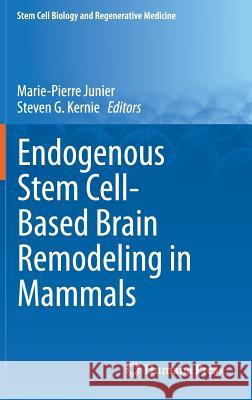
Marie-Pierre Junier; Steven G. Kernie
Endogenous Stem Cell-Based Brain Remodeling in Mammals Marie-Pierre Junier Steven G. Kernie 9781489973986 Springer - książkaWidoczna okładka, to zdjęcie poglądowe, a rzeczywista szata graficzna może różnić się od prezentowanej.

Endogenous Stem Cell-Based Brain Remodeling in Mammals

ISBN-13: 9781489973986 / Angielski / Twarda / 2014 / 230 str.

Marie-Pierre Junier; Steven G. Kernie
cena 605,23
(netto: 576,41 VAT:  5%)

Najniższa cena z 30 dni: 578,30
Termin realizacji zamówienia:
ok. 22 dni roboczych
Dostawa w 2026 r.

Darmowa dostawa!

This text highlights the endogenous regenerative potential of the central nervous system in neonates and juveniles and discusses possible ways it might be manipulated for medical purposes. The first section provides a descriptive summary of the salient steps of human brain development with a discussion of comparisons with other mammalian brains. It also provides a historical perspective on our understanding of ongoing brain development throughout the lifespan and serve to introduce the concept of brain plasticity following injury. The second part is devoted to the endogenous reparative potential of the brain, including its limitations, and articles focusing on defined pathologies (e.g. anoxia/hypoxia, epilepsy, traumatic brain injury and stress) in animal models and in humans pinpoint eventual ways these pathologies might be manipulated. The third and final focuses on the "dark side" of stem cells for brain repair or of the manipulation of spontaneous adaptive events after injury (e.g. genomic instability, sensitization to cancerous transformation and defective neural networks).


Kategorie:
Nauka, Biologia i przyroda
Kategorie BISAC:
Science > Cytologia
Science > Biologia molekularna
Medical > Neuroscience
Wydawca:
Springer
Seria wydawnicza:
Stem Cell Biology and Regenerative Medicine
Język:
Angielski
ISBN-13:
9781489973986
Rok wydania:
2014
Wydanie:
2014
Numer serii:
000371542
Ilość stron:
230
Waga:
0.48 kg
Wymiary:
16.0 x 24.3 x 1.4
Oprawa:
Twarda
Wolumenów:
01
Dodatkowe informacje:
Bibliografia
Wydanie ilustrowane

From the book reviews:

"A book of interest to researchers studying neurogenesis and regeneration and repair of the nervous tissue after injury. For neurologists, neurosurgeons and biologists." (Pediatric Endocrinology Reviews (PER), Vol. 12 (1), September, 2014)

.-1 Introduction

.-Marie-Pierre Junier, Steven G. Kernie

.-2 Structural Plasticity in Adult Nervous System: A Historic Perspective

.-Constantino Sotelo, Isabelle Dusart

.-3 Impact of Injured Tissue on Stem Cell Fate

.-Bobbi Fleiss, Vibol Chhor, Luigi Titomanlio, Stephane Auvin, Olivier Baud, Pierre Gressens

.-4 Role of Neural Stem and Progenitor Cells in the Adaptation of the Brain to Injury

.-Sue Hong, Tzong-Shiue Yu, Steven G. Kernie

.-5 Role of Adult Neurogenesis in Seizure-Induced Hippocampal Remodeling and Epilepsy

.-Alison L. Althaus, Jack M. Parent

.-6 Neurogenesis and Gliogenesis in the Postnatal Hypothalamus: a new level of plasticity for the regulation of hypothalamic function?

.-Ariane Sharif, Sergio R. Ojeda, Vincent Prevot

.-7 Regenerative Potential of NG2 Cells

.-Jean-Marie Mangin

.-8 Oligodendrocyte Progenitors and Brain Remodeling Following Blood Brain Barrier Rupture

.-Praveen Ballabh

.-9 Genomic Integrity of Embryonic and Neural Stem Cells

.-Nathalie Lefort, Marc Peschanski

.-10 Links Between Injury-Induced Brain Remodeling and Oncogenesis?

.-Marie-Pierre Junier, Elias A. El-Habr

Dr. Steven G. Kernie is an Associate Professor of Pediatrics and Pathology & Cell Biology at Columbia University in New York and Chief of Critical Care Medicine at Morgan Stanley Children’s Hospital at Columbia University Medical Center. His laboratory is interested in how the brain repairs itself following injury. The presence of adult neural stem and progenitor cells in the mammalian brain has awakened new interest and optimism in potential treatment for a variety of acquired brain disorders. The Kernie lab is investigating how adult neural stem and progenitor cells participate in injury-induced remodeling and in identifying genes and drugs that might be important in augmenting their contribution. In order to do this, they have generated a variety of transgenic mice that allow for temporally controlled alterations in the endogenous stem cell population in order to optimize the post-injury remodeling that occurs.

Dr. Marie-Pierre Junier is Research Director at Inserm and co-PI of team Glial Plasticity for the Center of Research Neuroscience Paris Seine at the University Pierre et Marie Curie. Her team showed the permissiveness of astrocytes to re-programming into immature states akin to neural progenitors or neural stem cells. It further demonstrated that these plastic capabilities of astrocytes sensitize them to cancerous transformation. The team is now using cancer stem cells isolated from human adult and pediatric gliomas to understand their differences from normal human neural stem cells. Combining proteomic, metabolic and epigenetic approaches, the team aims at developing new therapeutic strategies against these devastating cancers.

This book uses the juvenile mammalian brain as a starting point to describe how different injury mechanisms influence neuronal and glial progenitor response to injury, and how in certain circumstances, these cells might play adaptive or harmful roles in recovery.  It also provides an overview of emerging concepts in progenitor biology and how current understanding of the processes regulating these cells has tempered some of the initial enthusiasm regarding their therapeutic potential. Only recently has significant effort been devoted to the study of late neurogenesis in mammals, though this interesting phenomenon was first described over fifty years ago.  In many settings, injury accelerates the ongoing neurogenesis now known to occur, and recently described reservoirs of glial progenitors add to the pool of existing reparative possibilities. 

Dr. Steven G. Kernie is an Associate Professor of Pediatrics and Pathology & Cell Biology at Columbia University in New York and Chief of Critical Care Medicine at Morgan Stanley Children’s Hospital at Columbia University Medical Center. His laboratory is interested in how the brain repairs itself following injury. The presence of adult neural stem and progenitor cells in the mammalian brain has awakened new interest and optimism in potential treatment for a variety of acquired brain disorders. The Kernie lab is investigating how adult neural stem and progenitor cells participate in injury-induced remodeling and in identifying genes and drugs that might be important in augmenting their contribution. In order to do this, they have generated a variety of transgenic mice that allow for temporally controlled alterations in the endogenous stem cell population in order to optimize the post-injury remodeling that occurs.

Dr. Marie-Pierre Junier is Research Director at Inserm and co-PI of team Glial Plasticity for the Center of Research Neuroscience Paris Seine at the University Pierre et Marie Curie. Her team showed the permissiveness of astrocytes to re-programming into immature states akin to neural progenitors or neural stem cells. It further demonstrated that these plastic capabilities of astrocytes sensitize them to cancerous transformation. The team is now using cancer stem cells isolated from human adult and pediatric gliomas to understand their differences from normal human neural stem cells. Combining proteomic, metabolic and epigenetic approaches, the team aims at developing new therapeutic strategies against these devastating cancers.


Udostępnij

Facebook - konto krainaksiazek.pl


Opinie o Krainaksiazek.pl na Opineo.pl

Partner Mybenefit

Krainaksiazek.pl w programie rzetelna firma Krainaksiaze.pl - płatności przez paypal

Czytaj nas na:

Facebook - krainaksiazek.pl
  • książki na zamówienie
  • granty
  • książka na prezent
  • kontakt
  • pomoc
  • opinie
  • regulamin
  • polityka prywatności

Zobacz:

  • Księgarnia czeska

  • Wydawnictwo Książkowe Klimaty

1997-2025 DolnySlask.com Agencja Internetowa

© 1997-2022 krainaksiazek.pl
     
KONTAKT | REGULAMIN | POLITYKA PRYWATNOŚCI | USTAWIENIA PRYWATNOŚCI
Zobacz: Księgarnia Czeska | Wydawnictwo Książkowe Klimaty | Mapa strony | Lista autorów
KrainaKsiazek.PL - Księgarnia Internetowa

Polityka prywatnosci - link
Krainaksiazek.pl - płatnośc Przelewy24
Przechowalnia Przechowalnia





