• Wyszukiwanie zaawansowane
  • Kategorie
  • Kategorie BISAC
  • Książki na zamówienie
  • Promocje
  • Granty
  • Książka na prezent
  • Opinie
  • Pomoc
  • Załóż konto
  • Zaloguj się

Gastric Cytoprotection: A Clinician's Guide » książka


zaloguj się | załóż konto
Logo Krainaksiazek.pl

koszyk

konto

szukaj
topmenu
Księgarnia internetowa
Szukaj
Książki na zamówienie
Promocje
Granty
Książka na prezent
Moje konto
Pomoc
 
 
Wyszukiwanie zaawansowane
Pusty koszyk
Bezpłatna dostawa dla zamówień powyżej 20 złBezpłatna dostawa dla zamówień powyżej 20 zł

Kategorie główne

• Nauka
 [2952079]
• Literatura piękna
 [1850969]

  więcej...
• Turystyka
 [71058]
• Informatyka
 [151066]
• Komiksy
 [35579]
• Encyklopedie
 [23181]
• Dziecięca
 [620496]
• Hobby
 [139036]
• AudioBooki
 [1646]
• Literatura faktu
 [228729]
• Muzyka CD
 [379]
• Słowniki
 [2932]
• Inne
 [445708]
• Kalendarze
 [1409]
• Podręczniki
 [164793]
• Poradniki
 [480107]
• Religia
 [510956]
• Czasopisma
 [511]
• Sport
 [61267]
• Sztuka
 [243299]
• CD, DVD, Video
 [3411]
• Technologie
 [219640]
• Zdrowie
 [100984]
• Książkowe Klimaty
 [124]
• Zabawki
 [2281]
• Puzzle, gry
 [3363]
• Literatura w języku ukraińskim
 [258]
• Art. papiernicze i szkolne
 [8020]
Kategorie szczegółowe BISAC

Gastric Cytoprotection: A Clinician's Guide

ISBN-13: 9781468456998 / Angielski / Miękka / 2013 / 220 str.
Daniel Hollander; Andrzej S. Tarnawski
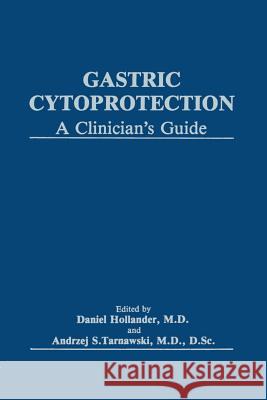
Gastric Cytoprotection: A Clinician's Guide Hollander, Daniel 9781468456998 Springer - książkaWidoczna okładka, to zdjęcie poglądowe, a rzeczywista szata graficzna może różnić się od prezentowanej.

Gastric Cytoprotection: A Clinician's Guide

ISBN-13: 9781468456998 / Angielski / Miękka / 2013 / 220 str.

Daniel Hollander; Andrzej S. Tarnawski
cena 201,24
(netto: 191,66 VAT:  5%)

Najniższa cena z 30 dni: 192,74
Termin realizacji zamówienia:
ok. 22 dni roboczych.

Darmowa dostawa!

Gastric secretions contain hydrogen ions at a concentration that is more than one million times higher than their intracellular concentration. This phenomenal gradient as well as the demonstrated ability of gastric juice to digest tissues has motivated clinicians and investigators alike to emphasize acid secretion and acid ablation in studying the pathogenesis and therapy of peptic ulcer disease. Conse- quently, over the past 150 years, we have made considerable progress in under- standing the mechanisms and regulation of acid secretion by the stomach. Not surprisingly, therapy for both peptic disease and mucosal injury has also been predominantly directed at either neutralizing acid or suppressing its production. During the past 10 years, attention has been focused on factors other than acid in the genesis and therapy of ulcer disease. Work done worldwide demon- strated that acid hypersecretion is not a common event in peptic ulcer disease. Therefore, we began realizing that factors other than acid secretion may be important in the genesis of ulcer disease or in gastroduodenal mucosal damage. In addition, new physiological information has established that the gas- troduodenal mucosa is normally protected by a complex series of events includ- ing mucus and bicarbonate secretion, cell renewal, surface mucosal restitution, and preservation of the microvasculature and mucosal proliferative zone.


Kategorie:
Nauka, Medycyna
Kategorie BISAC:
Medical > Gastroenterologia
Medical > Internal Medicine
Medical > Family & General Practice
Wydawca:
Springer
Język:
Angielski
ISBN-13:
9781468456998
Rok wydania:
2013
Wydanie:
Softcover Repri
Ilość stron:
220
Waga:
0.36 kg
Wymiary:
22.9 x 15.2
Oprawa:
Miękka
Wolumenów:
01
Dodatkowe informacje:
Komentarz
Bibliografia

I. Cytoprotection for the Clinician.- 1 Cytoprotection: Historical Perspective.- 1. Introduction.- 2. Antiulcer Effect without Acid Inhibition.- 3. Direct Cytoprotection.- 4. Differences among Prostaglandins.- 5. Clinical Studies on Cytoprotection.- 6. Adaptive Cytoprotection.- 7. Functional Cytoprotection.- 8. Intestinal Cytoprotection.- 9. Conclusions.- Annotated Bibliography.- 2 Acid Hypersecretion: Important Factor or Innocent Bystander?.- 1. Introduction.- 2. Information Interpreted as Indicating a Connection between Gastric Juice and Duodenal Ulceration.- 2.1. Animal Studies.- 2.2. Human Studies.- 2.3. Response to Treatment.- 2.4. Relationship between Acid and Pepsin in Gastric Juice.- 3. Analysis of the Evidence for the Role of Gastric Secretion in Ulcerogenesis.- 3.1. Animal Studies.- 3.2. Human Studies.- 3.3. Response to Treatment.- 3.4. Relationship between Acid and Pepsin.- 3.5. Heterogeneity.- 3.6. Mucosal Injury.- 4. Association and Causation.- 4.1. Strength of Association.- 4.2. Consistency of Observed Association.- 4.3. Specificity of Association.- 4.4. Temporality.- 4.5. Plausibility and Coherence.- 4.6. Bias.- 4.7. Summary: Relationship between Putative Cause and Disease.- 5. Alternative Etiologic Bases for Duodenal Ulceration.- Annotated Bibliography.- 3 Pathomorphology of Gastric Mucosal Injury.- 1. Functional Morphology of the Gastric Mucosa.- 2. General Consideration of Cell Injury.- 3. Pathogenesis of Reversible and Irreversible Cell Injuries.- 3.1. Ischemia.- 3.2. FreeRadicals.- 3.3. Cellular Signaling System.- 3.4. Cytoskeleton.- 3.5. Calcium as Ultimate Cell Killer.- 4. Gastric Mucosal Injury.- 4.1. Acutelnjury.- 4.2. Chronic Mucosal Injury — Acetic Acid-Induced Ulcers.- 4.3. Stress-Induced Ulcers.- 4.4. Endogenous Prostaglandins, Thromboxanes, Leukotrienes, and Platelet Activating Factor.- 5. Pathogenesis of Gastric Mucosal Injury.- 6. Relevance to Human Pathology.- Annotated Bibliography.- II Defensive Mechanisms of the Stomach.- 4 Mechanisms of Mucosal Protection.- 1. Introduction.- 2. Anatomical Features of Gastroprotection.- 2.1. Cell and Organelle Membrane Permeability.- 2.2. Cell Migration (Restitution) and Division (Regeneration).- 2.3. Microcirculation.- 2.4. Muscle Tone.- 3. Biochemical Processes Relevant to Protection.- 3.1. Mucus and Bicarbonate Secretion.- 3.2. Hydrophobicity of Phospholipids.- 3.3. AcidSecretion.- 3.4. Fluid Flux.- 3.5. Free Radical Scavenging.- 3.6. Release and Action of Enzymes.- 3.7. Release and Action of Vasoactive Substances.- 4. Mechanisms of Action of Major Groups of Protective Agents.- 4.1. Major Chemical Groups.- 4.2. Individual Drugs.- 5. Summary.- Annotated Bibliography.- 5 Mucus Secretion.- 1. The Nature of the Gastroduodenal Mucus Barrier.- 2. Structure of Mucus and Its Mucin Components.- 3. Mucus and Protection against the Endogenous Aggressors.- 3.1. Acid.- 3.2. Pepsin.- 4. Impairment of the Mucus Barrier in Peptic Ulcer Disease.- 5. Mucus and Protection against Exogenous Damaging Agents.- 6. Mucus Secretion, Cytoprotection, Prostaglandins, and Other Antiulcer Agents.- Annotated Bibliography.- 6 Bicarbonate Secretion and the Alkaline Microclimate.- 1. Introduction.- 2. Bicarbonate Secretion.- 2.1. Historical Background.- 2.2. Measurement of Bicarbonate Secretion.- 2.3. Significance of Bicarbonate Secretion.- 2.4. Mechanisms of Bicarbonate Secretion.- 3. Regulation of Gastroduodenal Bicarbonate Secretion.- 4. Effects of Damaging and Protective Agents on the Alkaline Microclimate.- 4.1. Damaging Agents.- 4.2. Protective Agents.- 5. Importance of the Alkaline Microclimate in the Pathogenesis and Treatment of Peptic Ulcer Disease.- Annotated Bibliography.- 7 Epithelial Cell Renewal.- 1. Introduction.- 2. Epithelial Renewal in the Normal Gastrointestinal Tract.- 2.1. Process of Epithelial Renewal.- 2.2. Epithelial Renewal within the Esophagus, Stomach, and Duodenum.- 2.3. Regulation of Epithelial Renewal.- 2.4. Restitution of the Epithelium.- 3. Methods of Studying Epithelial Renewal.- 3.1. Light Microscopy.- 3.2. Radioactive Labeling of Newly Synthesized DNA with Tritiated Thymidine.- 3.3. Measurement of Substances Involved in Cell Growth.- 4. Epithelial Renewal in Disorders of the Esophagus, Stomach, and Duodenum.- 4.1. Esophagus.- 4.2. Stomach and Duodenum.- 5. Relevance of Abnormalities in Epithelial Renewal to Carcinogenesis.- 6. Conclusions: Relevance of Abnormalities in Epithelial Cell Renewal to Cytoprotection.- Annotated Bibliography.- 8 Gastric Blood Flow and Mucosal Defense.- 1. Introduction.- 2. The Gastric Vasculature.- 2.1. General Anatomical Design.- 2.2. Functional Implications.- 3. Physiological Regulation of Mucosal Blood Flow.- 3.1. Basal Flow.- 3.2. Stimulated Flow.- 4. Blood Flow and the Gastric Mucosal Barrier.- 4.1. The Mucosal Barrier.- 4.2. Nonvascular Barrier Components.- 4.3. Role of Blood Flow in Barrier Function.- 4.4. Mucosal Mast Cells.- 5. Blood Flow in Mucosal Pathophysiology.- 5.1. Acid-Dependent Lesions and Blood Flow.- 5.2. Acid-Independent Mucosal Lesions.- 5.3. The Mucosal Homeostat System: A Unifying Hypothesis.- 6. Summary and Conclusions.- Annotated Bibliography.- III. Cytoprotective Therapy.- 9 Cytoprotective Therapy: Prostaglandins.- 1. Introduction.- 2. Evidence for a Role of Prostaglandin in Cytoprotection.- 2.1. Experimental Models.- 2.2. Effects of Modifiers of Arachidonic Acid Metabolism on Mucosal Integrity.- 2.3. Effects of Exogenous Prostaglandins on Mucosal Defense Mechanisms.- 2.4. Postulated Prostaglandin-Related Defects in Duodenal Ulcer Disease.- 3. Therapeutic Effects of Prostaglandins on Acute and Chronic Mucosal Injury in Humans.- 3.1. Aspirin and NSAID-Related Injury.- 3.2. Ethanol-Related Injury.- 3.3. Peptic Ulcer Disease.- 4. Summary.- 5. Future Directions.- Annotated Bibliography.- 10 The Role of Nutrient Essential Fatty Acids in Gastric Mucosal Protection.- 1. Introduction.- 2. Dietary Precursors of Prostanoid Synthesis.- 3. Protective Activity of Dietary Essential Fatty Acids against Acute Injury.- 4. Advantages of Dietary Essential Fatty Acids over Synthetic Prostaglandins.- 5. Mucosal Protective Effect of Chronic Feeding of Dietary Essential Fatty Acids.- 6. Effect of Dietary Essential Fatty Acids on Human Gastric Mucosa.- 7. Dietary Essential Fatty Acids and the Epidemiology of Peptic Ulcer Disease.- 8. Conclusions and Future Directions.- Annotated Bibliography.- 11 Gastroprotection by Nonprostaglandin Substances.- 1. Introduction.- 2. Gastroprotection by Suppression of Release or Action of PAF, Tx, or LT in the Gastric Mucosa.- 3. Endogenous Nonprostaglandin Gastroprotective Substances: Sulfhydryls, EGF, Gastrin, Somatostatin.- 4. Antiulcer Drugs with Gastroprotective Activity: Antacids, Carbenoxolone, Solon, Sucralfate, and Colloidal Bismuth.- 5. Other Nonprostaglandin Gastroprotective Substances: Sulfhydryls, Meciadanol, Certain Inorganic Compounds, Papavarine.- 6. Concluding Remarks.- Annotated Bibliography.


Udostępnij

Facebook - konto krainaksiazek.pl


Opinie o Krainaksiazek.pl na Opineo.pl

Partner Mybenefit

Krainaksiazek.pl w programie rzetelna firma Krainaksiaze.pl - płatności przez paypal

Czytaj nas na:

Facebook - krainaksiazek.pl
  • książki na zamówienie
  • granty
  • książka na prezent
  • kontakt
  • pomoc
  • opinie
  • regulamin
  • polityka prywatności

Zobacz:

  • Księgarnia czeska

  • Wydawnictwo Książkowe Klimaty

1997-2026 DolnySlask.com Agencja Internetowa

© 1997-2022 krainaksiazek.pl
     
KONTAKT | REGULAMIN | POLITYKA PRYWATNOŚCI | USTAWIENIA PRYWATNOŚCI
Zobacz: Księgarnia Czeska | Wydawnictwo Książkowe Klimaty | Mapa strony | Lista autorów
KrainaKsiazek.PL - Księgarnia Internetowa

Polityka prywatnosci - link
Krainaksiazek.pl - płatnośc Przelewy24
Przechowalnia Przechowalnia






