• Wyszukiwanie zaawansowane
  • Kategorie
  • Kategorie BISAC
  • Książki na zamówienie
  • Promocje
  • Granty
  • Książka na prezent
  • Opinie
  • Pomoc
  • Załóż konto
  • Zaloguj się

Against Typological Tyranny in Archaeology: A South American Perspective » książka


zaloguj się | załóż konto
Logo Krainaksiazek.pl

koszyk

konto

szukaj
topmenu
Księgarnia internetowa
Szukaj
Książki na zamówienie
Promocje
Granty
Książka na prezent
Moje konto
Pomoc
 
 
Wyszukiwanie zaawansowane
Pusty koszyk
Bezpłatna dostawa dla zamówień powyżej 20 złBezpłatna dostawa dla zamówień powyżej 20 zł

Kategorie główne

• Nauka
 [2950560]
• Literatura piękna
 [1849509]

  więcej...
• Turystyka
 [71097]
• Informatyka
 [151150]
• Komiksy
 [35848]
• Encyklopedie
 [23178]
• Dziecięca
 [617388]
• Hobby
 [139064]
• AudioBooki
 [1657]
• Literatura faktu
 [228597]
• Muzyka CD
 [383]
• Słowniki
 [2855]
• Inne
 [445295]
• Kalendarze
 [1464]
• Podręczniki
 [167547]
• Poradniki
 [480102]
• Religia
 [510749]
• Czasopisma
 [516]
• Sport
 [61293]
• Sztuka
 [243352]
• CD, DVD, Video
 [3414]
• Technologie
 [219456]
• Zdrowie
 [101002]
• Książkowe Klimaty
 [124]
• Zabawki
 [2311]
• Puzzle, gry
 [3459]
• Literatura w języku ukraińskim
 [254]
• Art. papiernicze i szkolne
 [8079]
Kategorie szczegółowe BISAC

Against Typological Tyranny in Archaeology: A South American Perspective

ISBN-13: 9781461487234 / Angielski / Twarda / 2013 / 236 str.
Cristobal Gnecco; Carl Langebaek
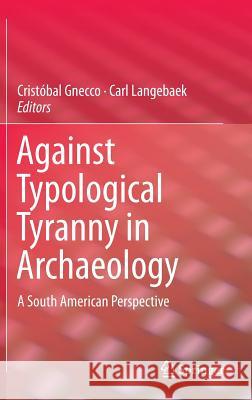
Against Typological Tyranny in Archaeology: A South American Perspective Gnecco, Cristóbal 9781461487234 Springer - książkaWidoczna okładka, to zdjęcie poglądowe, a rzeczywista szata graficzna może różnić się od prezentowanej.

Against Typological Tyranny in Archaeology: A South American Perspective

ISBN-13: 9781461487234 / Angielski / Twarda / 2013 / 236 str.

Cristobal Gnecco; Carl Langebaek
cena 401,58
(netto: 382,46 VAT:  5%)

Najniższa cena z 30 dni: 385,52
Termin realizacji zamówienia:
ok. 22 dni roboczych
Dostawa w 2026 r.

Darmowa dostawa!

The papers in this book question the tyranny of typological thinking in archaeology through case studies from various South American countries (Venezuela, Colombia, Bolivia, Argentina, and Brazil) and Antarctica. They aim to show that typologies are unavoidable (they are, after all, the way to create networks that give meanings to symbols) but that their tyranny can be overcome if they are used from a critical, heuristic and non-prescriptive stance: critical because the complacent attitude towards their tyranny is replaced by a militant stance against it; heuristic because they are used as means to reach alternative and suggestive interpretations but not as ultimate and definite destinies; and non-prescriptive because instead of using them as threads to follow they are rather used as constitutive parts of more complex and connective fabrics. The papers included in the book are diverse in temporal and locational terms. They cover from so called Formative societies in lowland Venezuela to Inca-related ones in Bolivia; from the coastal shell middens of Brazil to the megalithic sculptors of SW Colombia. Yet, the papers are related. They have in common their shared rejection of established, naturalized typologies that constrain the way archaeologists see, forcing their interpretations into well known and predictable conclusions. Their imaginative interpretative proposals flee from the secure comfort of venerable typologies, many suspicious because of their association with colonial political narratives. Instead, the authors propose novel ways of dealing with archaeological data.


Kategorie:
Nauka, Ekonomia i biznes
Kategorie BISAC:
Social Science > Archaeology
Social Science > Antropologia - Kultury
Wydawca:
Springer
Język:
Angielski
ISBN-13:
9781461487234
Rok wydania:
2013
Wydanie:
2014
Ilość stron:
236
Waga:
0.54 kg
Wymiary:
23.37 x 16.0 x 2.03
Oprawa:
Twarda
Wolumenów:
01
Dodatkowe informacje:
Bibliografia
Wydanie ilustrowane

Against typological tyranny. Cristóbal Gnecco and Carl Langebaek.- Social complexity in ancient Amerindian societies: perspectives from the Brazilian lowlands. Cristiana Barreto.- Blind men and an elephant: exchange systems and sociopolitical organizations in the Orinoco basin and neighboring areas in pre-Hispanic times. Rafael Gassón.- Palenques and palisades: a revision of social complexity issues in contact- period eastern Venezuela. Rodrigo Navarrete.- Agricola est quem domus demonstrate. Alejandro Haber.- Social space and the archaeology of inequality: insights into social differences at Ambato valley, southern Andes, Argentina. Andrés Laguens.- Poor chiefs: corporate dimensions of pre-Inca society in the southern Andes. Axel Nielsen.- Against the domain of master narratives: archaeology and Antarctic history. María Ximena Senatore and Andres Zarankin.- Testing a model of site location in the Alto Magdalena, Colombia. Víctor González.- Children of the creeks: cultural characterization of Nasa politics. Wilhelm Londoño.- On hybrids recently unleashed. Cristóbal Gnecco.- The role of place-making in chiefdom societies. Hope Henderson.- Words, things and text: El Infiernito, archaeology, documents and ethnology in the study of Muisca society. Carl Henrik Langebaek.

Cristobal Gnecco is professor in the Department of Anthropology, Universidad del Cauca (Colombia), where he teaches issues related to the political economy of archaeology, discourses on the other, and geopolitics of knowledge.

Carl Langebaek is professor in the Department of Anthropology, Universidad de los Andes (Colombia), where he teaches archaeology and ethnohistory.

The papers in this book question the tyranny of typological thinking in archaeology through case studies from various South American countries (Venezuela, Colombia, Bolivia, Argentina, and Brazil) and Antarctica. They aim to show that typologies are unavoidable (they are, after all, the way to create networks that give meanings to symbols) but that their tyranny can be overcome if they are used from a critical, heuristic and non-prescriptive stance: critical because the complacent attitude towards their tyranny is replaced by a militant stance against it; heuristic because they are used as means to reach alternative and suggestive interpretations but not as ultimate and definite destinies; and non-prescriptive because instead of using them as threads to follow they are rather used as constitutive parts of more complex and connective fabrics. The papers included in the book are diverse in temporal and locational terms. They cover from so called Formative societies in lowland Venezuela to Inca-related ones in Bolivia; from the coastal shell middens of Brazil to the megalithic sculptors of SW Colombia. Yet, the papers are related. They have in common their shared rejection of established, naturalized typologies that constrain the way archaeologists see, forcing their interpretations into well known and predictable conclusions. Their imaginative interpretative proposals flee from the secure comfort of venerable typologies, many suspicious because of their association with colonial political narratives. Instead, the authors propose novel ways of dealing with archaeological data.

Gnecco, Cristobal Juliet E. Morrow is associate professor of anthrop... więcej >


Udostępnij

Facebook - konto krainaksiazek.pl


Opinie o Krainaksiazek.pl na Opineo.pl

Partner Mybenefit

Krainaksiazek.pl w programie rzetelna firma Krainaksiaze.pl - płatności przez paypal

Czytaj nas na:

Facebook - krainaksiazek.pl
  • książki na zamówienie
  • granty
  • książka na prezent
  • kontakt
  • pomoc
  • opinie
  • regulamin
  • polityka prywatności

Zobacz:

  • Księgarnia czeska

  • Wydawnictwo Książkowe Klimaty

1997-2025 DolnySlask.com Agencja Internetowa

© 1997-2022 krainaksiazek.pl
     
KONTAKT | REGULAMIN | POLITYKA PRYWATNOŚCI | USTAWIENIA PRYWATNOŚCI
Zobacz: Księgarnia Czeska | Wydawnictwo Książkowe Klimaty | Mapa strony | Lista autorów
KrainaKsiazek.PL - Księgarnia Internetowa

Polityka prywatnosci - link
Krainaksiazek.pl - płatnośc Przelewy24
Przechowalnia Przechowalnia




