• Wyszukiwanie zaawansowane
  • Kategorie
  • Kategorie BISAC
  • Książki na zamówienie
  • Promocje
  • Granty
  • Książka na prezent
  • Opinie
  • Pomoc
  • Załóż konto
  • Zaloguj się

The Power of Human Imagination: New Methods in Psychotherapy » książka


zaloguj się | załóż konto
Logo Krainaksiazek.pl

koszyk

konto

szukaj
topmenu
Księgarnia internetowa
Szukaj
Książki na zamówienie
Promocje
Granty
Książka na prezent
Moje konto
Pomoc
 
 
Wyszukiwanie zaawansowane
Pusty koszyk
Bezpłatna dostawa dla zamówień powyżej 20 złBezpłatna dostawa dla zamówień powyżej 20 zł

Kategorie główne

• Nauka
 [2950560]
• Literatura piękna
 [1849509]

  więcej...
• Turystyka
 [71097]
• Informatyka
 [151150]
• Komiksy
 [35848]
• Encyklopedie
 [23178]
• Dziecięca
 [617388]
• Hobby
 [139064]
• AudioBooki
 [1657]
• Literatura faktu
 [228597]
• Muzyka CD
 [383]
• Słowniki
 [2855]
• Inne
 [445295]
• Kalendarze
 [1464]
• Podręczniki
 [167547]
• Poradniki
 [480102]
• Religia
 [510749]
• Czasopisma
 [516]
• Sport
 [61293]
• Sztuka
 [243352]
• CD, DVD, Video
 [3414]
• Technologie
 [219456]
• Zdrowie
 [101002]
• Książkowe Klimaty
 [124]
• Zabawki
 [2311]
• Puzzle, gry
 [3459]
• Literatura w języku ukraińskim
 [254]
• Art. papiernicze i szkolne
 [8079]
Kategorie szczegółowe BISAC

The Power of Human Imagination: New Methods in Psychotherapy

ISBN-13: 9781461339434 / Angielski / Miękka / 2011 / 426 str.
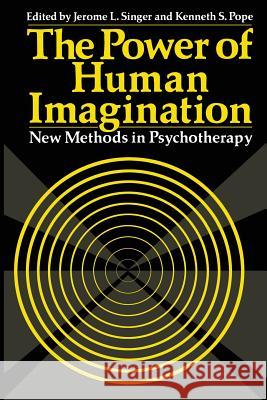
Jerome L. Singer; Kenneth S. Pope; Jerome L. Singer
The Power of Human Imagination: New Methods in Psychotherapy Singer, Jerome L. 9781461339434 Springer - książkaWidoczna okładka, to zdjęcie poglądowe, a rzeczywista szata graficzna może różnić się od prezentowanej.

The Power of Human Imagination: New Methods in Psychotherapy

ISBN-13: 9781461339434 / Angielski / Miękka / 2011 / 426 str.

Jerome L. Singer; Kenneth S. Pope; Jerome L. Singer
cena 201,24
(netto: 191,66 VAT:  5%)

Najniższa cena z 30 dni: 192,74
Termin realizacji zamówienia:
ok. 22 dni roboczych
Dostawa w 2026 r.

Darmowa dostawa!

For at least half of the twentieth century, psychology and the other mental health professions all but ignored the significant adaptive pos sibilities of the human gift of imagery. Our capacity seemingly to duplicate sights, sounds, and other sensory experiences through some form of central brain process continues to remain a mysterious, alma st miraculous skill. Because imagery is so much a private experience, experimental psychologists found it hard to measure and turned their attentian to observable behaviors that could easily be studied in ani maIs as well as in humans. Psychoanalysts and others working with the emotionally disturbed continued to take imagery informatian se riously in the form of dream reports, transferenee fantasies, and as indications of hallucinations or delusions. On the whole, however, they emphasized the maladaptive aspects of the phenomena, the dis tortions and defensiveness or the "regressive" qualities of daydreams and sequences of images. The present volume grows out of a long series of investigations by the senior author that have suggested that daydreaming and the stream of consciousness are not simply manifestations in adult life of persist ing phenomena of childhood. Rather, the data suggest that imagery sequences represent a major system of encoding and transforming information, a basic human capacity that is inevitably part of the brain's storage process and one that has enormous potential for adap tive utility. A companian volume, The Stream of Consciousness, edited by Kenneth S. Pope and Jerome L."


Kategorie:
Nauka, Psychologia
Kategorie BISAC:
Psychology > Psychotherapy - General
Psychology > Clinical Psychology
Psychology > Social Psychology
Wydawca:
Springer
Seria wydawnicza:
Emotions, Personality, and Psychotherapy
Język:
Angielski
ISBN-13:
9781461339434
Rok wydania:
2011
Wydanie:
1978
Numer serii:
000052863
Ilość stron:
426
Waga:
0.62 kg
Wymiary:
22.9 x 15.2
Oprawa:
Miękka
Wolumenów:
01
Dodatkowe informacje:
Wydanie ilustrowane

I • Introduction and Overview.- 1 The Use of Imagery and Fantasy Techniques in Psychotherapy.- 1. Introduction.- 2. The Stunted Growth of Psychology and Psychotherapy: A Bias toward Verbal and Directed Thought.- 3. Therapy and Imagination.- 4. Dimensions of Cognition and Expression.- 5. Psychoanalysis and Related Psychodynamic Approaches.- 6. More Direct Forms of Clinical Intervention.- 7. Self-Efficacy and Imagery.- 8. Some Preventive and Constructive Uses of Our Imagery Capacities.- 8.1. Imagery and Adaptive Escapism.- 8.2. Imagery Uses for Self-Awareness.- 8.3. Imagery for Self-Regulation and Biofeedback.- 8.4. Imagery for Creativity and Aesthetic Experience.- References.- II • Psychoanalytically Oriented Uses of Imagery.- 2 Controls of Visual Imagery and Therapist Intervention.- 1. Introduction.- 2. Image Formation as a Mode of Representation.- 3. Utility of the Visual Image System.- 4. A Model of the Image System.- 5. Defenses and the Process of Working-Through.- 6. Techniques to Alter Inhibitory Operations.- 7. Facilitations and Inhibitory Failures.- 8. More Complex Defensive Operations.- 9. Summary.- References.- 3 Emergent Uncovering Psychotherapy: The Use of Imagoic and Linguistic Vehicles in Objectifying Psychodynamic Processes.- 1. Introduction.- 2. Procedures for Objectifying and Differentiating Awareness and Interpersonal Behavior.- 2.1. Self-Disclosure.- 2.2. Entrée Points: The Exploration of Self-Awareness.- 2.3. Eyes Closed Free Association.- 2.4. The Verbalization of Suppressed and Dissociated Material: A Clinical Illustration.- 2.5. Relevant Laboratory Investigations.- 3. Objectifying Repression and Repressed Drive-Related Impulses.- 4. Modes of Information Processing.- 5. Relevant Clinical Illustrations.- 6. Laboratory Investigations of Drive Intensification.- 7. A Conceptual Integration.- 7.1. Intrapsychic Drives.- 7.2. Dissociation.- 7.3. Security Operations and Defenses against Impulses.- 7.4. Endopsychic Drives.- 7.5. Free Imagery: The Mechanisms of Image Retrieval.- 7.6. Uncovering: Pathogenesis and Therapeutics.- 8. Conclusions and Wider Implications.- 8.1. Domains of Phenomena.- 8.2. Can Spontaneous Visual Imagery Be Symbolic?.- 8.3. Creativity.- 8.4. Implications for Freudian and Sullivanian Theory.- References.- 4 Clinical Use of Categories of Therapeutic Imagery.- 1. Introduction: The Function of Imagery.- 2. The Technique of Psycho-Imagination Therapy.- 3. Spontaneous Imagery.- 4. Directed Imagery.- 5. Self-Image Imagery.- 6. Dual Imagery.- 7. Body Imagery.- 8. Sexual Imagery.- 9. Predicting Imagery.- 10. Task Imagery.- 11. Cathartic Imagery.- 12. Depth Imagery.- 13. General Imagery.- 14. Detection of Resistance in Imagery Production.- 15. Group Therapy Imagery.- 16. Current Research.- References.- III • Mental Imagery Therapies.- 5 Basic Principles and Therapeutic Efficacy of Guided Affective Imagery (GAI).- 1. Introduction.- 2. Theoretical Foundations.- 3. Mobile Projection.- 3.1. Diagnostic Aspect.- 3.2. Spontaneous Projection.- 3.3. Synchronic Transformation.- 4. Bringing Core Conflicts into Focus.- 5. Standard Themes.- 5.1. Standard Motifs of GAI.- 6. Therapeutic Techniques.- 6.1. Specific Techniques and Strategies.- 7. Management Models in Symbolic Drama (Symbolic Operation).- 7.1. Two Examples.- 7.2. Theoretical Excursus.- 7.3. Elementary Level.- 7.4. Intermediate Level.- 7.5. Advanced Level.- 8. Investigative Findings.- 8.1. Literature.- 8.2. Statistical Studies.- 8.3. Case Histories.- 8.4. Didactic Possibilities.- 9. Some Theoretical Reflections on GAI.- 9.1. The General Psychodynamic Concept.- 9.2. What Is Therapeutically Effective in GAI?.- 9.3. The Nature of Transference Relationships in GAI.- 9.4. Symbolic Concepts.- 10. Indications.- 11. Summary.- References.- 6 Active Imagining.- 1. Introduction.- 2. Dream Action and Dream Meanings.- 3. Human Competence.- 4. Realism in Dreamwork.- 5. Modalities of Experience.- 6. The Structure of Healing.- 7. Archetype and Image.- 8. Images and the Structure of Thought.- 9. Structure Abstracted.- References.- 7 Eidetic Psychotherapy.- 1. Introduction.- 2. Mental Images and Their Classification.- 2.1. After-Images.- 2.2. Eidetic Images.- 2.3. Memory Images.- 2.4. Imagination Images.- 3. Ahsen’s Eidetic Image: The ISM.- 3.1. Visiosomatic Fixation and Dessociation.- 3.2. Bipolar Configurations.- 3.3. The Magical Laws of the Psyche.- 4. Eidetics and Electrically Evoked Recollections.- 5. The ISM Theory of Personality.- 6. Diagnostic and Therapeutic Procedures.- 6.1. The Age Projection Test.- 6.2. Eidetic Parents Test.- 7. A Case History.- 8. Concluding Remarks.- References.- IV • Behavior-Therapy Uses of Imagery.- 8 Covert Conditioning: A Learning-Theory Perspective on Imagery.- 1. Introduction.- 2. Covert Conditioning Assumptions and Procedures.- 2.1. A Learning-Theory Basis for Covert Conditioning.- 2.2. Covert Conditioning Procedures.- 3. Imagery Development.- 3.1. Construction of Covert Scenes.- 3.2. Development of Imagery Capacity.- 3.3. Training to Enhance Vividness and Controllability.- 3.4. Imagery Practice.- 3.5. Assessment of Imagery.- 4. Application of Covert Processes to Overall Functioning.- 4.1. Covert Processes and Maladaptive Behavior.- 4.2. Behavioral Hygiene and Therapeutic Measures.- 5. Application of Covert Processes to Specific Classes of Behavior.- 5.1. Covert Behavior and Daydreaming.- 5.2. Covert Behavior of Nocturnal Dreaming.- 5.3. The Use of Covert Conditioning in the Modification of Organic Dysfunction.- References.- 9 Covert Modeling: The Therapeutic Application of Imagined Rehearsal.- 1. Introduction.- 2. Background and Implication of Covert Modeling.- 3. Efficacy of Covert Modeling.- 4. Important Parameters of Covert Modeling.- 4.1. Model-Client Similarity.- 4.2. Model Identity.- 4.3. Multiple Models.- 4.4. Model Consequences.- 4.5. Unexplored Parameters.- 5. Assessment of Imagery and the Mechanisms of Behavior Change.- 6. Imagery-Based Techniques versus Overt Behavior Rehearsal.- 7. Conclusions and Implications.- References.- V • Broader Applications of Imagery.- 10 Imagery and the Control of Depression.- 1. Introduction.- 2. Imagery in the Treatment of Depression: A Research Strategy.- 2.1. Methodology.- 2.2. Results.- 2.3. Discussion.- 2.4. Directedness of Imagery.- 2.5. Interpersonal Significance of Imagery.- 3. Alternative Models.- 4. Patterns of Depressive Experiences.- 5. Daydreaming Patterns.- 6. Conclusions.- 7. The Nature of the Psychotherapeutic Process.- 8. Imagery, Daydreaming, and a Cognitive Theory of Self-Control.- 9. The Conscious Control of Consciousness: The Use of Imagery in Alleviating Depression.- 10. Psychotherapeutic Uses of Imagery.- 10.1. Clinical Illustrations.- 10.2. An Overview.- References.- 11 Just Imagine How I Feel: How to Improve Empathy Through Training in Imagination.- 1. Introduction.- 2. Theoretical Background: Three Levels of Empathy.- 2.1. The Behavioral Level of Empathy.- 2.2. The Subjective Level of Empathy.- 2.3. The Psychoanalytic Notion of Empathy.- 2.4. The Cognitive-Structural Level of Empathy.- 2.5. Implications for Empathy Training.- 3. Research Procedures.- 3.1. Overview of the Research Plan.- 3.2. Hypotheses.- 3.3. Empathy Training Conditions.- 3.4. Outcome Measures.- 4. Results of the Study.- 4.1. Major Findings.- 4.2. Additional Findings.- 5. Discussion.- 5.1. Review of the Findings: Some “Ifs,” “Ands,” and “Buts”.- 5.2. Further Implications for Research and Practice.- 5.3. Theoretical Implications: The Fourth Level of Empathy.- References.- 12 The Body, Expressive Movement, and Physical Contact in Psychotherapy.- 1. Introduction.- 2. The Democratization of the Relationship of the Mind and the Body.- 3. The Romantic Vision of the Body-Movement Therapies.- 4. Obstacles to the Development of Body-Awareness.- 5. Communication in Psychotherapy.- 6. Form and Content in Psychotherapy.- 7. The Role of Language in Psychoanalytic Therapy.- 8. The Search for Meaning.- 9. The Unconscious in the Body-Movement Therapies.- 10. Movements Are Expressive.- 11. Against Interpretation.- 12. Overcoming Resistances: The Reichian Influence.- 13. Styles of Exercising Authority.- 14. Changing Conceptions of Countertransference.- References.- VI • Conclusion.- 13 Why Does Using Imagery in Psychotherapy Lead to Change?.- 1. The Need for an Integrative Orientation.- 2. Imagery and the Context of Psychotherapy.- 3. Cognitive Theory of Behavior Change.- 3.1. Self-Awareness.- 3.2. Generating Adaptive New Thoughts and Responses.- 3.3. In Vivo Practice.- 4. Imagery-Based Therapies.- 5. Psychological Processes Underlying Imagery-Based Therapies.- References.- Author Index.


Udostępnij

Facebook - konto krainaksiazek.pl


Opinie o Krainaksiazek.pl na Opineo.pl

Partner Mybenefit

Krainaksiazek.pl w programie rzetelna firma Krainaksiaze.pl - płatności przez paypal

Czytaj nas na:

Facebook - krainaksiazek.pl
  • książki na zamówienie
  • granty
  • książka na prezent
  • kontakt
  • pomoc
  • opinie
  • regulamin
  • polityka prywatności

Zobacz:

  • Księgarnia czeska

  • Wydawnictwo Książkowe Klimaty

1997-2025 DolnySlask.com Agencja Internetowa

© 1997-2022 krainaksiazek.pl
     
KONTAKT | REGULAMIN | POLITYKA PRYWATNOŚCI | USTAWIENIA PRYWATNOŚCI
Zobacz: Księgarnia Czeska | Wydawnictwo Książkowe Klimaty | Mapa strony | Lista autorów
KrainaKsiazek.PL - Księgarnia Internetowa

Polityka prywatnosci - link
Krainaksiazek.pl - płatnośc Przelewy24
Przechowalnia Przechowalnia






