• Wyszukiwanie zaawansowane
  • Kategorie
  • Kategorie BISAC
  • Książki na zamówienie
  • Promocje
  • Granty
  • Książka na prezent
  • Opinie
  • Pomoc
  • Załóż konto
  • Zaloguj się

Project Finance in Construction: A Structured Guide to Assessment » książka


zaloguj się | załóż konto
Logo Krainaksiazek.pl

koszyk

konto

szukaj
topmenu
Księgarnia internetowa
Szukaj
Książki na zamówienie
Promocje
Granty
Książka na prezent
Moje konto
Pomoc
 
 
Wyszukiwanie zaawansowane
Pusty koszyk
Bezpłatna dostawa dla zamówień powyżej 20 złBezpłatna dostawa dla zamówień powyżej 20 zł

Kategorie główne

• Nauka
 [2946912]
• Literatura piękna
 [1852311]

  więcej...
• Turystyka
 [71421]
• Informatyka
 [150889]
• Komiksy
 [35717]
• Encyklopedie
 [23177]
• Dziecięca
 [617324]
• Hobby
 [138808]
• AudioBooki
 [1671]
• Literatura faktu
 [228371]
• Muzyka CD
 [400]
• Słowniki
 [2841]
• Inne
 [445428]
• Kalendarze
 [1545]
• Podręczniki
 [166819]
• Poradniki
 [480180]
• Religia
 [510412]
• Czasopisma
 [525]
• Sport
 [61271]
• Sztuka
 [242929]
• CD, DVD, Video
 [3371]
• Technologie
 [219258]
• Zdrowie
 [100961]
• Książkowe Klimaty
 [124]
• Zabawki
 [2341]
• Puzzle, gry
 [3766]
• Literatura w języku ukraińskim
 [255]
• Art. papiernicze i szkolne
 [7810]
Kategorie szczegółowe BISAC

Project Finance in Construction: A Structured Guide to Assessment

ISBN-13: 9781444334777 / Angielski / Miękka / 2010 / 192 str.
Tony Merna; Yang Chu; Faisal F. Al-Thani
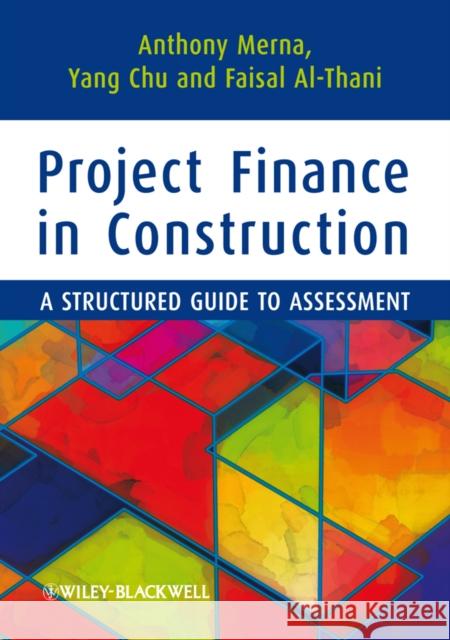
Project Finance in Construction: A Structured Guide to Assessment Merna, Tony 9781444334777 Wiley-Blackwell - książkaWidoczna okładka, to zdjęcie poglądowe, a rzeczywista szata graficzna może różnić się od prezentowanej.

Project Finance in Construction: A Structured Guide to Assessment

ISBN-13: 9781444334777 / Angielski / Miękka / 2010 / 192 str.

Tony Merna; Yang Chu; Faisal F. Al-Thani
cena 338,40
(netto: 322,29 VAT:  5%)

Najniższa cena z 30 dni: 337,71
Termin realizacji zamówienia:
ok. 30 dni roboczych
Bez gwarancji dostawy przed świętami

Darmowa dostawa!

Project finance has spread worldwide and includes numerous industrial projects from power stations and waste-disposal plants to telecommunication facilities, bridges, tunnels, railway networks, and now also the building of hospitals, education facilities, government accommodation and tourist facilities. Despite financial assessment of PF projects being fundamental to the lender's decision, there is little understanding of how the use of finance is perceived by individual stakeholders; why and how a financial assessment is performed; who should be involved; where and when it should be performed; what data should be used; and how financial assessments should be presented. Current uncertainty in financial markets makes many sponsors of construction project financings carefully consider bank liquidity, the higher cost of finance, and general uncertainty for demand. This has resulted in the postponement of a number of projects in certain industry sectors. Governments have seen tax receipts drastically reduced which has affected their ability to finance infrastructure projects, often irrespective of the perceived demand. Equity providers still seek to invest, however there are less opportunities due to market dislocation. Due to the demand for global infrastructure it is believed that project financings will return to their pre-crunch levels, or more so, however lenders' liquidity costs will be passed on to the borrowers. Lenders will also be under stricter regulation both internally and externally. The steps outlined in the guide are designed to provide a basic understanding for all those involved or interested in both structuring and assessing project financings. Secondary contracts involving constructors, operators, finance providers, suppliers and offtakers can be developed and assessed to determine their commercial viability over a projects life cycle. Special Features

  • a structured guide to assessing the commercial viability of construction projects
  • explains economic metrics to use in the decision making process
  • detailed case study shows how stakeholders apply the concept of project finance

Kategorie:
Technologie
Kategorie BISAC:
Technology & Engineering > Construction - General
Technology & Engineering > Civil - General
Wydawca:
Wiley-Blackwell
Język:
Angielski
ISBN-13:
9781444334777
Rok wydania:
2010
Ilość stron:
192
Waga:
0.43 kg
Wymiary:
24.13 x 17.27 x 1.02
Oprawa:
Miękka
Wolumenów:
01
Dodatkowe informacje:
Bibliografia
Glosariusz/słownik

Overall, the short book is simple to read and understand.   (Construction Management and Economics, 2012)

"This guide is for project managers, students, and academics involved in structuring and assessing project finance." ( Book News Inc, November 2010)

List of illustrations.

List of tables.

About the Authors.

Preface.

1 Introduction.

1.1 The development of project finance.

1.2 Financial assessment.

What is financial assessment?

Why perform a financial assessment?

Who is involved in the risk assessment process?

Where should a financial assessment be performed?

When should a financial assessment be performed?

What data are to be used?

How should assessment outputs be presented?

1.3 Purpose of this guide.

1.4 Scope of the guide.

2 Project finance.

2.1 Introduction.

2.2 Definition of project finance.

2.3 The key characteristics of project finance.

Special project/purpose vehicle.

Contractual arrangement.

Non–/limited recourse.

Off–balance sheet transaction.

Robust income stream of the project as the basis for financing.

2.4 Legal and financial considerations in project finance.

Legal.

Financial.

3 Financial instruments and cash flow modelling.

3.1 Introduction.

3.2 Debt finance.

Senior debt.

3.3 Mezzanine finance.

Subordinate debt.

Bond finance.

3.4 Equity finance.

3.5 Sources of debt and equity.

3.6 Cash flow modelling and project financing.

4 Risk management.

4.1 Introduction.

4.2 Risk.

4.3 Risk management process.

Risk identification.

Risk analysis.

Risk response.

4.4 Typical risks in project financing.

5 The financial assessment process.

5.1 Introduction.

5.2 The financial assessment structure.

SPV assessment.

Lenders′ assessment.

SPV and lender final assessment.

6 Case study.

6.1 Introduction.

6.2 Independent power project.

6.3 Supply and offtake contracts.

Supply contracts.

Offtake contracts.

Applications of supply and offtake contracts.

6.4 Assumptions for initial assessment.

7 Developing the base case model.

7.1 Introduction.

7.2 SPV s initial assessment.

7.3 Identify the estimated activities, time, costs and revenues of the project.

7.4 Development of the base case model.

7.5 Identify major project risks.

7.6 Assessment of base case model incorporating risks.

8 Initial economic assessment by lenders.

8.1 Introduction.

8.2 Financial package assessment.

Finance package (1).

Finance package (2).

Finance package (3).

8.3 Conclusions.

9 Financial engineering.

9.1 Introduction.

9.2 Financial instruments used in financial engineering.

Forward rates.

Financial futures.

Swaps.

Options.

Caps, floors, collars, swaptions and compound options.

Asset–backed securities.

9.3 Refinancing.

9.4 Reappraising public private partnerships.

9.5 Techniques applied in the reappraisal of PPP concession agreement.

9.6 Other financial engineering techniques.

10 Final assessment to determine project commercial viability.

10.1 Introduction.

10.2 Detailed risk assessment.

10.3 Financial engineering.

Tax holiday.

Financial collar.

Extending the concession.

Increasing debt.

Grace period.

Phasing construction and operation.

Upfront payments.

Existing concession revenues.

10.4 Summary.

11 Financial close.

11.1 Introduction.

11.2 Due diligence.

Technical.

Legal due diligence.

Trigger step in rights.

Model audit and sensitivity analysis.

Risk valuation.

Term sheet.

Inter–creditor agreement.

Hedge strategy.

Letters of credit.

Reserve account.

Escrow and ring–fenced facilities.

Economic indicators.

Taxation.

Insurance.

11.3 Financial close.

Credit committee approval process.

Due diligence report.

Technical closure.

Financial close.

Technical commencement.

Execute interest rate swaps.

12 Islamic finance and project finance.

12.1 Introduction.

12.2 Islamic finance.

12.3 Shariah.

Qiyas and Litihad.

12.4 Core principles of Islamic finance.

Sharing (profit/loss and risk).

No unfair gain.

No speculation.

No uncertainty.

No investments that are not in the public interest.

No hoarding of money.

Deception.

Islamic financial institutions.

Shariah supervisory boards.

12.5 Project finance.

The Ijara principle.

Ijara Mawsufah Fi Al Dhimmah (forward lease).

Istisna′a.

Sukuk.

Sukuk al Istisna′a.

A typical SAI deal.

Hedging.

Swaps.

12.6 Other Islamic finance techniques for projects.

Musharaka (equity financing).

Bai salam (forward financing).

12.7 Risks and liabilities.

12.8 Summary.

13 Conclusions and recommendations.

13.1 Review.

13.2 Conclusions.

13.3 Recommendations.

Appendix.

Glossary.

References.

Index.

Anthony Merna is senior partner of Oriel Group Practice, a multidisciplinary research and consultancy practice based in Manchester and a visiting lecturer to Manchester Business School at the University of Manchester. He has been teaching Project Finance for the last 14 years to a number of UK and overseas universities, businesses and government agencies.

Yang Chu is a graduate of the School of Mechanical, Aerospace and Civil Engineering at the University of Manchester and a research consultant with Oriel Group Practice specialising in the areas of project finance and risk modelling. He is currently carrying out risk management research at Manchester Business School.

Faisal Al–Thani is Senior Development Manager, Middle East for Maersk Oil based in Doha and a board member of the Marsh International Risk Council.

Project finance in construction procurement has spread worldwide from power stations and waste–disposal plants to telecommunication facilities, bridges, tunnels, railway networks, and now also to the building of hospitals and schools.

Despite a financial assessment of PF projects being fundamental to the lender s decision, there is little understanding of how the use of finance is perceived by individual stakeholders; why and how a financial assessment is performed; who should be involved; where and when it should take place; what data should be used; and how financial assessments should be presented.
The steps outlined in this guide provide a basic understanding for all those involved in structuring or assessing project finance.  Secondary contracts involving constructors, operators, finance providers, suppliers and offtakers can be developed and assessed to determine their commercial viability over a project s life cycle.

Any uncertainty in financial markets prompts sponsors of construction project financings to carefully consider bank liquidity, the higher cost of finance, and general uncertainty for demand. This results in the postponement of projects and the drastic reduction of governments′ tax receipts, which in turn affects their ability to finance infrastructure projects.

Project Finance in Construction offers a structured process for determining the commercial viability of large construction projects procured with project finance (PF).  It explains how to use economic metrics in the decision–making process and provides a detailed case study showing how stakeholders apply the concept of project finance.

This guide will enable students and academics involved in project finance as well as project managers worldwide to develop their own assessment structures and be confident in their use.

Merna, Tony Dr Tony Merna, BSc, MPhil, PhD, graduated with a d... więcej >


Udostępnij

Facebook - konto krainaksiazek.pl


Opinie o Krainaksiazek.pl na Opineo.pl

Partner Mybenefit

Krainaksiazek.pl w programie rzetelna firma Krainaksiaze.pl - płatności przez paypal

Czytaj nas na:

Facebook - krainaksiazek.pl
  • książki na zamówienie
  • granty
  • książka na prezent
  • kontakt
  • pomoc
  • opinie
  • regulamin
  • polityka prywatności

Zobacz:

  • Księgarnia czeska

  • Wydawnictwo Książkowe Klimaty

1997-2025 DolnySlask.com Agencja Internetowa

© 1997-2022 krainaksiazek.pl
     
KONTAKT | REGULAMIN | POLITYKA PRYWATNOŚCI | USTAWIENIA PRYWATNOŚCI
Zobacz: Księgarnia Czeska | Wydawnictwo Książkowe Klimaty | Mapa strony | Lista autorów
KrainaKsiazek.PL - Księgarnia Internetowa

Polityka prywatnosci - link
Krainaksiazek.pl - płatnośc Przelewy24
Przechowalnia Przechowalnia






