• Wyszukiwanie zaawansowane
  • Kategorie
  • Kategorie BISAC
  • Książki na zamówienie
  • Promocje
  • Granty
  • Książka na prezent
  • Opinie
  • Pomoc
  • Załóż konto
  • Zaloguj się

Trade-Offs in Conservation: Deciding What to Save » książka

zaloguj się | załóż konto
Logo Krainaksiazek.pl

koszyk

konto

szukaj
topmenu
Księgarnia internetowa
Szukaj
Książki na zamówienie
Promocje
Granty
Książka na prezent
Moje konto
Pomoc
 
 
Wyszukiwanie zaawansowane
Pusty koszyk
Bezpłatna dostawa dla zamówień powyżej 20 złBezpłatna dostawa dla zamówień powyżej 20 zł

Kategorie główne

• Nauka
 [2946600]
• Literatura piękna
 [1856966]

  więcej...
• Turystyka
 [72221]
• Informatyka
 [151456]
• Komiksy
 [35826]
• Encyklopedie
 [23190]
• Dziecięca
 [619653]
• Hobby
 [140543]
• AudioBooki
 [1577]
• Literatura faktu
 [228355]
• Muzyka CD
 [410]
• Słowniki
 [2874]
• Inne
 [445822]
• Kalendarze
 [1744]
• Podręczniki
 [167141]
• Poradniki
 [482898]
• Religia
 [510455]
• Czasopisma
 [526]
• Sport
 [61590]
• Sztuka
 [243598]
• CD, DVD, Video
 [3423]
• Technologie
 [219201]
• Zdrowie
 [101638]
• Książkowe Klimaty
 [124]
• Zabawki
 [2473]
• Puzzle, gry
 [3898]
• Literatura w języku ukraińskim
 [254]
• Art. papiernicze i szkolne
 [8170]
Kategorie szczegółowe BISAC

Trade-Offs in Conservation: Deciding What to Save

ISBN-13: 9781405193849 / Angielski / Twarda / 2010 / 432 str.
Nigel Leader-Williams; William M. Adams; Robert J. Smith
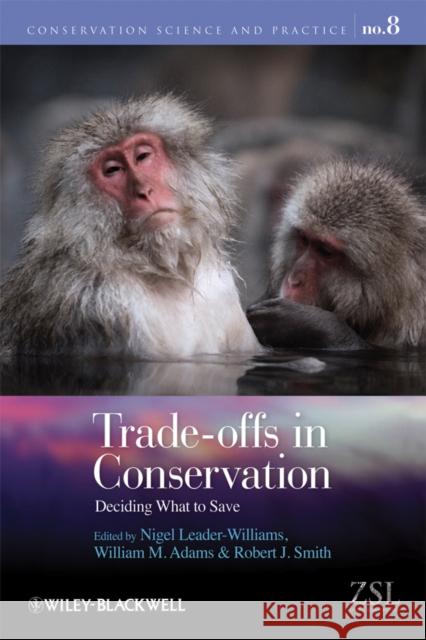
Trade-Offs in Conservation: Deciding What to Save Nigel Leader-Williams William M. Adams Robert J. Smith 9781405193849 Wiley-Blackwell - książkaWidoczna okładka, to zdjęcie poglądowe, a rzeczywista szata graficzna może różnić się od prezentowanej.

Trade-Offs in Conservation: Deciding What to Save

ISBN-13: 9781405193849 / Angielski / Twarda / 2010 / 432 str.

Nigel Leader-Williams; William M. Adams; Robert J. Smith
cena 686,36 zł
(netto: 653,68 VAT:  5%)

Najniższa cena z 30 dni: 680,74 zł
Termin realizacji zamówienia:
ok. 30 dni roboczych
Bez gwarancji dostawy przed świętami

Darmowa dostawa!

This book demonstrates that trade-offs can be very important for conservationists. Its various chapters show how and why trade-offs are made, and why conservationists need to think very hard about what, if anything, to do about them. The book argues that conservationists must carefully weigh up, and be explicit about, the trade-offs that they make every day in deciding what to save. Key Features:

  • Discusses the wider non-biological issues that surround making decisions about which species and biogeographic areas to prioritise for conservation
  • Focuses on questions such as: What are these wider issues that are influencing the decisions we make? What factors need to be included in our assessment of trade-offs? What package of information and issues do managers need to consider in making a rational decision? Who should make such decisions?
  • Part of the Conservation Science and Practice book series
This volume is of interest to policy-makers, researchers, practitioners and postgraduate students who are concerned about making decisions that include recognition of trade-offs in conservation planning.

Kategorie:
Nauka, Biologia i przyroda
Kategorie BISAC:
Science > Life Sciences - General
Nature > Animals - Wildlife
Wydawca:
Wiley-Blackwell
Seria wydawnicza:
Conservation Science and Practice
Język:
Angielski
ISBN-13:
9781405193849
Rok wydania:
2010
Numer serii:
000413139
Ilość stron:
432
Waga:
0.92 kg
Wymiary:
23.62 x 16.26 x 2.79
Oprawa:
Twarda
Wolumenów:
01
Dodatkowe informacje:
Bibliografia
Wydanie ilustrowane

"It will, however, find a ready market amongst top undergraduate and postgraduate students as it is a compendium of good summary facts, definitions and diagrams with some superlative introductory expositions. For the same reasons I suspect most lecturers in conservation biology will want a book on their shelves." (Biological Conservation Reviewers, 2011)


Contributors.

Preface and Acknowledgments.

Introduction.

1. Deciding What to Save: Trade–offs in Conservation (Nigel Leader–Williams, William M. Adams and Robert J. Smith).

Current Approaches and Toolkits.

2. Prioritizing Trade–offs in Conservation (Kerrie A. Wilson, Michael Bode, Hedley Grantham and Hugh P. Possingham).

3. Trade–offs in Identifying Global Conservation Priority Areas (William Murdoch, Michael Bode, Jon Hoekstra, Peter Kareiva, Steve Polasky, Hugh P. Possingham and Kerrie A. Wilson).

4. Trade–offs in Making Ecosystem Services and Human Well–being Conservation Priorities (Rebecca L. Goldman, Gretchen C. Daily and Peter Kareiva).

5. Defining and Measuring Success in Conservation (Valerie Kapos, Andrea Manica, Rosalind Aveling, Philip Bubb, Peter Carey, Abigail Entwistle, John Hopkins, Teresa Mulliken, Roger Safford, Alison Stattersfield, Matthew J. Walpole and Andrew Balmford).

Influence of Value Systems.

6. Conserving Invertebrates: How Many can be Saved, and How? (Michael J. Samways).

7. Trade–offs between Animal Welfare and Conservation in Law and Policy (Stuart R. Harrop).

8. Protection or Use: a Case of Nuanced Trade–offs? (Alison M. Rosser and Nigel Leader–Williams).

9. Whose Value Counts? Trade–offs between Biodiversity Conservation and Poverty Reduction (Dilys Roe and Matthew J. Walpole).

10. The Power of Traditions in Conservation (Katherine M. Homewood).

Economics and Governance.

11. Misaligned Incentives and Trade–offs in Allocating Conservation Funding (Aaron Bruner, Eduard T. Niesten and Richard E. Rice).

12. Marketing and Conservation: How to Lose Friends and Influence People (Robert J. Smith, Diogo Veríssimo and Douglas C. MacMillan).

13. Trade–offs between Conservation and Extractive Industries (Manuel Pulgar–Vidal, Bruno Monteferri and Juan Luis Dammert).

14. A Fighting Chance: can Conservation Create a Platform for Peace within Cycles of Human Conflict? (Rosalind Aveling, Helen Anthem and Annette Lanjouw).

Social and Institutional Constraints.

15. Trading–off Knowing Versus Doing for Effective Conservation Planning (Andrew T. Knight and Richard M. Cowling).

16. Path Dependence in Conservation (William M. Adams).

17. Conservation Trade–offs and the Politics of Knowledge (J. Peter Brosius).

Future Challenges.

18. Climatic Change and Conservation (Stephen G. Willis, David G. Hole and Brain Huntley).

19. Drivers of Biodiversity Change (Georgina M. Mace).

20. Another Entangled Bank: Making Conservation Trade–offs More Explicit (Robert J. Smith, William M. Adams and Nigel Leader–Williams).

Index.

Nigel Leader–Williams became Director of Conservation Leadership, based in the Department of Geography at the University of Cambridge, in 2009. Previously he was Director of the Durrell Institute of Conservation and Ecology at the University of Kent. His research focuses on sustainable resource use and human–wildlife conflict.

William M. Adams is Moran Professor of Conservation and Development. He is based in the Department of Geography at the University of Cambridge, where he has taught since 1984. His research focuses on the social dimensions of conservation in Africa and the UK. He is a Trustee of Fauna and Flora International.

Robert J. Smith is a Research Fellow at the Durrell Institute of Conservation and Ecology at the University of Kent. His research interests include protected area network design, conservation and corruption, and the influence of marketing in conservation.

Trade–offs are very commonly made in conservation. Inevitably, conservation action involves choices, between the populations of different species and the states of various ecosystems, between preservation and transformation by economic forces, between the needs of people and those of other species, between the interests of some people over others. However, conservationists are often slow to recognize trade–offs, and reluctant to draw attention to them or see them widely discussed. Does this matter? The answer to that question depends on what biodiversity is lost because of the trade–offs that conservationists make.

This book aims to show that trade–offs can be very important indeed for conservationists. Its various chapters show how and why trade–offs are made, and why conservationists need to think very hard about what, if anything, to do about them. The book argues that conservationists must carefully weigh up, and be explicit about, the trade–offs that they make every day in deciding what to save.

This volume will be of interest to policy–makers, researchers, practitioners and postgraduate students who are concerned about making decisions that include recognition of trade–offs in conservation planning.

Adams, William M. William M. Adams is Professor of Conservation and ... więcej >


Udostępnij

Facebook - konto krainaksiazek.pl


Opinie o Krainaksiazek.pl na Opineo.pl

Partner Mybenefit

Krainaksiazek.pl w programie rzetelna firma Krainaksiaze.pl - płatności przez paypal

Czytaj nas na:

Facebook - krainaksiazek.pl
  • książki na zamówienie
  • granty
  • książka na prezent
  • kontakt
  • pomoc
  • opinie
  • regulamin
  • polityka prywatności

Zobacz:

  • Księgarnia czeska

  • Wydawnictwo Książkowe Klimaty

1997-2025 DolnySlask.com Agencja Internetowa

© 1997-2022 krainaksiazek.pl
     
KONTAKT | REGULAMIN | POLITYKA PRYWATNOŚCI | USTAWIENIA PRYWATNOŚCI
Zobacz: Księgarnia Czeska | Wydawnictwo Książkowe Klimaty | Mapa strony | Lista autorów
KrainaKsiazek.PL - Księgarnia Internetowa

Polityka prywatnosci - link
Krainaksiazek.pl - płatnośc Przelewy24
Przechowalnia Przechowalnia







