• Wyszukiwanie zaawansowane
  • Kategorie
  • Kategorie BISAC
  • Książki na zamówienie
  • Promocje
  • Granty
  • Książka na prezent
  • Opinie
  • Pomoc
  • Załóż konto
  • Zaloguj się

Social Welfare Functions and Development: Measurement and Policy Applications » książka


zaloguj się | załóż konto
Logo Krainaksiazek.pl

koszyk

konto

szukaj
topmenu
Księgarnia internetowa
Szukaj
Książki na zamówienie
Promocje
Granty
Książka na prezent
Moje konto
Pomoc
 
 
Wyszukiwanie zaawansowane
Pusty koszyk
Bezpłatna dostawa dla zamówień powyżej 20 złBezpłatna dostawa dla zamówień powyżej 20 zł

Kategorie główne

• Nauka
 [2950560]
• Literatura piękna
 [1849509]

  więcej...
• Turystyka
 [71097]
• Informatyka
 [151150]
• Komiksy
 [35848]
• Encyklopedie
 [23178]
• Dziecięca
 [617388]
• Hobby
 [139064]
• AudioBooki
 [1657]
• Literatura faktu
 [228597]
• Muzyka CD
 [383]
• Słowniki
 [2855]
• Inne
 [445295]
• Kalendarze
 [1464]
• Podręczniki
 [167547]
• Poradniki
 [480102]
• Religia
 [510749]
• Czasopisma
 [516]
• Sport
 [61293]
• Sztuka
 [243352]
• CD, DVD, Video
 [3414]
• Technologie
 [219456]
• Zdrowie
 [101002]
• Książkowe Klimaty
 [124]
• Zabawki
 [2311]
• Puzzle, gry
 [3459]
• Literatura w języku ukraińskim
 [254]
• Art. papiernicze i szkolne
 [8079]
Kategorie szczegółowe BISAC

Social Welfare Functions and Development: Measurement and Policy Applications

ISBN-13: 9781137583246 / Angielski / Twarda / 2016 / 355 str.
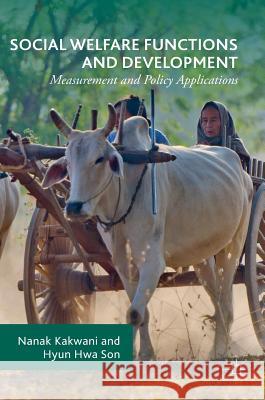
Nanak Kakwani; Hyun Hwa Son
Social Welfare Functions and Development: Measurement and Policy Applications Kakwani, Nanak 9781137583246 Palgrave MacMillan - książkaWidoczna okładka, to zdjęcie poglądowe, a rzeczywista szata graficzna może różnić się od prezentowanej.

Social Welfare Functions and Development: Measurement and Policy Applications

ISBN-13: 9781137583246 / Angielski / Twarda / 2016 / 355 str.

Nanak Kakwani; Hyun Hwa Son
cena 402,53
(netto: 383,36 VAT:  5%)

Najniższa cena z 30 dni: 385,52
Termin realizacji zamówienia:
ok. 22 dni roboczych
Dostawa w 2026 r.

Darmowa dostawa!

Nanak Kakwani and Hyun Hwa Son make use of social welfare functions to derive indicators of development relevant to specific social objectives, such as poverty- and inequality-reduction. Arguing that the measurement of development cannot be value-free, the authors assert that if indicators of development are to have policy relevance, they must be assessed on the basis of the social objectives in question. This study develops indicators that are sensitive to both the level and the distribution of individuals capabilities. The idea of the social welfare function, defined in income space, is extended to the concept of the social well-being function, defined in capability space. Through empirical analysis from selected developing countries, with a particular focus on Brazil, the authors shape techniques appropriate to the analysis of development in different dimensions. The focus of this evidence-based policy analysis is to evaluate alternative policies affecting the capacities of people to enjoy a better life. "


Kategorie:
Nauka, Ekonomia i biznes
Kategorie BISAC:
Business & Economics > Development - Economic Development
Business & Economics > Ekonometria
Business & Economics > Economics - Theory
Wydawca:
Palgrave MacMillan
Język:
Angielski
ISBN-13:
9781137583246
Rok wydania:
2016
Wydanie:
2016
Ilość stron:
355
Waga:
0.59 kg
Wymiary:
21.08 x 14.99 x 2.54
Oprawa:
Twarda
Wolumenów:
01
Dodatkowe informacje:
Wydanie ilustrowane

Foreword-. Preface-. Chapter 1: Introduction-.  1.1: The Concept of Development-. 1.2: Concept of Social Welfare Function-. 1.3: Inequality and Social Welfare Functions-. 1.4: Social Tension and Social Welfare Functions-. 1.5: Inequality and Social Groups-. 1.6: Social Policies and Labor Market-. 1.7: Income Inequality and Social Well-Being-. 1.8: Inequity in Opportunity-. 1.9: Global Poverty Estimates-. 1.10: Food Insecurity-. 1.11 Evaluation of Social Programs-. Chapter 2: Applied Social Welfare Functions-. 2.1: Introduction-. 2.2: What is a Social Welfare Function?-. 2.3: Income Inequality and Social Welfare Function-. 2.4: A Class of Atkinson’s Inequality Measures and Social Welfare Functions-. 2.5: Relative vs. Absolute Inequality-. 2.6: Gini Social Welfare Function-. 2.7: Generalized Gini Social Welfare Function-. 2.8: Rawlsian Social Welfare Function and Shared Prosperity-. 2.9: Estimates of Social Welfare Functions in Asia: An Illustration-. 2.10: Concluding Remarks-. Chapter 3: Measuring Social Tension-. 3.1: Introduction-. 3.2: A General Framework for Measuring Social Tension-. 3.3: Social Tension Caused by Inequality-. 3.4: Social Tension Caused by Poverty-. 3.5: Social Tension and Polarization-. 3.6: Growth Volatility and Social Tension-. 3.7: Social Mobility and Social Tension-. 3.8: Empirical Analysis of Social Tension in Brazil-. 3.8.1: Social Tension Due to Inequality-. 3.8.2: Social Tension Due to Poverty-. 3.8.3: Social Tension Due to Alienation and Polarization-. 3.8.4: Growth Volatility and Social Tension-. 3.8.5: Social Immobility-. 3.9: Concluding Remarks-. Chapter 4: Relative Deprivation and Social Groups-. 4.1: Introduction-. 4.2: Relative Deprivation Function-. 4.3: Relative Deprivation Suffered by Social Groups-. 4.4: Empirical Analysis: Case Study for Brazil, 2001–12-. 4.5: Age and Inequality-. 4.6: Gender and Inequality-. 4.7: Geographical Location and Inequality-. 4.8: Middle Class and Inequality-. 4.9: Race and Inequality-. 4.10: Education and Inequality-. 4.11: Concluding Remarks-. Chapter 5: Growth and Shared Prosperity-. 5.1: Introduction-. 5.2: A Simple Indicator of Shared Prosperity-. 5.3: Shared Growth-. 5.4: Patterns of Shared Prosperity in Brazil-. 5.5: Shared Growth in Brazil-. 5.6: Determinants of Shared Prosperity-. 5.7: Determinants of Shared Prosperity in Brazil from 2001 to 2012-. 5.8: The Role of Labor Market in Explaining Shared Growth-. 5.9: Shared Opportunities-. 5.9.1: Employment Opportunities-. 5.9.2: Productive Employment-. 5.9.3: Opportunity in Education Attainment-. 5.9.4: School Attendance-. 5.10: Concluding Remarks-. Chapter 6: Income Inequality and Social Well-Being-. 6.1: Introduction-. 6.2: What is Well-being?-. 6.3: Selection of Capabilities-. 6.4: Indicators of Well-being-. 6.5: Levels and Performance of Well-being in Brazil-. 6.6: Inequality of Well-being-. 6.7: Linkage between Ends and Means-. 6.8: Magnitude of Inequality in Well-being in Brazil-. 6.9: Income Inequality Elasticity of Well-being-. 6.10: Concluding Remarks-. Chapter 7: Measuring Equity in Opportunity Using Social Opportunity Function-. 7.1: Introduction-. 7.2: Inequality of Opportunities-. 7.3: A New Method of Measuring Contribution of Circumstance Variables to Inequality-. 7.4: Human Opportunity Index-. 7.5: Equity in Opportunity Based on Social Opportunity Function-. 7.6: Access of Opportunity by Social Groups-. 7.7: Empirical Analysis for Selected Countries in Asia-. 7.7.1: Opportunities in Education-. 7.7.2: Opportunities in Health-. 7.8: Concluding Remarks-. Chapter 8: Global Poverty Counts-. 8.1: Introduction-. 8.2: Establishing Global Poverty Lines-. 8.3: Producing Global Poverty Estimates-. 8.4: The Poverty Line in 2011 Purchasing Power Parity: World Bank’s Method-. 8.5: Equivalent Poverty Lines: An Alternative Method-. 8.6: Global Poverty Counts Based on Equivalent Poverty Lines-. 8.7: Concluding Remarks-. Chapter 9: Measuring Food Insecurity: Global Estimates-. 9.1: Introduction-. 9.2: Distinction between Food and Nutritional Security-. 9.3: Prevalence of Undernourishment-. 9.4: The Debate on Nutritional Insecurity: A Brief Overview-. 9.5: The FAO Method of Measuring Hunger-. 9.6: Limitation of FAO Method-. 9.7: Food Insecurity as Entitlement Failure-. 9.8: Measuring Household Food Security: A Proposed Method-. 9.9: Households’ per Capita Minimum Dietary Requirement-. 9.10: What is the Cost of a Nutritious Food Basket?-. 9.11: A Balanced Food Basket-. 9.12: Global Estimates of Food Insecurity-. 9.13: Linkage between Economic Growth and Food Insecurity-. 9.14: The Link between Food Insecurity and Extreme Poverty-. 9.15: Concluding Remarks-. Chapter 10 Social Rate of Return: A New Tool for Evaluating Social-Programs-. 10.1: Introduction-. 10.2: Beneficiary Incidence-. 10.3: Benefit Incidence-. 10.4: Social Rate of Return-. 10.5: Operationalizing Social Rate of Return-. 10.5.1: Poverty Social Welfare Function-. 10.5.2: Gini Social Welfare Function-.10.6: Contribution to Poverty and Inequality-. 10.7: Bolsa Familia Program-. 10.7.1: Coverage-. 10.7.2: Transfers per Beneficiary-. 10.7.3: Beneficiary Incidence Analysis-. 10.7.4: Exclusion Error and Leakage-. 10.7.5: Social Rate of Return of Bolsa Familia-. 10.7.6: Impact of the Program on Poverty and Inequality-. 10.7.7: Conditionality-. 10.8: Pantwid Pamilyang Pilipino Program-. 10.9: Comparison of Bolsa Familia and 4Ps-. 10.10: Concluding Remarks.


Nanak Kawkani was Professor of Economics for 30 years at the University of New South Wales in Sydney, Australia, and until 2006 was Principal Researcher and Director at UNDP’s International Policy Centre for Inclusive Growth in Brazil. He was an elected fellow of the Australian Research Committee of Social Science, and has been awarded the Mahalanobis gold medal for outstanding contribution in quantitative economics. He has published over 100 articles in international journals, as well as four books.

Hyun Hwa Son is Principal Evaluation Specialist in the Independent Evaluation Department of the Asian Development Bank (ADB), Philippines, having previously worked as a poverty economist at the United Nations Development Programme. She has held an academic position at Macquarie University in Sydney, Australia, and published extensively on poverty, inequality, pro-poor growth, inclusive growth, education and health.


Nanak Kakwani and Hyu Hwa Son make use of social welfare functions to derive indicators of development relevant to specific social objectives, such as poverty- and inequality-reduction. Arguing that the measurement of development cannot be value-free, the authors assert that if indicators of development are to have policy relevance, they must be assessed on the basis of the social objectives in question. 

This study develops indicators that are sensitive to both the level and the distribution of individuals’ capabilities. The idea of the social welfare function, defined in income space, is extended to the concept of the social well-being function, defined in capability space. 

Through empirical analysis from selected developing countries, with a particular focus on Brazil, the authors shape techniques appropriate to the analysis of development in different dimensions. The focus of this evidence-based policy analysis is to evaluate alternative policies affecting the capacities of people to enjoy a better life.


Kakwani, Nanak NANAK KAKWANI is Director of the International Pov... więcej >


Udostępnij

Facebook - konto krainaksiazek.pl


Opinie o Krainaksiazek.pl na Opineo.pl

Partner Mybenefit

Krainaksiazek.pl w programie rzetelna firma Krainaksiaze.pl - płatności przez paypal

Czytaj nas na:

Facebook - krainaksiazek.pl
  • książki na zamówienie
  • granty
  • książka na prezent
  • kontakt
  • pomoc
  • opinie
  • regulamin
  • polityka prywatności

Zobacz:

  • Księgarnia czeska

  • Wydawnictwo Książkowe Klimaty

1997-2025 DolnySlask.com Agencja Internetowa

© 1997-2022 krainaksiazek.pl
     
KONTAKT | REGULAMIN | POLITYKA PRYWATNOŚCI | USTAWIENIA PRYWATNOŚCI
Zobacz: Księgarnia Czeska | Wydawnictwo Książkowe Klimaty | Mapa strony | Lista autorów
KrainaKsiazek.PL - Księgarnia Internetowa

Polityka prywatnosci - link
Krainaksiazek.pl - płatnośc Przelewy24
Przechowalnia Przechowalnia





