Caves: Processes, Development, and Management » książka





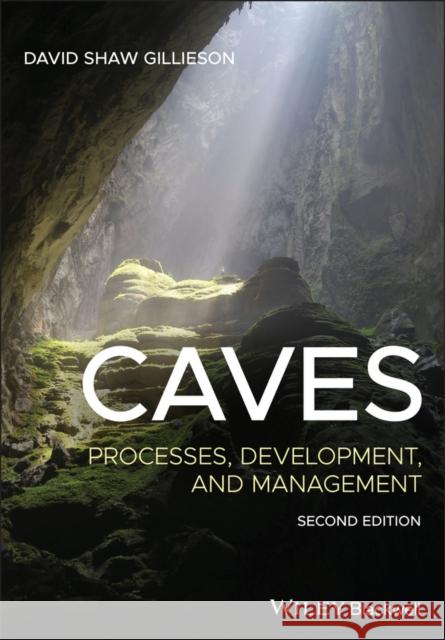
Caves: Processes, Development, and Management
ISBN-13: 9781119455578 / Angielski / Miękka / 2021 / 528 str.
Caves: Processes, Development, and Management
ISBN-13: 9781119455578 / Angielski / Miękka / 2021 / 528 str.
(netto: 274,71 VAT: 5%)
Najniższa cena z 30 dni: 284,93
ok. 30 dni roboczych.
Darmowa dostawa!
Glosariusz/słownik
Preface and AcknowledgementsFigure PermissionsPlate PermissionsChapter 1: Introduction1.1 Some Basic Propositions1.2 Now the Details...Chapter 2: Caves and Karst2.1 What is a Cave?2.2 What is Karst?2.3 Caves as Systems2.4 Caves as Geomorphic Systems2.5 Caves as Biological Systems2.6 Where are the Deepest and Longest Caves?Chapter 3: Cave Hydrology3.1 Basic Concepts in Karst Drainage Systems3.2 Porosity and Permeability3.2.1 Diffuse flow3.2.2 Fissure flow3.2.3 Conduit flow3.2.4 Understanding the karst drainage system3.3 Zonation of the Karst Drainage System3.4 Defining the Catchment of a Cave3.5 Analysis of Karst Drainage Systems3.5.1 Water tracing techniques3.5.2 Spring hydrograph analysis3.5.3 Spring chemograph analysis3.6 Structure and Function of Karst Drainage Systems3.6.1 Storage and transfers in the karst system3.6.2 The role of extreme events3.7 Karst Hydrology of the Mammoth Cave Plateau, KentuckyChapter 4: Processes of Rock Dissolution4.1 Introduction4.2 Karst Rocks4.2.1 Limestone4.2.2 Dolomite4.2.3 Evaporite rocks - Gypsum and Halite4.2.4 Sandstone4.2.5 Granite4.3 Processes of Dissolution of Karst Rocks4.3.1 The solution of limestone in meteoric waters4.3.2 Soil and vegetation in the limestone solution process4.3.3 The zoning of solution in the unsaturated zone4.3.4 Limestone solution in seawater4.4 Hydrothermal Solution of Limestone4.5 Solution of Evaporites4.6 Solution of Silicates in Meteoric Waters4.7 Caves in Quaternary Limestone in Southern AustraliaChapter 5: Speleogenesis5.1 Classifying Cave Systems5.2 Controls of Rock Structure on Cave Development5.2.1 Role of lithology5.2.2 Role of joints, fractures, and faults5.2.3 Cave breakdown and evaporite weathering5.3 Meteoric Speleogenesis, Unconfined and Confined5.3.1 Formation of caves in plan5.3.2 Formation of caves in length and depth5.3.3 The formation of maze caves5.4 Tectonic and Eustatic Controls on Cave Development5.5 Deep Shafts of the World5.6 Hypogene Speleogenesis5.6.1 Solutional mesoforms as indicators of hypogene origin5.6.2 Condensation and corrosion in passage enlargement5.7 Flank Margin Speleogenesis5.8 Caves Formed in Gypsum5.9 Lava Tubes, Weathering Caves, and Pseudokarst5.9.1 The formation of lava tubes5.9.2 Weathering caves and pseudokarst5.10 Life History and Antiquity of Caves5.11 Geological Control and the World's Longest CaveChapter 6: Cave Interior Deposits6.1 Introduction6.2 Carbonates6.3 Controls over Carbonate Mineralogy6.4 Other Cave Deposits Formed by Carbonate Minerals6.5 Growth Rates of Speleothems6.6 Important Non-Carbonate Minerals6.7 Evaporites (Sulphates and Halides)6.8 Phosphates and Nitrates6.9 Oxides, Silicates, and Hydroxides6.10 Ice in Caves6.11 Other Minerals6.12 Cave Deposits of the Nullarbor Plain, AustraliaChapter 7: Cave Sediments7.1 Introduction7.2 Clastic Sediment Types7.3 Processes of Sedimentation7.3.1 Gravity-fall processes7.3.2 Waterlain clastic sediments7.3.3 Cave and rockshelter entrance deposits7.4 Sediment Transport and Particle Size7.5 Diagenesis of Cave Sediments7.6 Stratigraphy and its Interpretation7.7 Provenance Studies7.8 Cave Sediments and Environmental History at Zhoukoudian, ChinaChapter 8: Dating Cave Deposits8.1 The Importance of Dating Cave Deposits8.2 Dating Techniques and the Quaternary Timescale8.3 Palaeomagnetism8.4 Uranium Series; Uranium-Thorium, Uranium-Lead8.5 Radiocarbon8.6 Other Dating Methods: Cosmogenic Radionuclides, and Tephrochronology8.7 Timing Glacial and Interglacial Events in New ZealandChapter 9: Cave Deposits and Past Climates9.1 Introduction9.2 Oxygen Isotope Analysis9.3 The Last Glacial-Interglacial Temperature Record9.4 Carbon Isotopes and Environmental Changes9.5 Cyclone History in the Indo-Pacific Region9.6 Other Proxy Records (Trace Elements, Annual Laminae, Pollen, Lipid Biomarkers)9.7 The Long Environmental History of the Nullarbor Plain, Australia9.8 Some Speculations on the FutureChapter 10: Cave Ecology10.1 Introduction10.2 Classification of Cave Life and its Function10.3 Adaptations and Modifications to Life in Darkness10.4 Life Zones within Caves10.5 The Cave as a Habitat10.6 Energy Flows in Cave Ecosystems10.7 Cave Microbiology10.8 Origin and Dispersal of Cave-Dwelling Animals10.9 Threats to Cave Fauna10.10 Conservation of Biological Diversity in Caves10.11 Caves and Ecosystem Services10.12 White Nose Syndrome10.13 Unravelling the Secrets of the Carrai Bat CaveChapter 11: Cave Archaeology11.1 Introduction11.2 Prehistoric uses of caves11.3 Cave faunas and hominids11.4 Cave art in context11.5 Depositional environments in caves11.6 Cave deposits and biological conservation11.7 Taphonomy of cave deposits11.8 Archaeology of Liang Bua Cave, Flores (the Hobbit Cave)Chapter 12: Historic Uses of Caves12.1 Introduction12.2 Caves as Shelter12.3 Caves as Sacred Spaces12.4 Caves as Sources of Raw Materials12.5 Cave Tourism12.6 Cave Dwellings in TurkeyChapter 13: Cave Management13.1 Introduction - Caves as Contested Spaces13.2 Interpretation and Guide Training13.3 Cave Lighting13.4 Some Engineering Issues in Caves13.5 Impacts of Visitors and Infrastructure on Show Caves13.6 Radon Risk in Caves13.7 Cave Cleaning and its Impacts13.8 Impacts of Recreational Caving on Caves13.9 Cave Rescue13.10 Cave Inventories and Alternative Management Concepts13.11 Rehabilitation and Restoration of Caves13.12 Cave Classification and Management13.13 Policy Approaches to Cave and Karst Protection13.14 Management of the Gunung Mulu World Heritage Area, Sarawak, MalaysiaChapter 14: Catchment Management in Karst14.1 Introduction14.2 Basic Concepts in Karst Management14.3 Defining Karst Catchments14.4 Vegetation and Caves14.5 Accelerated Soil Loss in Karst14.6 Agricultural Impacts14.6.1 Rocky desertification14.6.2 Infilling of dolines14.6.3 Altered drainage14.6.4 Groundwater lowering14.6.5 Fertiliser and herbicides14.6.6 Pesticides14.6.7 Microbial contamination of groundwater14.6.8 Golf courses on karst14.7 Fire Management in Karst14.8 Conservation Issues in Karst14.9 Assessing Vulnerability in Karst Management14.9.1 Karst Disturbance Index14.9.2 Karst Groundwater Vulnerability14.10 Data Availability14.10.1 Understanding disputes over cave and karst resources14.11 The IUCN Guidelines for Cave and Karst ProtectionChapter 15: Documentation of Caves15.1 Cave Use Classification15.2 Geoheritage Assessment15.3 Cave Mapping15.4 Cave Photography15.5 3D Scanning of Caves15.5.1 Processing15.5.2 Use in scientific studies15.5.3 Drones15.6 Mapping World Heritage Caves in Gunung Mulu National Park, MalaysiaFurther ReadingElectronic Media SourcesGlossaryIndex
About the AuthorDavid Shaw Gillieson is an Honorary Professorial Fellow at the School of Geography, Earth and Atmospheric Sciences, University of Melbourne, Carlton, Victoria, Australia. He has held academic appointments at the Australian National University, University of New South Wales and James Cook University. Over the last fifty years he has explored and studied caves in Australasia, Europe, North America, Oceania and Southeast Asia. He is currently Treasurer of the Australasian Cave and Karst Management Association, and is a former Chair of the International Geographical Union Commission on Karst. He has been involved in the evaluation and writing of World Heritage nominations, and cave and karst management plans across the globe.




Czytaj nas na:
1997-2026 DolnySlask.com Agencja Internetowa
KrainaKsiazek.PL - Księgarnia Internetowa


