• Wyszukiwanie zaawansowane
  • Kategorie
  • Kategorie BISAC
  • Książki na zamówienie
  • Promocje
  • Granty
  • Książka na prezent
  • Opinie
  • Pomoc
  • Załóż konto
  • Zaloguj się

Intellectual Powers » książka

zaloguj się | załóż konto
Logo Krainaksiazek.pl

koszyk

konto

szukaj
topmenu
Księgarnia internetowa
Szukaj
Książki na zamówienie
Promocje
Granty
Książka na prezent
Moje konto
Pomoc
 
 
Wyszukiwanie zaawansowane
Pusty koszyk
Bezpłatna dostawa dla zamówień powyżej 20 złBezpłatna dostawa dla zamówień powyżej 20 zł

Kategorie główne

• Nauka
 [2950560]
• Literatura piękna
 [1849509]

  więcej...
• Turystyka
 [71097]
• Informatyka
 [151150]
• Komiksy
 [35848]
• Encyklopedie
 [23178]
• Dziecięca
 [617388]
• Hobby
 [139064]
• AudioBooki
 [1657]
• Literatura faktu
 [228597]
• Muzyka CD
 [383]
• Słowniki
 [2855]
• Inne
 [445295]
• Kalendarze
 [1464]
• Podręczniki
 [167547]
• Poradniki
 [480102]
• Religia
 [510749]
• Czasopisma
 [516]
• Sport
 [61293]
• Sztuka
 [243352]
• CD, DVD, Video
 [3414]
• Technologie
 [219456]
• Zdrowie
 [101002]
• Książkowe Klimaty
 [124]
• Zabawki
 [2311]
• Puzzle, gry
 [3459]
• Literatura w języku ukraińskim
 [254]
• Art. papiernicze i szkolne
 [8079]
Kategorie szczegółowe BISAC

Intellectual Powers

ISBN-13: 9781118651216 / Angielski / Miękka / 2013 / 496 str.
P. M. S. Hacker
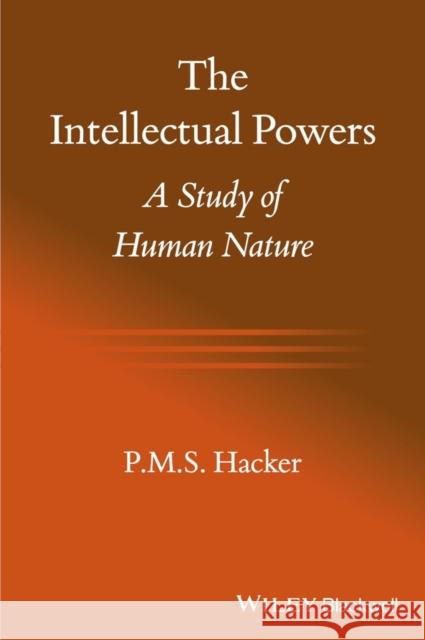
Intellectual Powers Hacker, P. M. S. 9781118651216 John Wiley & Sons - książkaWidoczna okładka, to zdjęcie poglądowe, a rzeczywista szata graficzna może różnić się od prezentowanej.

Intellectual Powers

ISBN-13: 9781118651216 / Angielski / Miękka / 2013 / 496 str.

P. M. S. Hacker
cena 112,25
(netto: 106,90 VAT:  5%)

Najniższa cena z 30 dni: 111,55
Termin realizacji zamówienia:
ok. 30 dni roboczych
Dostawa w 2026 r.

Darmowa dostawa!


The Intellectual Powers is a philosophical investigation into the cognitive and cogitative powers of mankind. It develops a connective analysis of our powers of consciousness, intentionality, mastery of language, knowledge, belief, certainty, sensation, perception, memory, thought, and imagination, by one of Britain's leading philosophers. It is an essential guide and handbook for philosophers, psychologists, and cognitive neuroscientists.

  • The culmination of 45 years of reflection on the philosophy of mind, epistemology, and the nature of the human person
  • No other book in epistemology or philosophy of psychology provides such extensive overviews of consciousness, self-consciousness, intentionality, mastery of a language, knowledge, belief, memory, sensation and perception, thought and imagination
  • Illustrated with tables, tree-diagrams, and charts to provide overviews of the conceptual relationships disclosed by analysis
  • Written by one of Britain's best philosophical minds
  • A sequel to Hacker's Human Nature: The Categorial Framework
  • An essential guide and handbook for all who are working in philosophy of mind, epistemology, psychology, cognitive science, and cognitive neuroscience


Kategorie:
Nauka, Filozofia
Kategorie BISAC:
Philosophy > History & Surveys - General
Philosophy > Movements - Humanism
Wydawca:
John Wiley & Sons
Język:
Angielski
ISBN-13:
9781118651216
Rok wydania:
2013
Ilość stron:
496
Waga:
0.59 kg
Wymiary:
22.86 x 15.24 x 2.03
Oprawa:
Miękka
Wolumenów:
01
Dodatkowe informacje:
Bibliografia
Wydanie ilustrowane

Peter Hacker is the most subtle and penetrating philosopher of the age. In recent years he has demolished the pretentions of cognitive neuroscience and caused outrage among fellow philosophers by showing that many of their claims are meaningless. The Intellectual Powers, his most recent book, is another masterpiece, examining the cognitive capacities of the human species. If, as the Ancient Greeks believed, philosophy is the most important subject, Hacker is one of our most seminal thinkers. (Matthew Syed, The Times, 7 December 2013)

An essential guide and handbook for all who are working in philosophy of mind, epistemology, psychology, cognitive science, and cognitive neuroscience.   (Expofairs.com, 21 November 2013)

Preface

Introduction: The Project

Prolegomena

Chapter 1    Consciousness as the Mark of the Mental

            1. Consciousness as a mark of modernity

            2. The genealogy of the concept of consciousness

            3. The analytic of consciousness

            4. The early modern philosophical conception of consciousness

            5. The dialectic of consciousness I

            6. The contemporary philosophical conception of consciousness

            7. The dialectic of consciousness II

            8. The illusions of self–consciousness


Chapter 2   Intentionality as the Mark of the Mental

            1. Intentionality

            2. Intentional objects

            3. The central sun: the relation of thought to reality

            4. The first circle: what do we believe (hope, suspect, etc.)?

            5. The second circle: the relation of language to reality

            6. The third circle: the relation of thought to language

            7. The fourth circle: the epistemology of intentionality

            8. The fifth circle: meaning and understanding


Chapter 3   Mastery of a Language as the Mark of a Mind

            1. A language–using animal

            2. Linguistic communication

            3. Knowing a language

            4. Meaning something

            5. Understanding and interpreting

            6. Meaning and use

            7. The dialectic of understanding: the mystery of understanding new sentences


Part I  The Cognitive and Doxastic Powers


Chapter 4   Knowledge

            1. The value of knowledge

            2. The grammatical groundwork

            3. The semantic field

            4. What knowledge is not

            5. Certainty

            6. Analyses of knowledge

            7. Knowledge and ability

            8. Knowing how

            9. What is knowledge? The role of know in human discourse


Chapter 5   Belief

            1. The web of belief

            2. The grammatical groundwork

            3. The surrounding landscape

            4. Voluntariness and responsibility for belief

            5. Belief and feelings

            6. Belief and dispositions

            7. Belief and mental states

            8. Why believing something cannot be a brain state

            9. What is belief? The role of believe in human discourse


Chapter 6   Knowledge, Belief and the Epistemology of Belief

            1. Knowledge and belief

            2. The epistemology of belief

            3. Non–standard cases: self–deception and unconscious beliefs


Chapter 7  Sensation and Perception

            1. The cognitive powers of the senses

            2. Sensation

            3. Perception and sensation

            4. Sensation, feeling and tactile perception


Chapter 8   Perception

            1. Perceptual organs, the senses and proper sensibles

            2. Perceptual powers: cognition and volition

            3. The classical causal theory of perception

            4. The modern causal theory of perception


Chapter 9   Memory

            1. Memory as a form of knowledge

            2. The objects of memory

            3. The faculty and its actualities

            4. Forms of memory

            5. Further conceptual links and contrasts

            6. The dialectic of memory I: the Aristotelian legacy

            7. The dialectic of memory II: trace theory


Part II The Cogitative Powers


Chapter 10   Thought and Thinking

            1. Floundering without an overview

            2. The varieties of thinking

            3. Is thinking an activity?

            4. What do we think in?

            5. Thought, language and the language of thought

            6. Can animals think?

            7. The agent, organ and location of thinking

            8. Thinking and the inner life


Chapter 11   Imagination

            1. A cogitative faculty

            2. The conceptual network of the imagination

            3. Perceiving and imagining

            4. Perceptions and imaginations : clarity and vivacity of mental imagery

            5. Mental images and imagining

            6. Imagination and the will

            7. The imaginable, the conceivable and the possible


Appendix: Philosophical Analysis and the Way of Words

            1. On method

            2. Methodological objections and misunderstandings

Index

P. M. S. Hacker is a Fellow of St John s College, Oxford. He is the author of numerous books and articles on philosophy of mind and philosophy of language as well as philosophical foundations of cognitive neuroscience, and is the leading authority on the philosophy of Wittgenstein. Among his many publications is the monumental four–volume Analytical Commentary on Wittgenstein′s Philosophical Investigations (Wiley–Blackwell, 1991, first two volumes co–authored with G. P. Baker), and its epilogue Wittgenstein′s Place in Twentieth Century Analytic Philosophy (Wiley–Blackwell, 1996). His work (with Maxwell Bennett) on cognitive neuroscience, Philosophical Foundations of Neuroscience (2003) and History of Cognitive Neuroscience (2008), is renowned. The first volume of his trilogy on human nature, Human Nature: the Categorial Framework, was published in 2007.

The Intellectual Powers: a Study of Human Nature is a philosophical investigation into the cognitive and cogitative abilities of mankind. It elaborates a connective analysis of consciousness and self–consciousness, intentionality, linguistic ability, knowledge, belief, sensation, perception, memory, thought, and imagination. Each chapter contains a detailed survey of one of these faculties, as well as an analysis of the illusions of reason that have dogged the efforts of past and present philosophers to grasp the nature and limits of our epistemic powers. Together they present a compelling picture both of what connects us to the rest of the animal kingdom and of what is unique to humankind.

This book is a sequel to Human Nature: the Categorial Framework (2007), but it is completely self–contained. It is written in a style that is lucid and jargon–free. The text is illustrated by tables, tree–diagrams, and charts to provide overviews of the conceptual relationships disclosed by analysis. This comprehensive investigation constitutes an indispensable handbook for all students of epistemology and philosophy of mind.

Ranging widely over topics in epistemology, philosophy of psychology, metaphysics, and philosophical anthropology, this work presents the mature, original reflections of one of Britain′s best philosophical minds.

Hacker, P. M. S. P. M. S. Hacker is Fellow of St. John's College, O... więcej >


Udostępnij

Facebook - konto krainaksiazek.pl


Opinie o Krainaksiazek.pl na Opineo.pl

Partner Mybenefit

Krainaksiazek.pl w programie rzetelna firma Krainaksiaze.pl - płatności przez paypal

Czytaj nas na:

Facebook - krainaksiazek.pl
  • książki na zamówienie
  • granty
  • książka na prezent
  • kontakt
  • pomoc
  • opinie
  • regulamin
  • polityka prywatności

Zobacz:

  • Księgarnia czeska

  • Wydawnictwo Książkowe Klimaty

1997-2025 DolnySlask.com Agencja Internetowa

© 1997-2022 krainaksiazek.pl
     
KONTAKT | REGULAMIN | POLITYKA PRYWATNOŚCI | USTAWIENIA PRYWATNOŚCI
Zobacz: Księgarnia Czeska | Wydawnictwo Książkowe Klimaty | Mapa strony | Lista autorów
KrainaKsiazek.PL - Księgarnia Internetowa

Polityka prywatnosci - link
Krainaksiazek.pl - płatnośc Przelewy24
Przechowalnia Przechowalnia






