The Black-Scholes-Merton Model as an Idealization of Discrete-Time Economies » książka

topmenu




The Black-Scholes-Merton Model as an Idealization of Discrete-Time Economies
ISBN-13: 9781108486361 / Angielski / Twarda / 2019 / 214 str.
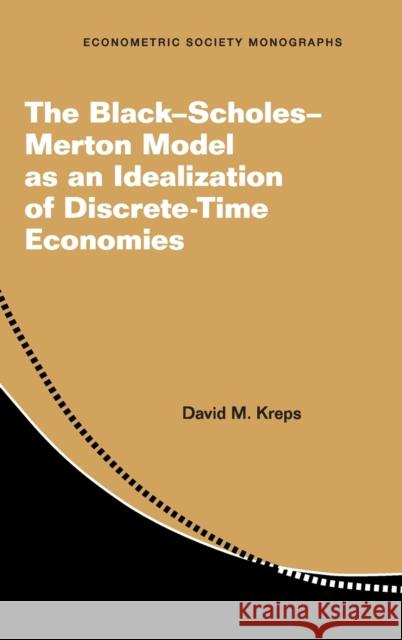
The Black-Scholes-Merton Model as an Idealization of Discrete-Time Economies
ISBN-13: 9781108486361 / Angielski / Twarda / 2019 / 214 str.
cena 494,75
(netto: 471,19 VAT: 5%)
Najniższa cena z 30 dni: 478,55
(netto: 471,19 VAT: 5%)
Najniższa cena z 30 dni: 478,55
Termin realizacji zamówienia:
ok. 16-18 dni roboczych.
ok. 16-18 dni roboczych.
Darmowa dostawa!
Examines whether continuous-time models in frictionless financial economies can be well approximated by discrete-time models.




Czytaj nas na:
Zobacz: Księgarnia Czeska | Wydawnictwo Książkowe Klimaty | Mapa strony | Lista autorów
KrainaKsiazek.PL - Księgarnia Internetowa

KrainaKsiazek.PL - Księgarnia Internetowa

