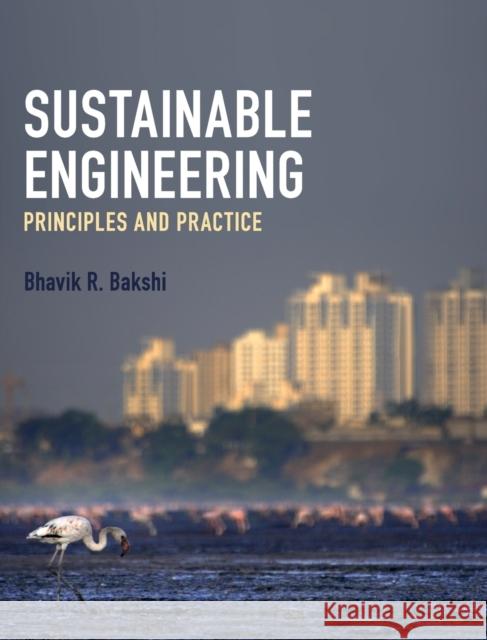
'Sustainable Engineering provides a comprehensive engineering treatment of sustainability. This is the only textbook covering many of the new approaches to sustainable engineering. Clear, succinct chapters, and the range of quantitative problems, make for a welcome textbook that will be widely useful for undergraduate engineering classes. It includes recent concepts such as water footprinting, energy return on investment, material flow analysis, energy analysis, ecosystem services calculations, techno-economic analysis, and industrial symbiosis. The problems are quantitative and thorough, with sufficient worked examples that they can be mastered in an introductory sustainable engineering course. The sustainability framing is broad and thorough, allowing undergraduates to see the big-picture context for sustainable engineering. References are also excellent, encouraging students to become familiar with key data sources, software, and the relevant scientific literature.' Valerie Thomas, Anderson Interface Professor of Natural Systems, Georgia Institute of Technology
Part I. Introduction and Motivation: 1. The basis of human well-being; 2. Status of ecosystem goods and services; 3. Sustainability: definitions and challenges; Part II. Reasons for Unsustainability: 4. Economics and the environment; 5. Business and the environment; 6. Science, engineering, and the environment; 7. Society and the environment; Part III. Sustainability Assessment: 8. Goal definition and scope; 9. Inventory analysis; 10. Mathematical framework; 11. Footprint assessment; 12. Energy and material flow analysis; 13. Exergy analysis; 14. Cumulative exergy consumption and emergy analysis; 15. Life cycle impact assessment; 16. Ecosystem services in sustainability impact assessment; Part IV. Solutions for Sustainability: 17. Designing sustainable processes and products; 18. Ecosystem ecology; 19. Industrial symbiosis and circular economy; 20. Ecosystems in engineering; 21. Economic policies; 22. Societal development.