• Wyszukiwanie zaawansowane
  • Kategorie
  • Kategorie BISAC
  • Książki na zamówienie
  • Promocje
  • Granty
  • Książka na prezent
  • Opinie
  • Pomoc
  • Załóż konto
  • Zaloguj się

Handbook of Smart Coatings for Materials Protection » książka


zaloguj się | załóż konto
Logo Krainaksiazek.pl

koszyk

konto

szukaj
topmenu
Księgarnia internetowa
Szukaj
Książki na zamówienie
Promocje
Granty
Książka na prezent
Moje konto
Pomoc
 
 
Wyszukiwanie zaawansowane
Pusty koszyk
Bezpłatna dostawa dla zamówień powyżej 20 złBezpłatna dostawa dla zamówień powyżej 20 zł

Kategorie główne

• Nauka
 [2952079]
• Literatura piękna
 [1850969]

  więcej...
• Turystyka
 [71058]
• Informatyka
 [151066]
• Komiksy
 [35579]
• Encyklopedie
 [23181]
• Dziecięca
 [620496]
• Hobby
 [139036]
• AudioBooki
 [1646]
• Literatura faktu
 [228729]
• Muzyka CD
 [379]
• Słowniki
 [2932]
• Inne
 [445708]
• Kalendarze
 [1409]
• Podręczniki
 [164793]
• Poradniki
 [480107]
• Religia
 [510956]
• Czasopisma
 [511]
• Sport
 [61267]
• Sztuka
 [243299]
• CD, DVD, Video
 [3411]
• Technologie
 [219640]
• Zdrowie
 [100984]
• Książkowe Klimaty
 [124]
• Zabawki
 [2281]
• Puzzle, gry
 [3363]
• Literatura w języku ukraińskim
 [258]
• Art. papiernicze i szkolne
 [8020]
Kategorie szczegółowe BISAC

Handbook of Smart Coatings for Materials Protection

ISBN-13: 9780857096807 / Angielski / Twarda / 2014 / 628 str.
Abdel Salam Hamdy Makhlouf
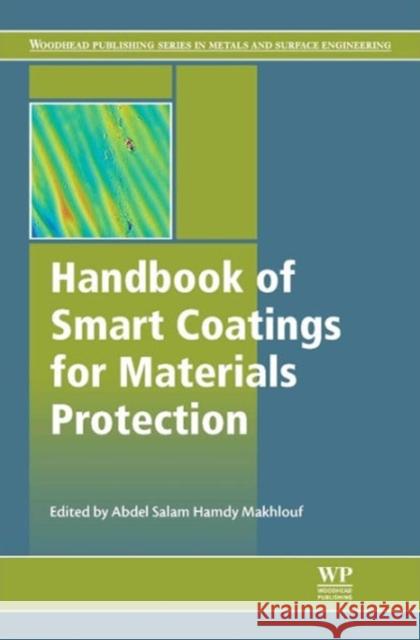
Handbook of Smart Coatings for Materials Protection Abdel Salam Hamdy Makhlouf 9780857096807 Woodhead Publishing - książkaWidoczna okładka, to zdjęcie poglądowe, a rzeczywista szata graficzna może różnić się od prezentowanej.

Handbook of Smart Coatings for Materials Protection

ISBN-13: 9780857096807 / Angielski / Twarda / 2014 / 628 str.

Abdel Salam Hamdy Makhlouf
cena 1068,72
(netto: 1017,83 VAT:  5%)

Najniższa cena z 30 dni: 1062,14
Termin realizacji zamówienia:
ok. 30 dni roboczych
Dostawa w 2026 r.

Darmowa dostawa!

A smart coating is defined as one that changes its properties in response to an environmental stimulus. The Handbook of Smart Coatings for Materials Protection reviews the new generation of smart coatings for corrosion and other types of material protection. Part one explores the fundamentals of smart coatings for materials protection including types, materials, design, and processing. Chapters review corrosion processes and strategies for prevention; smart coatings for corrosion protection; techniques for synthesizing and applying smart coatings; multi-functional, self-healing coatings; and current and future trends of protective coatings for automotive, aerospace, and military applications. Chapters in part two focus on smart coatings with self-healing properties for corrosion protection, including self-healing anticorrosion coatings for structural and petrochemical engineering applications; smart self-healing coatings for corrosion protection of aluminum alloys, magnesium alloys and steel; smart nanocoatings for corrosion detection and control; and recent advances in polyaniline-based organic coatings for corrosion protection. Chapters in part three move on to highlight other types of smart coatings, including smart self-cleaning coatings for corrosion protection; smart polymer nanocomposite water- and oil-repellent coatings for aluminum; UV-curable organic polymer coatings for corrosion protection of steel; smart epoxy coatings for early detection of corrosion in steel and aluminum; and structural ceramics with self-healing properties. The Handbook of Smart Coatings for Materials Protection is a valuable reference for those concerned with preventing corrosion, particularly of metals, professionals working within the surface coating industries, as well as all those with an academic research interest in the field.

  • Reviews the new generation of smart coatings for corrosion and other types of material protection
  • Explores the fundamentals of smart coatings for materials protection including types, materials, design, and processing
  • Includes a focus on smart coatings with self-healing properties for corrosion protection

Kategorie:
Inne
Kategorie BISAC:
Technology & Engineering > Metallurgy
Technology & Engineering > Materials Science - General
Technology & Engineering > Industrial Engineering
Wydawca:
Woodhead Publishing
Język:
Angielski
ISBN-13:
9780857096807
Rok wydania:
2014
Ilość stron:
628
Waga:
1.06 kg
Wymiary:
23.88 x 16.26 x 4.32
Oprawa:
Twarda
Wolumenów:
01
Dodatkowe informacje:
Bibliografia
Wydanie ilustrowane

Contributor contact details

Woodhead Publishing Series in Metals and Surface Engineering

Preface

Part I: Fundamentals of smart coatings for materials protection

1. Corrosion processes and strategies for prevention: an introduction

Abstract:

1.1 Introduction

1.2 Corrosion of metals, alloys and composites: an overview

1.3 Wet corrosive environments

1.4 Strategies for corrosion inhibition: design and materials

1.5 Strategies for corrosion inhibition: protective coatings

1.6 Conclusion

1.7 Acknowledgement

1.8 References

2. Smart coatings for corrosion protection: an overview

Abstract:

2.1 Introduction

2.2 Triggering mechanisms

2.3 Self-healing mechanisms

2.4 Sensing systems

2.5 Future trends

2.6 Conclusion

2.7 Acknowledgement

2.8 References

3. Techniques for synthesizing and applying smart coatings for material protection

Abstract:

3.1 Introduction

3.2 Environmentally friendly smart self-healing coatings

3.3 Most common methods and technologies for synthesizing smart coatings

3.4 Conclusion

3.5 References

4. Multi-functional, self-healing coatings for corrosion protection: materials, design and processing

Abstract:

4.1 Introduction

4.2 Key issues in developing multi-functional coatings

4.3 Materials for encapsulation of self-healing and anti-corrosion agents

4.4 Computer-based simulation

4.5 Material testing and function screening

4.6 Processing

4.7 Guiding principles for designing multi-functional coatings

4.8 Case studies and examples

4.9 Conclusion and future trends

4.10 Acknowledgements

4.11 References

5. Strategies for developing multi-functional, self-healing coatings for corrosion prevention and other functions

Abstract:

5.1 Introduction

5.2 Approaches to self-healing of functional coatings

5.3 Corrosion and other functions of coatings recovered or enhanced by self-healing

5.4 Technologies for creating functional self-healing coatings

5.5 Conclusion

5.6 Future trends

5.7 Sources of further information and advice

5.8 References

6. Protective coatings for automotive, aerospace and military applications: current prospects and future trends

Abstract:

6.1 Introduction

6.2 Advances in materials of construction

6.3 Advances in surface pre-treatment

6.4 Advances in top organic coatings

6.5 Optimising the coatings process and testing

6.6 Conclusion and future trends

6.7 References

Part II: Smart coatings with self-healing properties for corrosion protection

7. The use of nano-/microlayers, self-healing and slow-release coatings to prevent corrosion and biofouling

Abstract:

7.1 Introduction

7.2 Corrosion of different metals: mechanisms, monitoring and corrosion inhibitors

7.3 Microbiologically influenced corrosion (MIC) and biofouling: mechanisms, monitoring and control

7.4 Inhibition of corrosion and biofilm formation by nanolayers

7.5 Self-healing coatings against corrosion and biofilm formation with nano-/microcapsules and nano-/microspheres

7.6 Conclusion

7.7 References and further reading

8. Self-healing anti-corrosion coatings for applications in structural and petrochemical engineering

Abstract:

8.1 Introduction

8.2 Self-healing mechanisms

8.3 Self-healing anti-corrosion coatings based on polyaniline (PANI)-modified ferrites

8.4 Self-healing anti-corrosion coatings based on conducting polymer-modified graphene

8.5 Conducting polymer coatings based on PANI-modified TiO2

8.6 Self-healing anti-corrosion coatings using the layer-by-layer approach

8.7 Conclusion and future trends

8.8 References

9. Smart nanocoatings for corrosion detection and control

Abstract:

9.1 Introduction

9.2 Smart anti-corrosion nanocoatings

9.3 Smart self-healing coatings using microcapsules

9.4 Synthesis of microcapsules

9.5 Physical and mechanical properties of self-healing coatings

9.6 Smart nanocoatings for specific applications

9.7 Smart self-cleaning nanocoatings

9.8 Applications of smart nanocoatings

9.9 Conclusion and future trends

9.10 References

10. Smart self-healing coatings for corrosion protection of aluminium alloys

Abstract:

10.1 Introduction

10.2 Corrosion of aluminium alloys

10.3 Conversion coatings with self-healing properties

10.4 Hybrid sol-gel self-healing coatings

10.5 Sol-gel coatings with corrosion inhibitors

10.6 Multilayer coatings combining sol-gel coatings and corrosion inhibitors

10.7 Organic polymeric coatings with self-healing properties

10.8 Smart organic coating systems with controlled inhibitor release

10.9 Smart coatings with micro- and nanocontainers

10.10 Conclusion and future trends

10.11 References

11. Smart stannate-based self-healing coatings for corrosion protection of magnesium alloys

Abstract:

11.1 Introduction

11.2 Developing and testing stannate-based smart coatings

11.3 The performance of stannate-based smart coatings

11.4 Conclusion

11.5 Acknowledgments

11.6 References

12. Incorporating microcapsules in smart coatings for corrosion protection of steel

Abstract:

12.1 Introduction

12.2 Mechanisms of self-healing in smart anticorrosion coatings

12.3 Synthesis of microcapsules

12.4 Characterization of microcapsules

12.5 Testing the effectiveness of coatings

12.6 Conclusion

12.7 Acknowledgments

12.8 References

13. Multi-layer smart coatings for corrosion protection of aluminium alloys and steel

Abstract:

13.1 Introduction

13.2 Developing layer-by-layer (LbL) coatings with active feedback properties

13.3 Methods for formation of LbL coatings

13.4 Case studies

13.5 Conclusion and future trends

13.6 References and further reading

14. Electro-active polymer (EAP) coatings for corrosion protection of metals

Abstract:

14.1 Introduction

14.2 The use of electro-active polymers (EAPs) in corrosion protection

14.3 Synthesis and properties of particular EAPs

14.4 Toxicological properties of poly(2,5-(bis-N-methyl-N-hexylamino) phenylene vinylene (BAM-PPV)

14.5 Methods to evaluate corrosion-inhibiting properties of EAPs

14.6 Corrosion inhibition of ferrous metals using EAP coatings

14.7 Corrosion inhibition of aluminum alloys using EAP coatings

14.8 Future trends

14.9 Conclusion

14.10 Acknowledgment

14.11 References

15. Microencapsulated indicators and inhibitors for corrosion detection and control

Abstract:

15.1 Introduction

15.2 Corrosion indicators and corrosion sensing

15.3 Corrosion inhibitor delivery systems

15.4 Current developments in smart coatings for corrosion sensing and inhibition

15.5 pH-sensitive microcapsules and microparticles

15.6 Microencapsulation methods

15.7 Microcapsules and microparticles for corrosion indication

15.8 Microcapsules and microparticles for corrosion inhibition

15.9 Conclusion

15.10 Acknowledgments

15.10 References

15.12 Appendix: list of acronyms

Part III: Other types of smart coating

16. Smart acrylic coatings containing silica particles for corrosion protection of aluminum and other metals

Abstract:

16.1 Introduction

16.2 The use of acrylic polymers in coatings

16.3 Synthesis and characterization of novel acrylic-based copolymers

16.4 Sol-gel incorporation of silica nanoparticles

16.5 Analyzing crosslinking and key properties in the coating

16.6 Conclusion

16.7 Acknowledgments

16.8 References

17. Recent advances in polyaniline (PANI)-based organic coatings for corrosion protection

Abstract:

17.1 Introduction

17.2 Polyaniline (PANI) as an intrinsically conductive polymer (ICP)

17.3 PANI as an anti-corrosion polymer

17.4 Mechanisms of PANI as a barrier protective coating

17.5 Mechanism of PANI as a corrosion inhibitor

17.6 Mechanism of PANI in self-healing coatings with controlled inhibitor release

17.7 Conclusion and future trends

17.8 References

18. Smart self-cleaning coatings for corrosion protection

Abstract:

18.1 Introduction

18.2 Types of self-cleaning coatings

18.3 Techniques for developing self-cleaning coatings

18.4 TiO2 as a material for corrosion protection

18.5 Conclusion

18.6 Future trends

18.7 References

19. Smart polymer nanocomposite water and oil repellent coatings for aluminum

Abstract:

19.1 Introduction

19.2 Developing super-hydrophobic coatings: materials, processing and characterization

19.3 Flame treatment for super-hydrophobicity

19.4 Assessing coating properties

19.5 Electrical characteristics of the super-hydrophobic coatings

19.6 Conclusion

19.7 References

20. UV-curable organic polymer coatings for corrosion protection of steel

Abstract:

20.1 Introduction

20.2 UV-cured coatings: materials and mechanisms of crosslinking

20.3 Additives and pigments

20.4 Case studies

20.5 Conclusion

20.6 Sources of further information and advice

20.7 References

21. Smart epoxy coatings for early detection of corrosion in steel and aluminum

Abstract:

21.1 Introduction

21.2 In situ early corrosion detection via indicator molecules embedded in a protective coating

21.3 Early detection of steel corrosion via 'turn-on' fluorescence

21.4 Sensing mechanism of the corrosion indicator

21.5 Early detection of aluminum corrosion via 'turn-on' fluorescence

21.6 Future trends

21.7 Conclusion

21.8 References

22. Structural ceramics with self-healing properties

Abstract:

22.1 Introduction

22.2 Material development

22.3 Self-crack-healing behavior

22.4 High-temperature strength of crack-healed specimen

22.5 Crack-healing behavior during service

22.6 Conclusion

22.7 References

Index

Abdel Salam Hamdy Makhlouf is a Full Professor (Tenured) at the College of Engineering and Computer Science, University of Texas Pan-American, USA. Professor Makhlouf has received several prestigious international awards for his research work and is an expert evaluator for the EU FP7 programme and various scholarship programmes around the world. He is an Editor for the Nanotechnology section of Insciences Journal and for the International Journal of Applied Sciences. He is also an Advisory Editor for books published by Elsevier in the area of advanced coatings and thin films.

Makhlouf, Abdel Salam Hamdy Dr. Abel Salam Hamdy Makhlouf, Max Planck Institut... więcej >


Udostępnij

Facebook - konto krainaksiazek.pl


Opinie o Krainaksiazek.pl na Opineo.pl

Partner Mybenefit

Krainaksiazek.pl w programie rzetelna firma Krainaksiaze.pl - płatności przez paypal

Czytaj nas na:

Facebook - krainaksiazek.pl
  • książki na zamówienie
  • granty
  • książka na prezent
  • kontakt
  • pomoc
  • opinie
  • regulamin
  • polityka prywatności

Zobacz:

  • Księgarnia czeska

  • Wydawnictwo Książkowe Klimaty

1997-2025 DolnySlask.com Agencja Internetowa

© 1997-2022 krainaksiazek.pl
     
KONTAKT | REGULAMIN | POLITYKA PRYWATNOŚCI | USTAWIENIA PRYWATNOŚCI
Zobacz: Księgarnia Czeska | Wydawnictwo Książkowe Klimaty | Mapa strony | Lista autorów
KrainaKsiazek.PL - Księgarnia Internetowa

Polityka prywatnosci - link
Krainaksiazek.pl - płatnośc Przelewy24
Przechowalnia Przechowalnia





