• Wyszukiwanie zaawansowane
  • Kategorie
  • Kategorie BISAC
  • Książki na zamówienie
  • Promocje
  • Granty
  • Książka na prezent
  • Opinie
  • Pomoc
  • Załóż konto
  • Zaloguj się

The Open Past: Subjectivity and Remembering in the Talmud » książka


zaloguj się | załóż konto
Logo Krainaksiazek.pl

koszyk

konto

szukaj
topmenu
Księgarnia internetowa
Szukaj
Książki na zamówienie
Promocje
Granty
Książka na prezent
Moje konto
Pomoc
 
 
Wyszukiwanie zaawansowane
Pusty koszyk
Bezpłatna dostawa dla zamówień powyżej 20 złBezpłatna dostawa dla zamówień powyżej 20 zł

Kategorie główne

• Nauka
 [2939893]
• Literatura piękna
 [1808953]

  więcej...
• Turystyka
 [70366]
• Informatyka
 [150555]
• Komiksy
 [35137]
• Encyklopedie
 [23160]
• Dziecięca
 [608786]
• Hobby
 [136447]
• AudioBooki
 [1631]
• Literatura faktu
 [225099]
• Muzyka CD
 [360]
• Słowniki
 [2914]
• Inne
 [442115]
• Kalendarze
 [1068]
• Podręczniki
 [166599]
• Poradniki
 [468390]
• Religia
 [506548]
• Czasopisma
 [506]
• Sport
 [61109]
• Sztuka
 [241608]
• CD, DVD, Video
 [3308]
• Technologie
 [218981]
• Zdrowie
 [98614]
• Książkowe Klimaty
 [124]
• Zabawki
 [2174]
• Puzzle, gry
 [3275]
• Literatura w języku ukraińskim
 [260]
• Art. papiernicze i szkolne
 [7376]
Kategorie szczegółowe BISAC

The Open Past: Subjectivity and Remembering in the Talmud

ISBN-13: 9780823244928 / Angielski / Twarda / 2012 / 392 str.
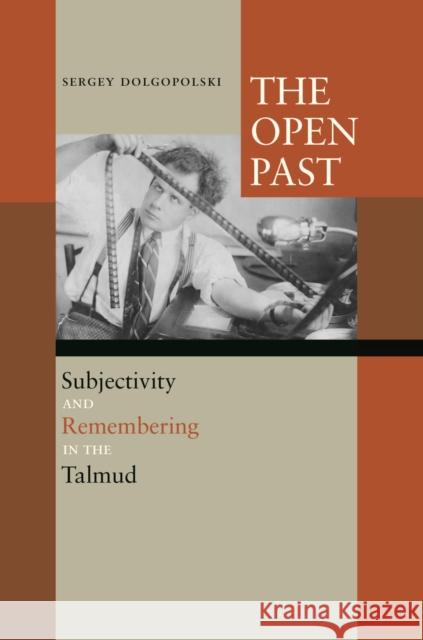
Sergey Dolgopolski
The Open Past: Subjectivity and Remembering in the Talmud Dolgopolski, Sergey 9780823244928 Fordham University Press - książkaWidoczna okładka, to zdjęcie poglądowe, a rzeczywista szata graficzna może różnić się od prezentowanej.

The Open Past: Subjectivity and Remembering in the Talmud

ISBN-13: 9780823244928 / Angielski / Twarda / 2012 / 392 str.

Sergey Dolgopolski
cena 284,07
(netto: 270,54 VAT:  5%)

Najniższa cena z 30 dni: 280,01
Termin realizacji zamówienia:
ok. 30 dni roboczych.

Darmowa dostawa!

If life in time is imminent and means an always open future, what role remains for the past? If time originates from that relationship to the future, then the past can only be a fictitious beginning, a necessary phantom of a starting point, a retroactively generated chronological period of "before." Advanced in philosophical thought of the last two centuries, this view of the past permeated the study on the Talmud as well, resulting in application of modern philosophical categories of the "thinking subject," subjectivity, and time to thinking about thinking displayed in the texts of the Talmud. This book challenges that application. Departing from the hitherto prevalent view of thinking in the Talmud in terms of anonymous thinking subjects, called "redactors" or "designer" of Talmudic discussions, the book reconsiders the modern reduction of the past to a chronological period in time, and reclaims the originary power (and authority) the past exerts in thinking and remembering displayed both in the conversations the characters in the Talmud have, and in the literary design of these conversations. Central for that task of reclaiming the radical role of the past are contrasting medieval notions of the virtual and their modern appropriations, thinking subject among them, which serve as both a bridging point and a demarcation between the practices of thinking of, and remembering, the past in the Talmud vis-a-vis other rhetorical and/or philosophical school and disciplines of thought. The Open Past suggests the possibility of understanding the conversations and the design of these conversations in the Talmud in terms of thinking in no time. This no time has several layers of meaning. In its weakest formulation, it means "in no single time" in the sense that the Talmudic conversations happen in no historically "real" time. More strongly put, it means, borrowing the language from film theory, that the Talmud requires a never consolidated difference between diegetical time, and the time of montage; which creates a no-one's time and place that in turn creates time and place for everyone else. Even more strongly, it means that performance of the conversations in the Talmud is constantly driven by, and towards, an always open past -- a power of that past is radically different from the power of either futuristic or chronological time.


Kategorie:
Nauka, Filozofia
Kategorie BISAC:
Philosophy > Religious
Religion > Philosophy
Religion > Judaism - Talmud
Wydawca:
Fordham University Press
Język:
Angielski
ISBN-13:
9780823244928
Rok wydania:
2012
Ilość stron:
392
Waga:
0.59 kg
Wymiary:
22.86 x 15.75 x 3.56
Oprawa:
Twarda
Wolumenów:
01
Dodatkowe informacje:
Bibliografia
Obwoluta
Dolgopolski, Sergey SERGEY DOLGOPOLSKI is Assistant Professor of Relig... więcej >


Udostępnij

Facebook - konto krainaksiazek.pl


Opinie o Krainaksiazek.pl na Opineo.pl

Partner Mybenefit

Krainaksiazek.pl w programie rzetelna firma Krainaksiaze.pl - płatności przez paypal

Czytaj nas na:

Facebook - krainaksiazek.pl
  • książki na zamówienie
  • granty
  • książka na prezent
  • kontakt
  • pomoc
  • opinie
  • regulamin
  • polityka prywatności

Zobacz:

  • Księgarnia czeska

  • Wydawnictwo Książkowe Klimaty

1997-2026 DolnySlask.com Agencja Internetowa

© 1997-2022 krainaksiazek.pl
     
KONTAKT | REGULAMIN | POLITYKA PRYWATNOŚCI | USTAWIENIA PRYWATNOŚCI
Zobacz: Księgarnia Czeska | Wydawnictwo Książkowe Klimaty | Mapa strony | Lista autorów
KrainaKsiazek.PL - Księgarnia Internetowa

Polityka prywatnosci - link
Krainaksiazek.pl - płatnośc Przelewy24
Przechowalnia Przechowalnia





