One Foot in the Finite: Melville's Realism Reclaimed » książka

topmenu




One Foot in the Finite: Melville's Realism Reclaimed
ISBN-13: 9780810136120 / Angielski / Miękka / 2017 / 184 str.
One Foot in the Finite: Melville's Realism Reclaimed
ISBN-13: 9780810136120 / Angielski / Miękka / 2017 / 184 str.
cena 144,01
(netto: 137,15 VAT: 5%)
Najniższa cena z 30 dni: 140,54
(netto: 137,15 VAT: 5%)
Najniższa cena z 30 dni: 140,54
Termin realizacji zamówienia:
ok. 30 dni roboczych.
ok. 30 dni roboczych.
Darmowa dostawa!
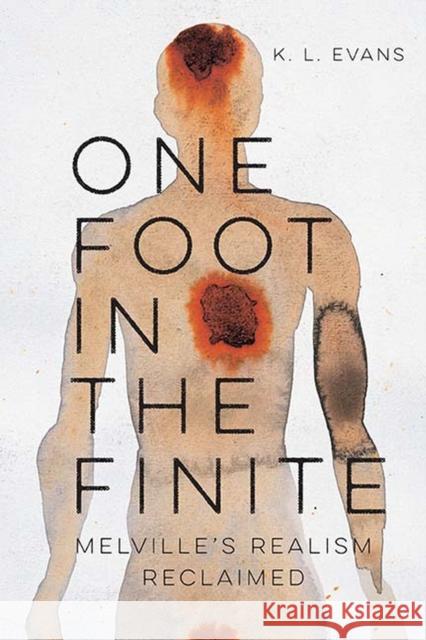
In One Foot in the Finite, K. L. Evans makes the case that Melville's masterpiece Moby-Dick offers a chance to rethink literary realism. Distinguishing between realism as an attempt to hold up a mirror to the natural world and the more nuanced realism associated with the work of Dante, Shakespeare, Goethe, Melville, Proust, Woolf, and Joyce, Evans suggests that even narratives like Moby-Dick that are highly stylized or include fantastical elements can depict life as it is actually lived and experienced by real people.
This spirited contribution to materialist critiques also includes a timely reexamination of concepts. Concepts (like "whale") are puzzling because they are not part of the natural world, the world of physical objects and forces in which human beings are immersed, and yet they are not denizens of the subjective, essentially private inner world that philosophers since Descartes have associated with the world of ideas. Though the whale that figures centrally in Moby-Dick is otherworldly or nonsensible, a "phantom," as Melville writes, it is not merely an idea or creation of the mind. For Evans, Melville is a realist because he shows how the concept "whale" is intersubjective--how it can be comprehensible to and rightly used by any number of persons. The argument that our concepts (and their linguistic expressions) are not separated from the actual lives of humans has widespread literary and philosophical ramifications, for it overturns a view of language in which words pass at such remoteness from tangible things that all talk is idle and the meanings of our signs turn out to be capricious and arbitrary.



Czytaj nas na:
Zobacz: Księgarnia Czeska | Wydawnictwo Książkowe Klimaty | Mapa strony | Lista autorów
KrainaKsiazek.PL - Księgarnia Internetowa

KrainaKsiazek.PL - Księgarnia Internetowa

