• Wyszukiwanie zaawansowane
  • Kategorie
  • Kategorie BISAC
  • Książki na zamówienie
  • Promocje
  • Granty
  • Książka na prezent
  • Opinie
  • Pomoc
  • Załóż konto
  • Zaloguj się

Chaos theory in Psychology and the Life Sciences » książka


zaloguj się | załóż konto
Logo Krainaksiazek.pl

koszyk

konto

szukaj
topmenu
Księgarnia internetowa
Szukaj
Książki na zamówienie
Promocje
Granty
Książka na prezent
Moje konto
Pomoc
 
 
Wyszukiwanie zaawansowane
Pusty koszyk
Bezpłatna dostawa dla zamówień powyżej 20 złBezpłatna dostawa dla zamówień powyżej 20 zł

Kategorie główne

• Nauka
 [2950560]
• Literatura piękna
 [1849509]

  więcej...
• Turystyka
 [71097]
• Informatyka
 [151150]
• Komiksy
 [35848]
• Encyklopedie
 [23178]
• Dziecięca
 [617388]
• Hobby
 [139064]
• AudioBooki
 [1657]
• Literatura faktu
 [228597]
• Muzyka CD
 [383]
• Słowniki
 [2855]
• Inne
 [445295]
• Kalendarze
 [1464]
• Podręczniki
 [167547]
• Poradniki
 [480102]
• Religia
 [510749]
• Czasopisma
 [516]
• Sport
 [61293]
• Sztuka
 [243352]
• CD, DVD, Video
 [3414]
• Technologie
 [219456]
• Zdrowie
 [101002]
• Książkowe Klimaty
 [124]
• Zabawki
 [2311]
• Puzzle, gry
 [3459]
• Literatura w języku ukraińskim
 [254]
• Art. papiernicze i szkolne
 [8079]
Kategorie szczegółowe BISAC

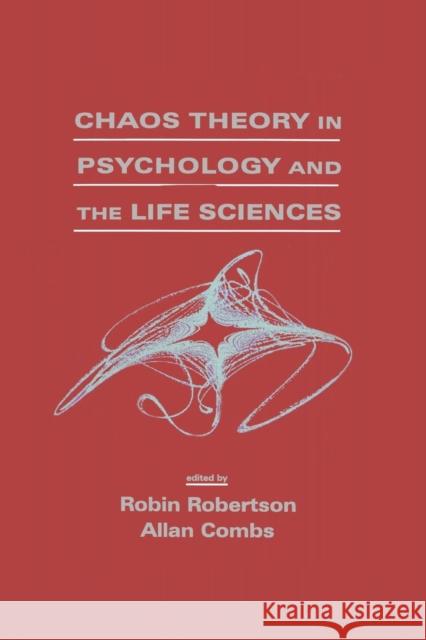
Chaos theory in Psychology and the Life Sciences

ISBN-13: 9780805817379 / Angielski / Miękka / 1995 / 416 str.
Robin Robertson;Allan Combs;Robin Robertson
Chaos theory in Psychology and the Life Sciences Robin Robertson Allan Combs Robin Robertson 9780805817379 Taylor & Francis - książkaWidoczna okładka, to zdjęcie poglądowe, a rzeczywista szata graficzna może różnić się od prezentowanej.

Chaos theory in Psychology and the Life Sciences

ISBN-13: 9780805817379 / Angielski / Miękka / 1995 / 416 str.

Robin Robertson;Allan Combs;Robin Robertson
cena 276,84
(netto: 263,66 VAT:  5%)

Najniższa cena z 30 dni: 266,93
Termin realizacji zamówienia:
ok. 22 dni roboczych
Dostawa w 2026 r.

Darmowa dostawa!

This book represents the best of the first three years of the Society for Chaos Theory in Psychology conferences. While chaos theory has been a topic of considerable interest in the physical and biological sciences, its applications in psychology and related fields have been obscured until recently by its complexity. Nevertheless, a small but rapidly growing community of psychologists, neurobiologists, sociologists, mathematicians, and philosophers have been coming together to discuss its implications and explore its research possibilities.

Chaos theory has been termed the first authentic paradigm shift since the advent of quantum physics. Whether this is true or not, it unquestionably bears profound implications for many fields of thought. These include the cognitive analysis of the mind, the nature of personality, the dynamics of psychotherapy and counseling, understanding brain events and behavioral records, the dynamics of social organization, and the psychology of prediction. To each of these topics, chaos theory brings the perspective of dynamic self-organizing processes of exquisite complexity. Behavior, the nervous system, and social processes exhibit many of the classical characteristics of chaotic systems -- they are deterministic and globally predictable and yet do not submit to precise predictability.

This volume is the first to explore ideas from chaos theory in a broad, psychological perspective. Its introduction, by the prominent neuroscientist Walter Freeman, sets the tone for diverse discussions of the role of chaos theory in behavioral research, the study of personality, psychotherapy and counseling, mathematical cognitive psychology, social organization, systems philosophy, and the understanding of the brain.


This book represents the best of the first three years of the Society for Chaos Theory in Psychology conferences. While chaos theory has been a topic of considerable interest in the physical and biological sciences, its applications in psychology and related fields have been obscured until recently by its complexity. Nevertheless, a small but rapidly growing community of psychologists, neurobiologists, sociologists, mathematicians, and philosophers have been coming together to discuss its implications and explore its research possibilities.

Chaos theory has been termed the first authentic paradigm shift since the advent of quantum physics. Whether this is true or not, it unquestionably bears profound implications for many fields of thought. These include the cognitive analysis of the mind, the nature of personality, the dynamics of psychotherapy and counseling, understanding brain events and behavioral records, the dynamics of social organization, and the psychology of prediction. To each of these topics, chaos theory brings the perspective of dynamic self-organizing processes of exquisite complexity. Behavior, the nervous system, and social processes exhibit many of the classical characteristics of chaotic systems -- they are deterministic and globally predictable and yet do not submit to precise predictability.

This volume is the first to explore ideas from chaos theory in a broad, psychological perspective. Its introduction, by the prominent neuroscientist Walter Freeman, sets the tone for diverse discussions of the role of chaos theory in behavioral research, the study of personality, psychotherapy and counseling, mathematical cognitive psychology, social organization, systems philosophy, and the understanding of the brain.

Kategorie:
Nauka, Psychologia
Kategorie BISAC:
Psychology > Experimental Psychology
Wydawca:
Taylor & Francis
Język:
Angielski
ISBN-13:
9780805817379
Rok wydania:
1995
Ilość stron:
416
Waga:
0.67 kg
Wymiary:
22.89 x 15.42 x 2.49
Oprawa:
Miękka
Wolumenów:
01

"It provides interesting metaphors, particularly with reference to philosophy and psychology. This book is a starting point for those interested in the metaphor and methods of chaos theory in psychology."
—American Journal of Clinical Hypnosis.

Contents: W.J. Freeman, Foreword. Part I:Introduction to Chaos Theory. R. Robertson, Chaos Theory and the Relationship Between Psychology and Science. S. Goerner, Chaos, Evolution, and Deep Ecology. J. Goldstein, The Tower of Babel in Nonlinear Dynamics: Toward the Clarification of Terms. Part II:Research Methods and Chaos Theory. A. Combs, M. Winkler, The Nostril Cycle: A Study in the Methodology of Chaos Science. T.L. Brown, A. Combs, Constraint, Complexity, and Chaos: A Methodological Follow-Up on the Nostril Cycle. H.C. Sabelli, L. Carlson-Sabelli, M. Patel, A. Levy, J. Diez-Martin, Anger, Fear, Depression and Crime: Physiological and Psychological Studies Using the Process Method. P.E. Rapp, Is There Evidence for Chaos in the Human Central Nervous System? Part III:Cognition and Chaos Theory. W. Sulis, Naturally Occurring Computational Systems. B. Goertzel, Belief Systems as Attractors. B. Goertzel, A Cognitive Law of Motion. F.D. Abraham, Dynamics, Bifurcation, Self-Organization, Chaos, Mind, Conflict, Insensitivity to Initial Conditions, Time, Unification, Diversity, Free Will, and Social Responsibility. Part IV:Education, Social Science, and Chaos Theory. C.A. Torre, Chaos, Creativity, and Innovation: Toward a Dynamical Model of Problem Solving. G. Koehler, Fractals and Path-Dependent Processes: A Theoretical Approach for Characterizing Emergency Medical Responses to Major Disasters. T.R. Young, Chaos Theory and Social Dynamics: Foundations of Postmodern Social Science. Part V:Psychotherapy and Chaos Theory. J. Goldstein, Unbalancing Psychoanalytic Theory: Moving Beyond the Equilibrium Model of Freud's Thought. S.E. Francis, Chaotic Phenomena in Psychophysiological Self-Regulation. L. Chamberlain, Strange Attractors in Patterns of Family Interaction. T. Marks-Tarlow, The Fractal Geometry of Human Nature. I.E. Lonie, The Princess and the Swineherd: Applications of Chaos Theory to Psychodynamics. P.A. Perna, Regression as Chaotic Uncertainty and Transformation. Part VI:Philosophy and Chaos Theory. P. Ainslie, Chaos, Psychology and Spirituality. M.R. Bütz, E. Duran, B.R. Tong, Cross-Cultural Chaos. M.R. Bütz, Emergence in Neurological Positivism, and the Algorithm of Number in Analytical Psychology. D. Loye, How Predictable Is the Future?: The Conflict Between Traditional Chaos Theory and the Psychology of Prediction, and the Challenge for Chaos Psychology. F.D. Peat, Chaos: The Geometrization of Thought.

Robin Roberston, Allan Combs


Udostępnij

Facebook - konto krainaksiazek.pl


Opinie o Krainaksiazek.pl na Opineo.pl

Partner Mybenefit

Krainaksiazek.pl w programie rzetelna firma Krainaksiaze.pl - płatności przez paypal

Czytaj nas na:

Facebook - krainaksiazek.pl
  • książki na zamówienie
  • granty
  • książka na prezent
  • kontakt
  • pomoc
  • opinie
  • regulamin
  • polityka prywatności

Zobacz:

  • Księgarnia czeska

  • Wydawnictwo Książkowe Klimaty

1997-2025 DolnySlask.com Agencja Internetowa

© 1997-2022 krainaksiazek.pl
     
KONTAKT | REGULAMIN | POLITYKA PRYWATNOŚCI | USTAWIENIA PRYWATNOŚCI
Zobacz: Księgarnia Czeska | Wydawnictwo Książkowe Klimaty | Mapa strony | Lista autorów
KrainaKsiazek.PL - Księgarnia Internetowa

Polityka prywatnosci - link
Krainaksiazek.pl - płatnośc Przelewy24
Przechowalnia Przechowalnia




