• Wyszukiwanie zaawansowane
  • Kategorie
  • Kategorie BISAC
  • Książki na zamówienie
  • Promocje
  • Granty
  • Książka na prezent
  • Opinie
  • Pomoc
  • Załóż konto
  • Zaloguj się

The Power and the Money: The Mexican Financial System, 1876-1932 » książka


zaloguj się | załóż konto
Logo Krainaksiazek.pl

koszyk

konto

szukaj
topmenu
Księgarnia internetowa
Szukaj
Książki na zamówienie
Promocje
Granty
Książka na prezent
Moje konto
Pomoc
 
 
Wyszukiwanie zaawansowane
Pusty koszyk
Bezpłatna dostawa dla zamówień powyżej 20 złBezpłatna dostawa dla zamówień powyżej 20 zł

Kategorie główne

• Nauka
 [2939893]
• Literatura piękna
 [1808953]

  więcej...
• Turystyka
 [70366]
• Informatyka
 [150555]
• Komiksy
 [35137]
• Encyklopedie
 [23160]
• Dziecięca
 [608786]
• Hobby
 [136447]
• AudioBooki
 [1631]
• Literatura faktu
 [225099]
• Muzyka CD
 [360]
• Słowniki
 [2914]
• Inne
 [442115]
• Kalendarze
 [1068]
• Podręczniki
 [166599]
• Poradniki
 [468390]
• Religia
 [506548]
• Czasopisma
 [506]
• Sport
 [61109]
• Sztuka
 [241608]
• CD, DVD, Video
 [3308]
• Technologie
 [218981]
• Zdrowie
 [98614]
• Książkowe Klimaty
 [124]
• Zabawki
 [2174]
• Puzzle, gry
 [3275]
• Literatura w języku ukraińskim
 [260]
• Art. papiernicze i szkolne
 [7376]
Kategorie szczegółowe BISAC

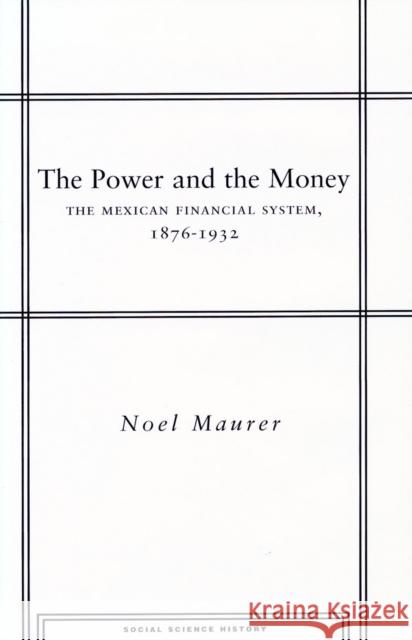
The Power and the Money: The Mexican Financial System, 1876-1932

ISBN-13: 9780804742856 / Angielski / Twarda / 2002 / 272 str.
Noel Maurer
The Power and the Money: The Mexican Financial System, 1876-1932 Maurer, Noel 9780804742856 Stanford University Press - książkaWidoczna okładka, to zdjęcie poglądowe, a rzeczywista szata graficzna może różnić się od prezentowanej.

The Power and the Money: The Mexican Financial System, 1876-1932

ISBN-13: 9780804742856 / Angielski / Twarda / 2002 / 272 str.

Noel Maurer
cena 328,15
(netto: 312,52 VAT:  5%)

Najniższa cena z 30 dni: 323,47
Termin realizacji zamówienia:
ok. 30 dni roboczych.

Darmowa dostawa!

After its independence in 1821, Mexico experienced more than fifty years of political chaos until Porfirio Diaz assumed power in 1876. Thirty-five years later, Mexico entered another period of turbulent instability (1910-29), during which the country underwent a revolution, a counter-revolution, a counter-counter-revolution, three civil wars, and four violent coups or attempted coups. In both periods, governments repudiated debts, confiscated cash reserves, demanded forced loans, and engaged in the unrestrained printing of currency. The governments that came to power after these bouts of instability faced a crucial dilemma. They needed resources in order to impose order, yet they lacked the ability to raise significant tax revenue. The answer was to borrow--but how did governments facing armed resistance and a real chance of being overthrown credibly promise to repay their debts? Porfirio Diaz's strategy in the 1880s was to create a bank with a legal monopoly over lending to the federal government. Diaz's regime also enforced property rights to give elites tied to powerful local strongmen a stake in the political system. The threat of revolt by these strongmen assured politically connected local elites that the federal government would not attempt to confiscate their wealth. Diaz's strategy created an inefficient and concentrated banking system that interacted with the politicized nature of property rights in such a way as to produce an extremely concentrated industrial system. The Mexican Revolution (which began in 1910) violently ended the Porfirian regime but failed to alter the basic political and economic calculus. Just as Diaz had done, the leaders who attained power after 1920 selectively enforced property rights. In addition, the government created a hostage: a government-owned commercial bank. If the rules of the game were altered, the capital of the government's bank and its lucrative profits would disappear. As a result, despite ongoing violence and political instability the domestic banking system recovered rapidly during the 1920s. The result was the same as in the Porfiriato: a continuing high level of financial and industrial concentration. This is not to say that the Revolution had no effects--but in the long run, it failed to sever the ties between banks and politics. If anything, the Revolution strengthened them.


Kategorie:
Nauka, Historia
Kategorie BISAC:
History > Latin America - Mexico
Business & Economics > Banks & Banking
Business & Economics > Finance - General
Wydawca:
Stanford University Press
Seria wydawnicza:
Social Science History
Język:
Angielski
ISBN-13:
9780804742856
Rok wydania:
2002
Numer serii:
000240509
Ilość stron:
272
Waga:
0.53 kg
Wymiary:
26.16 x 13.56 x 2.29
Oprawa:
Twarda
Wolumenów:
01
Dodatkowe informacje:
Bibliografia
Maurer, Noel Noel Maurer is Associate Professor at the Harvard ... więcej >


Udostępnij

Facebook - konto krainaksiazek.pl


Opinie o Krainaksiazek.pl na Opineo.pl

Partner Mybenefit

Krainaksiazek.pl w programie rzetelna firma Krainaksiaze.pl - płatności przez paypal

Czytaj nas na:

Facebook - krainaksiazek.pl
  • książki na zamówienie
  • granty
  • książka na prezent
  • kontakt
  • pomoc
  • opinie
  • regulamin
  • polityka prywatności

Zobacz:

  • Księgarnia czeska

  • Wydawnictwo Książkowe Klimaty

1997-2026 DolnySlask.com Agencja Internetowa

© 1997-2022 krainaksiazek.pl
     
KONTAKT | REGULAMIN | POLITYKA PRYWATNOŚCI | USTAWIENIA PRYWATNOŚCI
Zobacz: Księgarnia Czeska | Wydawnictwo Książkowe Klimaty | Mapa strony | Lista autorów
KrainaKsiazek.PL - Księgarnia Internetowa

Polityka prywatnosci - link
Krainaksiazek.pl - płatnośc Przelewy24
Przechowalnia Przechowalnia





