• Wyszukiwanie zaawansowane
  • Kategorie
  • Kategorie BISAC
  • Książki na zamówienie
  • Promocje
  • Granty
  • Książka na prezent
  • Opinie
  • Pomoc
  • Załóż konto
  • Zaloguj się

Solomon's Child: Method in the Early Royal Society of London » książka


zaloguj się | załóż konto
Logo Krainaksiazek.pl

koszyk

konto

szukaj
topmenu
Księgarnia internetowa
Szukaj
Książki na zamówienie
Promocje
Granty
Książka na prezent
Moje konto
Pomoc
 
 
Wyszukiwanie zaawansowane
Pusty koszyk
Bezpłatna dostawa dla zamówień powyżej 20 złBezpłatna dostawa dla zamówień powyżej 20 zł

Kategorie główne

• Nauka
 [2950560]
• Literatura piękna
 [1849509]

  więcej...
• Turystyka
 [71097]
• Informatyka
 [151150]
• Komiksy
 [35848]
• Encyklopedie
 [23178]
• Dziecięca
 [617388]
• Hobby
 [139064]
• AudioBooki
 [1657]
• Literatura faktu
 [228597]
• Muzyka CD
 [383]
• Słowniki
 [2855]
• Inne
 [445295]
• Kalendarze
 [1464]
• Podręczniki
 [167547]
• Poradniki
 [480102]
• Religia
 [510749]
• Czasopisma
 [516]
• Sport
 [61293]
• Sztuka
 [243352]
• CD, DVD, Video
 [3414]
• Technologie
 [219456]
• Zdrowie
 [101002]
• Książkowe Klimaty
 [124]
• Zabawki
 [2311]
• Puzzle, gry
 [3459]
• Literatura w języku ukraińskim
 [254]
• Art. papiernicze i szkolne
 [8079]
Kategorie szczegółowe BISAC

Solomon's Child: Method in the Early Royal Society of London

ISBN-13: 9780804732918 / Angielski / Twarda / 2002 / 312 str.
William Lynch
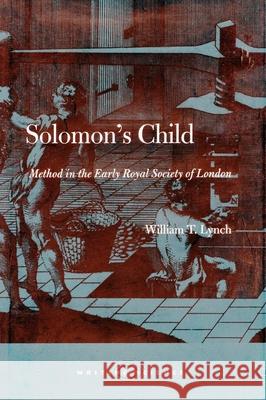
Solomon's Child: Method in the Early Royal Society of London Lynch, William T. 9780804732918 Stanford University Press - książkaWidoczna okładka, to zdjęcie poglądowe, a rzeczywista szata graficzna może różnić się od prezentowanej.

Solomon's Child: Method in the Early Royal Society of London

ISBN-13: 9780804732918 / Angielski / Twarda / 2002 / 312 str.

William Lynch
cena 325,48
(netto: 309,98 VAT:  5%)

Najniższa cena z 30 dni: 323,47
Termin realizacji zamówienia:
ok. 30 dni roboczych
Dostawa w 2026 r.

Darmowa dostawa!

This book challenges the accepted view of the early Royal Society of London that holds that its fellows did not seriously attempt to implement Francis Bacon's program for the methodological reform of the sciences. Instead, the book shows that Bacon's program shaped the Society's earliest work in important, if often contradictory, ways as fellows wedded Bacon's ideas to their various interests and problem areas. Developing Bacon's program in different directions resulted in a richer understanding of his method than the undirected empiricism often associated with his name. The author demonstrates that Bacon's call for a focus on -things themselves- was built upon three distinct images of objects of knowledge, in opposition to recent accounts that focus on the collective witnessing of matters of fact. He identifies at the core of Bacon's method a threefold metaphorical ontology of objects of knowledge and corresponding objectivities. The book reveals a picture of the Royal Society as more sophisticated and unified than previously depicted, while simultaneously demonstrating how the fellows' development of Bacon's legacy ultimately pulled in different directions. Specular objects of knowledge privileged passive observation and justified an empiricist objectivity. Manipulated objects of art or manual objects emphasized an engaged, constructivist objectivity in which knowing is doing. And, a vision of underlying forms as generative objects of knowledge, which could be combined like letters of the alphabet to produce phenomena at will, defined a theoretical concept of objectivity. These components of Bacon's method inform in varying ways the early publications of the Royal Society by John Evelyn, Robert Hooke, John Wilkins, Thomas Sprat, and John Graunt, which are examined in detail to demonstrate the collective negotiation of an ambitious inductive program employing hypotheses, active powers, and the disciplined use of analogy. Examining the Royal Society's activity in the areas of horticulture, experimentation, language reform, cultural criticism, and political arithmetic, the author synthesizes philosophical and sociological approaches to science in developing a new understanding of the Royal Society and its legacy for science, culture, and politics.


Kategorie:
Nauka, Historia
Kategorie BISAC:
Science > History
Literary Criticism > European - General
Wydawca:
Stanford University Press
Seria wydawnicza:
Writing Science (Hardcover)
Język:
Angielski
ISBN-13:
9780804732918
Rok wydania:
2002
Numer serii:
000026351
Ilość stron:
312
Waga:
0.60 kg
Wymiary:
22.9 x 15.2
Oprawa:
Twarda
Wolumenów:
01
Dodatkowe informacje:
Bibliografia
Lynch, William <div>William T. Lynch is an Assistant Profes... więcej >


Udostępnij

Facebook - konto krainaksiazek.pl


Opinie o Krainaksiazek.pl na Opineo.pl

Partner Mybenefit

Krainaksiazek.pl w programie rzetelna firma Krainaksiaze.pl - płatności przez paypal

Czytaj nas na:

Facebook - krainaksiazek.pl
  • książki na zamówienie
  • granty
  • książka na prezent
  • kontakt
  • pomoc
  • opinie
  • regulamin
  • polityka prywatności

Zobacz:

  • Księgarnia czeska

  • Wydawnictwo Książkowe Klimaty

1997-2025 DolnySlask.com Agencja Internetowa

© 1997-2022 krainaksiazek.pl
     
KONTAKT | REGULAMIN | POLITYKA PRYWATNOŚCI | USTAWIENIA PRYWATNOŚCI
Zobacz: Księgarnia Czeska | Wydawnictwo Książkowe Klimaty | Mapa strony | Lista autorów
KrainaKsiazek.PL - Księgarnia Internetowa

Polityka prywatnosci - link
Krainaksiazek.pl - płatnośc Przelewy24
Przechowalnia Przechowalnia





