• Wyszukiwanie zaawansowane
  • Kategorie
  • Kategorie BISAC
  • Książki na zamówienie
  • Promocje
  • Granty
  • Książka na prezent
  • Opinie
  • Pomoc
  • Załóż konto
  • Zaloguj się

Introduction to Environmental » książka

zaloguj się | załóż konto
Logo Krainaksiazek.pl

koszyk

konto

szukaj
topmenu
Księgarnia internetowa
Szukaj
Książki na zamówienie
Promocje
Granty
Książka na prezent
Moje konto
Pomoc
 
 
Wyszukiwanie zaawansowane
Pusty koszyk
Bezpłatna dostawa dla zamówień powyżej 20 złBezpłatna dostawa dla zamówień powyżej 20 zł

Kategorie główne

• Nauka
 [2950560]
• Literatura piękna
 [1849509]

  więcej...
• Turystyka
 [71097]
• Informatyka
 [151150]
• Komiksy
 [35848]
• Encyklopedie
 [23178]
• Dziecięca
 [617388]
• Hobby
 [139064]
• AudioBooki
 [1657]
• Literatura faktu
 [228597]
• Muzyka CD
 [383]
• Słowniki
 [2855]
• Inne
 [445295]
• Kalendarze
 [1464]
• Podręczniki
 [167547]
• Poradniki
 [480102]
• Religia
 [510749]
• Czasopisma
 [516]
• Sport
 [61293]
• Sztuka
 [243352]
• CD, DVD, Video
 [3414]
• Technologie
 [219456]
• Zdrowie
 [101002]
• Książkowe Klimaty
 [124]
• Zabawki
 [2311]
• Puzzle, gry
 [3459]
• Literatura w języku ukraińskim
 [254]
• Art. papiernicze i szkolne
 [8079]
Kategorie szczegółowe BISAC

Introduction to Environmental

ISBN-13: 9780632059058 / Angielski / Miękka / 2003 / 336 str.
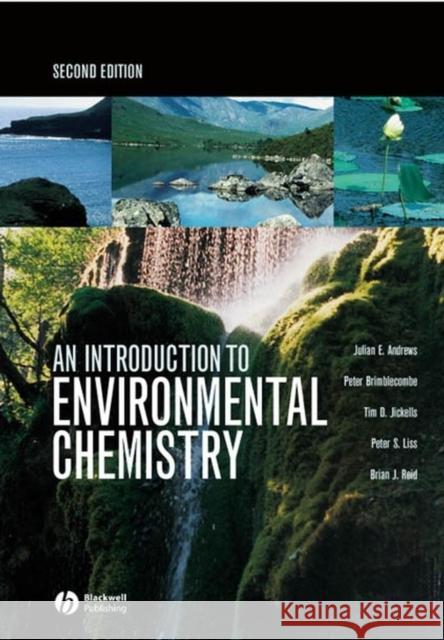
Julian E. Andrews
Introduction to Environmental Andrews, Julian E. 9780632059058  - książkaWidoczna okładka, to zdjęcie poglądowe, a rzeczywista szata graficzna może różnić się od prezentowanej.

Introduction to Environmental

ISBN-13: 9780632059058 / Angielski / Miękka / 2003 / 336 str.

Julian E. Andrews
cena 266,94
(netto: 254,23 VAT:  5%)

Najniższa cena z 30 dni: 265,29
Termin realizacji zamówienia:
ok. 30 dni roboczych
Dostawa w 2026 r.

Darmowa dostawa!

This introductory text explains the fundamentals of the chemistry of the natural environment and the effects of mankind's activities on the earth's chemical systems.


  • Retains an emphasis on describing how natural geochemical processes operate over a variety of scales in time and space, and how the effects of human perturbation can be measured.
  • Topics range from familiar global issues such as atmospheric pollution and its effect on global warming and ozone destruction, to microbiological processes that cause pollution of drinking water deltas.
  • Contains sections and information boxes that explain the basic chemistry underpinning the subject covered.
  • Each chapter contains a list of further reading on the subject area. Updated case studies.

  • No prior chemistry knowledge required.
  • Suitable for introductory level courses.

Kategorie:
Nauka, Biologia i przyroda
Kategorie BISAC:
Science > Earth Sciences - Geology
Science > Chemia - Organiczna
Język:
Angielski
ISBN-13:
9780632059058
Rok wydania:
2003
Wydanie:
Revised
Ilość stron:
336
Waga:
0.56 kg
Wymiary:
24.54 x 17.37 x 1.85
Oprawa:
Miękka
Wolumenów:
01
Dodatkowe informacje:
Bibliografia
Wydanie ilustrowane

"I can strongly recommend this book as a basic text for all those who wish to gain an initial understanding of the chemistry of the Earth and the way humans are interacting with their environment."
Peter O′Neill, University of Plymouth, Progress in Physical Geography, June 2005 <!––end––>

"Overall, this book is a valuable addition to reading lists for students taking undergraduate level courses primarily in Environmental Science, but also in Physical Geography, Earth Sciences and Environmental Chemistry. It is very readable and well written."
International Journal of Climatology, April 2006

"If I had to recommend one single textbook for courses in environmental science to students and all those interested from other fields, it would be this one. It is an excellent introductory reader and learning aid."
Environmental Biology

List of boxes ix

Preface to the second edition xi

Preface to the first edition xii

Acknowledgements xiv

Symbols and abbreviations xviii

1 Introduction 1

1.1 What is environmental chemistry? 1

1.2 In the beginning 2

1.3 Origin and evolution of the Earth 2

1.3.1 Formation of the crust and atmosphere 4

1.3.2 The hydrosphere 5

1.3.3 The origin of life and evolution of the atmosphere 8

1.4 Human effects on biogeochemical cycles? 9

1.5 The structure of this book 11

1.6 Internet keywords 12

1.7 Further reading 13

1.8 Internet search keywords 13

2 Environmental chemist’s toolbox 14

2.1 About this chapter 14

2.2 Order in the elements? 14

2.3 Bonding 19

2.3.1 Covalent bonds 19

2.3.2 Ionic bonding, ions and ionic solids 20

2.4 Using chemical equations 21

2.5 Describing amounts of substances: the mole 22

2.6 Concentration and activity 22

2.7 Organic molecules – structure and chemistry 23

2.7.1 Functional groups 25

2.7.2 Representing organic matter in simple equations 26

2.8 Radioactivity of elements 27

2.9 Finding more chemical tools in this book 29

2.10 Further reading 30

2.11 Internet search keywords 30

3 The atmosphere 31

3.1 Introduction 31

3.2 Composition of the atmosphere 32

3.3 Steady state or equilibrium? 35

3.4 Natural sources 38

3.4.1 Geochemical sources 39

3.4.2 Biological sources 41

3.5 Reactivity of trace substances in the atmosphere 44

3.6 The urban atmosphere 45

3.6.1 London smog – primary pollution 46

3.6.2 Los Angeles smog – secondary pollution 48

3.6.3 21st–century particulate pollution 52

3.7 Air pollution and health 53

3.8 Effects of air pollution 55

3.9 Removal processes 56

3.10 Chemistry of the stratosphere 58

3.10.1 Stratospheric ozone formation and destruction 59

3.10.2 Ozone destruction by halogenated species 61

3.10.3 Saving the ozone layer 63

3.11 Further reading 64

3.12 Internet search keywords 65

4 The chemistry of continental solids 66

4.1 The terrestrial environment, crust and material cycling 66

4.2 The structure of silicate minerals 70

4.2.1 Coordination of ions and the radius ratio rule 70

4.2.2 The construction of silicate minerals 73

4.2.3 Structural organization in silicate minerals 73

4.3 Weathering processes 76

4.4 Mechanisms of chemical weathering 77

4.4.1 Dissolution 77

4.4.2 Oxidation 77

4.4.3 Acid hydrolysis 83

4.4.4 Weathering of complex silicate minerals 84

4.5 Clay minerals 87

4.5.1 One to one clay mineral structure 88

4.5.2 Two to one clay mineral structure 88

4.6 Formation of soils 93

4.6.1 Parent (bedrock) material (p) 94

4.6.2 Climate (cl) 94

4.6.3 Relief (r) 97

4.6.4 Vegetation (v) 99

4.6.5 Influence of organisms (o) 99

4.7 Wider controls on soil and clay mineral formation 104

4.8 Ion exchange and soil pH 111

4.9 Soil structure and classification 112

4.9.1 Soils with argillic horizons 113

4.9.2 Spodosols (podzols) 113

4.9.3 Soils with gley horizons 117

4.10 Contaminated land 119

4.10.1 Organic contaminants in soils 119

4.10.2 Degradation of organic contaminants in soils 125

4.10.3 Remediation of contaminated land 129

4.10.4 Phytoremediation 137

4.11 Further reading 139

4.12 Internet search keywords 140

5 The chemistry of continental waters 141

5.1 Introduction 141

5.2 Element chemistry 142

5.3 Water chemistry and weathering regimes 145

5.3.1 Alkalinity, dissolved inorganic carbon and pH buffering 151

5.4 Aluminium solubility and acidity 155

5.4.1 Acidification from atmospheric inputs 156

5.4.2 Acid mine drainage 156

5.4.3 Recognizing acidification from sulphate data – ternary diagrams 159

5.5 Biological processes 161

5.5.1 Nutrients and eutrophication 163

5.6 Heavy metal contamination 170

5.6.1 Mercury contamination from gold mining 170

5.7 Contamination of groundwater 174

5.7.1 Anthropogenic contamination of groundwater 176

5.7.2 Natural arsenic contamination of groundwater 178

5.8 Further reading 180

5.9 Internet search keywords 180

6 The oceans 181

6.1 Introduction 181

6.2 Estuarine processes 182

6.2.1 Aggregation of colloidal material in estuaries 183

6.2.2 Mixing processes in estuaries 184

6.2.3 Halmyrolysis and ion exchange in estuaries 186

6.2.4 Microbiological activity in estuaries 187

6.3 Major ion chemistry of seawater 189

6.4 Chemical cycling of major ions 191

6.4.1 Sea–to–air fluxes 194

6.4.2 Evaporites 194

6.4.3 Cation exchange 195

6.4.4 Calcium carbonate formation 196

6.4.5 Opaline silica 205

6.4.6 Sulphides 206

6.4.7 Hydrothermal processes 208

6.4.8 The potassium problem: balancing the seawater major ion budget 214

6.5 Minor chemical components in seawater 216

6.5.1 Dissolved gases 216

6.5.2 Dissolved ions 216

6.5.3 Conservative behaviour 218

6.5.4 Nutrient–like behaviour 218

6.5.5 Scavenged behaviour 223

6.6 The role of iron as a nutrient in the oceans 227

6.7 Ocean circulation and its effects on trace element distribution 229

6.8 Anthropogenic effects on ocean chemistry 233

6.8.1 Human effects on regional seas 1: the Baltic 233

6.8.2 Human effects on regional seas 2: the Gulf of Mexico 235

6.8.3 Human effects on total ocean minor element budgets? 235

6.9 Further reading 237

6.10 Internet search keywords 238

7 Global change 239

7.1 Why study global–scale environmental chemistry? 239

7.2 The carbon cycle 240

7.2.1 The atmospheric record 240

7.2.2 Natural and anthropogenic sources and sinks 242

7.2.3 The global budget of natural and anthropogenic carbon dioxide 251

7.2.4 The effects of elevated carbon dioxide levels on global temperature and other properties 257

7.3 The sulphur cycle 262

7.3.1 The global sulphur cycle and anthropogenic effects 262

7.3.2 The sulphur cycle and atmospheric acidity 265

7.3.3 The sulphur cycle and climate 271

7.4 Persistent organic pollutants 274

7.4.1 Persistent organic pollutant mobility in the atmosphere 274

7.4.2 Global persistent organic pollutant equilibrium 278

7.5 Further reading 281

7.6 Internet search keywords 281

Index 283

Colour plates fall between pp. 138 and 139.

J.E. Andrews, P. Brimblecombe, T.D. Jickells, P.S. Liss and B. Reid are all based in the School of Environmental Sciences at the University of East Anglia. They have many years experience in teaching environmental chemistry to undergraduates and are internationally respected researchers in their fields.

Environmental chemistry is now a key part of many environmental, earth and life science courses. An understanding of the fundamental chemistry implicit in the subject is important, but students must also be familiar with aspects of mineralogy, oceanography, soil science, sedimentology and microbiology, to name just a few of the cross–over areas.

The second edition is fully revised and expanded to provide a concise but thorough introduction to the subject in its widest sense. The book retains an emphasis on describing how natural geochemical processes operate over a variety of scales in time and space, and how the effects of human perturbations can be measured. Topics range from familiar global issues such as atmospheric pollution and its effect on global warming and ozone destruction, the link between chemistry and productivity in the oceans, through contamination of soils by synthetic organic chemicals, to the microbiological processes that cause pollution of drinking water in deltas.

The book contains sections and information boxes that explain the basic chemistry underpinning the subjects covered. These boxes will help students with little or no previous chemical background to enter this fascinating subject.


Udostępnij

Facebook - konto krainaksiazek.pl


Opinie o Krainaksiazek.pl na Opineo.pl

Partner Mybenefit

Krainaksiazek.pl w programie rzetelna firma Krainaksiaze.pl - płatności przez paypal

Czytaj nas na:

Facebook - krainaksiazek.pl
  • książki na zamówienie
  • granty
  • książka na prezent
  • kontakt
  • pomoc
  • opinie
  • regulamin
  • polityka prywatności

Zobacz:

  • Księgarnia czeska

  • Wydawnictwo Książkowe Klimaty

1997-2025 DolnySlask.com Agencja Internetowa

© 1997-2022 krainaksiazek.pl
     
KONTAKT | REGULAMIN | POLITYKA PRYWATNOŚCI | USTAWIENIA PRYWATNOŚCI
Zobacz: Księgarnia Czeska | Wydawnictwo Książkowe Klimaty | Mapa strony | Lista autorów
KrainaKsiazek.PL - Księgarnia Internetowa

Polityka prywatnosci - link
Krainaksiazek.pl - płatnośc Przelewy24
Przechowalnia Przechowalnia








