Termin realizacji zamówienia: ok. 22 dni roboczych.
Darmowa dostawa!
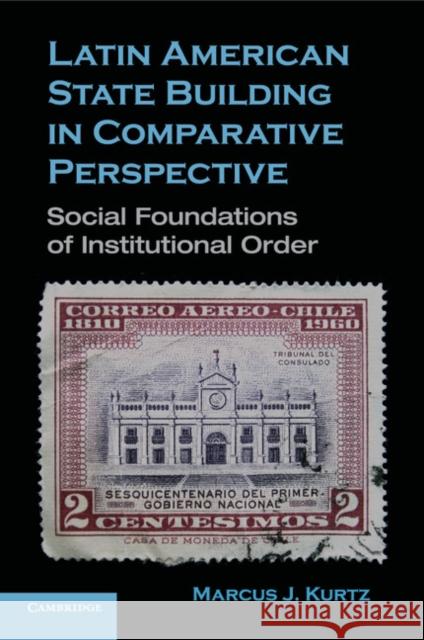
Provides an account of long-run institutional development in Latin America that emphasizes the social and political foundations of state-building processes.
'Kurtz asks what has led some states to develop institutions capable of regulating the economic, political, and even social behavior of their citizens, while others have lagged behind. To answer this question, he relies upon a rich historical analysis of state-building efforts in Argentina, Chile, Peru, and Uraguay … He tests this theory this extensive data from paired comparisons of the polar opposite cases of Chile and Peru, as well as the more similar cases of Argentina and Uruguay. Summing up: recommended. Undergraduate, graduate, and research collections.' M. F. T. Malone, Choice
1. The difficulties of state building; 2. The social foundations of state building in the contemporary era; 3. State formation in Chile and Peru: institution building and atrophy in unlikely settings; 4. State formation in Argentina and Uruguay: agrarian capitalism, elite conflict, and the construction of cooperation; 5. Divergence reinforced: the timing of political inclusion and state strength in Chile and Peru; 6. The social question and the state: mass mobilization, suffrage, and institutional development in Argentina and Uruguay; 7. Conclusions, implications, and extensions: social foundations, Germany/Prussia, and the limits of contemporary state building; Bibliography.