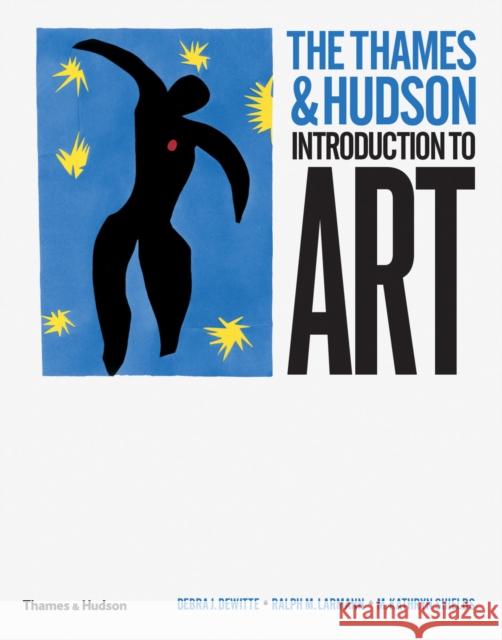
'A revelatory volume ... Aimed at the teenager and foundation-year student, it still holds plenty of surprises for the old hand' - The Times
How to Use this Book * Gateway Features * Introduction Part 1: Fundamentals 1.1 Art in Two Dimensions: Line, Shape and the Principle of Contrast * 1.2 Three-Dimensional Art: Form, Volume, Mass and Texture * 1.3 Implied Depth: Value and Space * 1.4 Colour * 1.5 Time and Motion * 1.6 Unity, Variety and Balance * 1.7 Scale and Proportion * 1.8 Emphasis and Focal Point * 1.9 Pattern and Rhythm * 1.10 Content and Analysis Part 2: Media and Processes 2.1 Drawing * 2.2 Painting * 2.3 Printmaking * 2.4 Visual Communication Design * 2.5 Photography * 2.6 Film/Video and Digital Art * 2.7 Alternative media and processes * 2.8 The Tradition of Craft * 2.9 Sculpture * 2.10 Architecture Part 3: History 3.1. The Prehistoric and Ancient Mediterranean * 3.2. Art of the Middle Ages * 3.3. Art of India, China and Japan * 3.4 Art of the Americas * 3.5 Art of Africa and the Pacific Islands * 3.6 Art of Renaissance and Baroque Europe (1400 - 1750) * 3.7 Art of Europe and America (1700 - 1900) 3.8 Twentieth and Twenty-First Centuries: The Age of Global Art Part 4: Themes 4.1. Art and Community * 4.2 Spirituality and Art * 4.3 Art and the Cycle of Life * 4.4 Art and Science * 4.5 Art and Illusion * 4.6 Art and Rulers * 4.7 Art and War * 4.8 Art and Social Conscience * 4.9 The Body in Art * 4.10 Art and Gender * 4.11 Expression Glossary * Further Reading * Sources of Quotations * Illustration Credits * Acknowledgments * Index
Debra J. DeWitte is Adjunct Assistant Professor of Art & Art History, University of Texas/Arlington.
Ralph M. Larmann is Associate Professor of Art at the University of Evansville,Indiana.
M. Kathryn Shields is Assistant Professor of Art History and Chair of the Art Department, Guilford College, North Carolina.