• Wyszukiwanie zaawansowane
  • Kategorie
  • Kategorie BISAC
  • Książki na zamówienie
  • Promocje
  • Granty
  • Książka na prezent
  • Opinie
  • Pomoc
  • Załóż konto
  • Zaloguj się

Joe Wilson and the Creation of Xerox » książka


zaloguj się | załóż konto
Logo Krainaksiazek.pl

koszyk

konto

szukaj
topmenu
Księgarnia internetowa
Szukaj
Książki na zamówienie
Promocje
Granty
Książka na prezent
Moje konto
Pomoc
 
 
Wyszukiwanie zaawansowane
Pusty koszyk
Bezpłatna dostawa dla zamówień powyżej 20 złBezpłatna dostawa dla zamówień powyżej 20 zł

Kategorie główne

• Nauka
 [2949965]
• Literatura piękna
 [1857847]

  więcej...
• Turystyka
 [70818]
• Informatyka
 [151303]
• Komiksy
 [35733]
• Encyklopedie
 [23180]
• Dziecięca
 [617748]
• Hobby
 [139972]
• AudioBooki
 [1650]
• Literatura faktu
 [228361]
• Muzyka CD
 [398]
• Słowniki
 [2862]
• Inne
 [444732]
• Kalendarze
 [1620]
• Podręczniki
 [167233]
• Poradniki
 [482388]
• Religia
 [509867]
• Czasopisma
 [533]
• Sport
 [61361]
• Sztuka
 [243125]
• CD, DVD, Video
 [3451]
• Technologie
 [219309]
• Zdrowie
 [101347]
• Książkowe Klimaty
 [123]
• Zabawki
 [2362]
• Puzzle, gry
 [3791]
• Literatura w języku ukraińskim
 [253]
• Art. papiernicze i szkolne
 [7933]
Kategorie szczegółowe BISAC

Joe Wilson and the Creation of Xerox

ISBN-13: 9780471998358 / Angielski / Twarda / 2006 / 416 str.
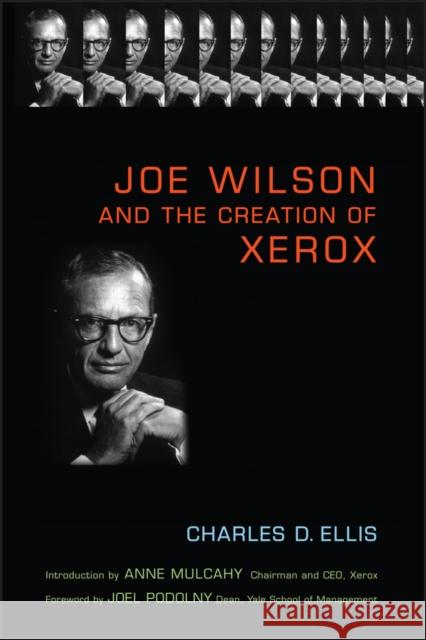
Charles D. Ellis; Joel M. Podolny; Anne M. Mulcahy
Joe Wilson and the Creation of Xerox Charles D. Ellis Joel M. Podolny Anne M. Mulcahy 9780471998358 John Wiley & Sons - książkaWidoczna okładka, to zdjęcie poglądowe, a rzeczywista szata graficzna może różnić się od prezentowanej.

Joe Wilson and the Creation of Xerox

ISBN-13: 9780471998358 / Angielski / Twarda / 2006 / 416 str.

Charles D. Ellis; Joel M. Podolny; Anne M. Mulcahy
cena 102,69 zł
(netto: 97,80 VAT:  5%)

Najniższa cena z 30 dni: 101,64 zł
Termin realizacji zamówienia:
ok. 30 dni roboczych
Bez gwarancji dostawy przed świętami

Darmowa dostawa!

"Charley Ellis has written a magnificent portrait, capturing the indomitable spirit of Joe Wilson and his instinctive understanding of the need for and commercial usefulness of a transforming imaging technology. Joe Wilson and his extraordinary team, which I had the good fortune to first meet in 1960, epitomized the wonderful observation of George Bernard Shaw who said, 'Some look at things that are, and ask why? I dream of things that never were and ask why not?' Xerox and xerography are not only a part of our vocabulary, but part of our everyday life. Charley Ellis gives the reader a poignant understanding of just how this happened through the life, adventures, critical business decisions, and dreams of Joseph Wilson and a cadre of remarkable individuals. This book will surely join the library of memorable biographies that capture the building of America into a risk-tolerant, technologically sophisticated, idea-oriented society that thrives by understanding what Charles Darwin really said: 'Survival will be neither to the strongest of the species, nor to the most intelligent, but to those most adaptable to change.'"
--Frederick Frank, Vice Chairman, Lehman Brothers Inc.


Kategorie:
Literatura faktu
Kategorie BISAC:
Biography & Autobiography > Business
Wydawca:
John Wiley & Sons
Język:
Angielski
ISBN-13:
9780471998358
Rok wydania:
2006
Ilość stron:
416
Waga:
0.63 kg
Wymiary:
23.11 x 16.26 x 3.61
Oprawa:
Twarda
Wolumenów:
01
Dodatkowe informacje:
Obwoluta

"An inspiring biography" ( The Economist, November 2006)

If you run a business and aspire to make it great, you owe it to yourself to read Joe Wilson and the Creation of Xerox by Charles D. Ellis. Despite occasionally pedestrian writing, the book rewards the reader with dramatic accounts of how one great leader managed to influence change rather than just react to it.
Wilson knew little about technology, yet he––not the brilliant techies with whom he surrounded himself––created the modern copier industry. Xerox was an old Rochester, N.Y., company that was small, obscure and unambitious until Wilson took over from his dad in the late 1940s. In a sense, his takeover kicked off the technology revolution that shook American industry out of its somnolence. Early investors with small stakes in Xerox became multimillionaires. Later investors lost billions looking for the "next Xerox." They would have done better searching for the next Joe Wilson.
His tact and lack of ego held together a necessarily diverse bunch of people. Sol Linowitz, the company lawyer, upstaged him by letting it be said on national television that he, not Wilson, was the father of Xerox. Wilson ignored it: Linowitz was important to the company, and Wilson wanted success, not an ego massage. He grasped the importance of image. He pioneered new and novel ways to get public attention for Xerox, including backing public–service TV shows at a time when the company could barely afford the expense in order to convey an image of quality for a little–known brand.
When a leading consulting firm told Xerox there was no real market for its proposed 412 xerography machine, Wilson and his aides took the report apart and discovered that the questions asked and the methodology were faulty. He plowed on.
The 412, Xerox′s first truly competitive product, would have to sell for $47,000 and was far too big for salespeople to lug around. Who would, or could, write a check of this size for a mere copying machine? But hey, someone suggested, who wouldn′t pay a nickel to get rid of the messy carbon copy that was the curse of every office at the time? Wilson didn′t hesitate: a nickel a copy it would be. Customers loved the seemingly cheap price, and orders mounted and remounted for the 412. To the customer′s surprise and Xerox′s delight, users were making far more copies of things than they did before the 412. The machine was so clean, fast and precise, it was an easy way to expand internal communication in the days before e–mail. In a year, some customers were spending more for copies than the machine would have cost. Xerox became a cash jackpot machine.
Ellis′s generally upbeat book has a sad ending. On his retirement in the mid–1960s, an ailing and tired Wilson made two horrible mistakes: He picked an incompetent successor and then failed to bequeath a strong board that could have reined in his successor′s blunders. His successor threw away the chance to own the coming personal computer revolution and made disastrous billion–dollar investments in old industries. He lacked his predecessor′s knack for embracing change. By then, Wilson was too ill to retake the reins. Xerox shriveled, and its bonds sank to junk status. Rescued by the present CEO, Ann Mulcahy, Xerox is doing well again, but it is no longer the shining symbol Wilson created.
The author, Charley Ellis, is retired head of the consulting firm Greenwich Associates and serves as a Yale trustee and a director of the Vanguard funds. He knows a lot about business leadership, having consulted for and worked with many of the best practitioners. Among all of the business leaders he′s known, and he′s known hundreds, he puts Joe Wilson––whom he never met––over them all. The lessons here are clear and shining––both the good and the bad. (Forbes.com, October 25, 2006)

Transforming family–owned Haloid Corp., which struggled in the shadow of hometown behemoth Eastman Kodak, into the globally recognized Xerox is an amazing accomplishment. But as Ellis′s biography of Joe Wilson attests, Wilson′s achievements ranged more widely and went much deeper than many gave him credit for. Ellis, author of 11 books and former financial industry consultant offers a heartfelt, if not artful, telling of the CEO′s life story. He contends that Wilson embodied all of the qualities that leadership management books celebrate: integrity, foresight and the ability to inspire people to perform. He credits these attributes to helping Wilson so spectacularly realize his vision for his company; its employees; his alma mater, the University of Rochester; and the city and people of Rochester, N.Y. Ellis′s telling starts off slow and is initially quite repetitive. But once Xerox is finally born, after years of setbacks, the story picks up. The real purpose for the detailed buildup appears toward the end, when credit for the last 20–odd years of corporate strife and ultimate success is given to the wrong person, Wilson′s best friend and the company′s corporate counsel. At that point, it becomes clear why Ellis was compelled to write this book so long after the company′s rise and its true founder′s demise.(Sept.) (Publishers Weekly, July 17, 2006)

Introduction
by Anne M. Mulcahy, Chairman and CEO of Xerox Corporation ix

Foreword
by Joel Podolny, Dean, Yale School of Management xv

1 Early Years 1

2 Peggy 13

3 The Thirties 19

4 Years of Struggle 29

5 Chet Carlson 39

6 Battelle 51

7 Contact Just Barely 57

8 Sol Linowitz 67

9 Toward Xerox 79

10 The University 97

11 Worst of Times, Best of Times 111

12 Joe Wilson 131

13 IBM, RCA, and GE 135

14 Gathering Strength in Finance 147

15 Building the Organization 157

16 Going International 177

17 Going It Alone 191

18 5¢ 199

19 The 914 209

20 Go! 225

21 Getting on Message 239

22 Xerox: Zoom–Zoom 259

23 Fuji–Xerox 267

24 Challenges of Success 275

25 Minister Florence 289

26 LIFE 301

27 Public Service 315

28 Winding Down 325

29 No Longer CEO 337

30 At the Rockefellers 353

Afterword 359

Joe Wilson: In His Own Words 371

Acknowledgments 377

Index 381

CHARLES D. ELLIS is a recognized expert on business management. For thirty years, he was managing partner of Greenwich Associates, the leading worldwide strategy consultant to the financial services industry, which he founded and where he developed close working relationships with senior executives at most of the major investment firms in North America, Asia, and Europe. His other activities include teaching the Investment Management course at both Yale School of Management and Harvard Business School; chairing CFA Institute, the investment professionals′ organization; serving as a Director of Vanguard; advising some of the world′s largest investing institutions; and chairing the investment committees at the Whitehead Institute and Yale University. He is one of ten individuals recognized by the investment profession for lifetime leadership. Among his eleven prior books is Capital: The Story of Long–Term Investment Excellence (Wiley).

JOE WILSON AND THE CREATION OF XEROX

Joe Wilson was that rare business leader who, like Henry Ford before him or Bill Gates since, literally changed the world in which he lived. Wilson′s company, Xerox Corporation, introduced the first one–piece, plain paper photocopier in 1959, dramatically altering the way in which business was done and becoming so culturally ingrained that the term for photocopying is "Xeroxing."

Yet Wilson was much more than just one of the twentieth century′s most talented and accomplished business executives. Decades before a sense of social responsibility was considered vital to the success of a corporation, Joe Wilson was a driving force behind gender and racial equality, labor–management harmony, and the need for big business to understand and address the failures of our overall society.

Joe Wilson and the Creation of Xerox is the first book to tell the story of this deeply principled and talented leader. Written by Charles Ellis, the globally renowned business strategist and author of the investment classic Winning the Loser′s Game, this inspirational and vastly entertaining book details:

  • The determination and entrepreneurial drive of Joe Wilson as he transformed the brilliant invention of Chester Carlson from near–certain oblivion to ubiquitous xerography
  • The early growth years of Xerox then called Haloid and the programs Joe Wilson put in place to hire the most promising employees and seamlessly "retire" those who didn′t share his vision and work ethic
  • The many years of uncertainty and near–defeat through which Wilson led the team he was recruiting to create the company and the great products that drove Xerox′s profits consistently upward at a faster rate for a longer number of years than any other company
  • The legendary 914 copier, and how Wilson and other company executives bet their futures and fortunes on the unproven product that would soon make Xerox a household name
  • Wilson′s hands–on work with minority leaders to provide education and opportunity to young African– Americans during the racially explosive 1960s
  • The transition years, and how Joe Wilson carefully relinquished control of Xerox while remaining intimately involved in both its day–to–day and long–term growth

In a business world in which intense competition is the norm, with old–fashioned integrity often the first casualty, Joe Wilson′s life and legacy have established a gold standard of leadership ethics and excellence. Joe Wilson and the Creation of Xerox tells Wilson′s story, from struggling college graduate to esteemed business leader, and provides a success template that will be valuable for business leaders of every type, in every industry.

Ellis, Charles D. CHARLES D. ELLIS served 28 years as managing partn... więcej >
Podolny, Joel M. Joel M. Podolny is dean and William S. Bienecke Pr... więcej >


Udostępnij

Facebook - konto krainaksiazek.pl


Opinie o Krainaksiazek.pl na Opineo.pl

Partner Mybenefit

Krainaksiazek.pl w programie rzetelna firma Krainaksiaze.pl - płatności przez paypal

Czytaj nas na:

Facebook - krainaksiazek.pl
  • książki na zamówienie
  • granty
  • książka na prezent
  • kontakt
  • pomoc
  • opinie
  • regulamin
  • polityka prywatności

Zobacz:

  • Księgarnia czeska

  • Wydawnictwo Książkowe Klimaty

1997-2025 DolnySlask.com Agencja Internetowa

© 1997-2022 krainaksiazek.pl
     
KONTAKT | REGULAMIN | POLITYKA PRYWATNOŚCI | USTAWIENIA PRYWATNOŚCI
Zobacz: Księgarnia Czeska | Wydawnictwo Książkowe Klimaty | Mapa strony | Lista autorów
KrainaKsiazek.PL - Księgarnia Internetowa

Polityka prywatnosci - link
Krainaksiazek.pl - płatnośc Przelewy24
Przechowalnia Przechowalnia





