• Wyszukiwanie zaawansowane
  • Kategorie
  • Kategorie BISAC
  • Książki na zamówienie
  • Promocje
  • Granty
  • Książka na prezent
  • Opinie
  • Pomoc
  • Załóż konto
  • Zaloguj się

The Handbook of Traditional and Alternative Investment Vehicles: Investment Characteristics and Strategies » książka


zaloguj się | załóż konto
Logo Krainaksiazek.pl

koszyk

konto

szukaj
topmenu
Księgarnia internetowa
Szukaj
Książki na zamówienie
Promocje
Granty
Książka na prezent
Moje konto
Pomoc
 
 
Wyszukiwanie zaawansowane
Pusty koszyk
Bezpłatna dostawa dla zamówień powyżej 20 złBezpłatna dostawa dla zamówień powyżej 20 zł

Kategorie główne

• Nauka
 [2939893]
• Literatura piękna
 [1808953]

  więcej...
• Turystyka
 [70366]
• Informatyka
 [150555]
• Komiksy
 [35137]
• Encyklopedie
 [23160]
• Dziecięca
 [608786]
• Hobby
 [136447]
• AudioBooki
 [1631]
• Literatura faktu
 [225099]
• Muzyka CD
 [360]
• Słowniki
 [2914]
• Inne
 [442115]
• Kalendarze
 [1068]
• Podręczniki
 [166599]
• Poradniki
 [468390]
• Religia
 [506548]
• Czasopisma
 [506]
• Sport
 [61109]
• Sztuka
 [241608]
• CD, DVD, Video
 [3308]
• Technologie
 [218981]
• Zdrowie
 [98614]
• Książkowe Klimaty
 [124]
• Zabawki
 [2174]
• Puzzle, gry
 [3275]
• Literatura w języku ukraińskim
 [260]
• Art. papiernicze i szkolne
 [7376]
Kategorie szczegółowe BISAC

The Handbook of Traditional and Alternative Investment Vehicles: Investment Characteristics and Strategies

ISBN-13: 9780470609736 / Angielski / Twarda / 2010 / 530 str.
Mark J Anson
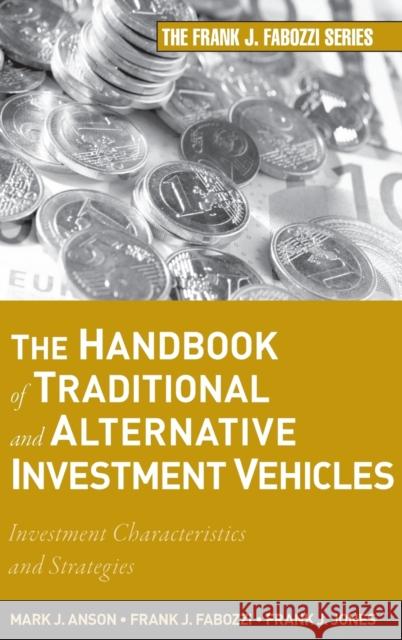
The Handbook of Traditional and Alternative Investment Vehicles: Investment Characteristics and Strategies Anson, Mark J. P. 9780470609736  - książkaWidoczna okładka, to zdjęcie poglądowe, a rzeczywista szata graficzna może różnić się od prezentowanej.

The Handbook of Traditional and Alternative Investment Vehicles: Investment Characteristics and Strategies

ISBN-13: 9780470609736 / Angielski / Twarda / 2010 / 530 str.

Mark J Anson
cena 344,93
(netto: 328,50 VAT:  5%)

Najniższa cena z 30 dni: 341,15
Termin realizacji zamówienia:
ok. 16-18 dni roboczych.

Darmowa dostawa!

A comprehensive volume that covers a complete array of traditional and alternative investment vehicles This practical guide provides a comprehensive overview of traditional and alternative investment vehicles for professional and individual investors hoping to gain a deeper understanding of the benefits and pitfalls of using these products. In it, expert authors Mark Anson, Frank Fabozzi, and Frank Jones clearly present the major principles and methods of investing and their risks and rewards. Along the way, they focus on providing you with the information needed to successfully invest using a host of different methods depending upon your needs and goals.

  • Topics include equities, all types of fixed income securities, investment-oriented insurance products, mutual funds, closed-end funds, investment companies, exchange-traded funds, futures, options, hedge funds, private equity, and real estate
  • Written by the expert author team of Mark Anson, Frank Fabozzi, and Frank Jones
  • Includes valuable insights for everyone from finance professionals to individual investors
Many finance books offer collections of expertise on one or two areas of finance, but The Handbook of Traditional and Alternative Investment Vehicles brings all of these topics together in one comprehensive volume.

Kategorie:
Nauka, Ekonomia i biznes
Kategorie BISAC:
Business & Economics > Finance - General
Język:
Angielski
ISBN-13:
9780470609736
Rok wydania:
2010
Numer serii:
000412730
Ilość stron:
530
Waga:
0.85 kg
Wymiary:
23.11 x 16.0 x 3.56
Oprawa:
Twarda
Wolumenów:
01
Dodatkowe informacje:
Bibliografia
Obwoluta
Wydanie ilustrowane

Preface.

About the Authors.

CHAPTER 1: Introduction.

Risks Associated with Investing.

Asset Classes.

Super Asset Classes.

Strategic vs. Tactical Allocations.

Efficient vs. Inefficient Asset Classes.

Beta and Alpha Drivers.

Financial Instruments and Concepts Introduced in this Chapter.

CHAPTER 2: Investing in Common Stock.

Earnings.

Dividends.

Stock Repurchases.

The U.S. Equity Markets.

Trading Mechanics.

Trading Costs.

Financial Instruments and Concepts Introduced in this Chapter.

CHAPTER 3: More on Common Stock.

Pricing Efficiency of the Stock Market.

Stock Market Indicators.

Risk Factors.

Tracking Error.

Common Stock Investment Strategies.

Financial Instruments and Concepts Introduced in this Chapter.

CHAPTER 4: Bond Basics.

Features of Bonds.

Yield Measures and Their Limitations.

Interest Rate Risk.

Call and Prepayment Risk.

Credit Risk.

Financial Instruments and Concepts Introduced in this Chapter.

CHAPTER 5: U.S. Treasury and Federal Agency Securities.

Treasury Securities.

Federal Agency Securities.

Financial Instruments and Concepts Introduced in this Chapter.

CHAPTER 6: Municipal Securities.

Tax–Exempt and Taxable Municipal Securities.

Types of Municipal Securities.

Tax–Exempt Municipal Bond Yields.

Risks Associated with Investing in Municipal Bonds.

Build America Bonds.

Financial Instruments and Concepts Introduced in this Chapter.

CHAPTER 7: Corporate Fixed Income Securities.

Corporate Bonds.

Medium–Term Notes.

Commercial Paper.

Preferred Stock.

Convertible Security.

Financial Instruments and Concepts Introduced in this Chapter.

CHAPTER 8: Agency Mortgage Passthrough Securities.

Mortgages.

Mortgage Passthrough Securities.

Types of Agency Mortgage Passthrough Securities.

Prepayment Conventions and Cash Flows.

Factors Affecting Prepayment Behavior.

Prepayment Models.

Yield.

A Closer Look at Prepayment Risk.

Trading and Settlement Procedures for Agency Passthroughs.

Stripped Mortgage–Backed Securities.

Financial Instruments and Concepts Introduced in this Chapter.

CHAPTER 9: Agency Collateralized Mortgage Obligations.

The Basic Principle of CMOs.

Agency CMOs.

CMO Structures.

Yields.

Financial Instruments and Concepts Introduced in this Chapter.

CHAPTER 10: Structured Credit Products.

Private Label Residential MBS.

Commercial Mortgage–Backed Securities.

Nonmortgage Asset–Backed Securities.

Auto Loan–Backed Securities.

Collateralized Debt Obligations.

Financial Instruments and Concepts Introduced in this Chapter.

CHAPTER 11: Investment–Oriented Life Insurance.

Cash Value Life Insurance.

Stock and Mutual Insurance Companies.

General Account vs. Separate Account Products.

Overview of Cash Value Whole Life Insurance.

Taxability of Life Insurance.

Products.

Financial Instruments and Concepts Introduced in this Chapter.

CHAPTER 12: Investment Companies.

Types of Investment Companies.

Fund Sales Charges and Annual Operating Expenses.

Advantages of Investing in Mutual Funds.

Types of Funds by Investment Objective.

The Concept of a Family of Funds.

Taxation of Mutual Funds.

Structure of a Fund.

Financial Instruments and Concepts Introduced in this Chapter.

CHAPTER 13: Exchange–Traded Funds.

Review of Mutual Funds and Closed–End Funds.

Basics of Exchange–Traded Funds.

ETF Mechanics: The ETF Creation/Redemption Process.

ETF Sponsors.

Mutual Funds vs. ETFs: Relative Advantages.

Uses of ETFs.

The New Generation of Mutual Funds.

Financial Instruments and Concepts Introduced in this Chapter.

CHAPTER 14: Investing in Real Estate.

The Benefits of Real Estate Investing.

Real Estate Performance.

Real Estate Risk Profile.

Real Estate as Part of a Diversified Portfolio.

Core, Value–Added, and Opportunistic Real Estate.

Financial Instruments and Concepts Introduced in this Chapter.

CHAPTER 15: Investing in Real Estate Investment Trusts.

Advantages and Disadvantages of REITs.

Different Types of REITs.

REIT Rules.

Economics of REITs.

Financial Instruments and Concepts Introduced in this Chapter.

CHAPTER 16: Introduction to Hedge Funds.

Hedge Funds vs. Mutual Funds.

Growth of the Hedge Fund Industry.

Categories of Hedge Funds.

Hedge Fund Strategies.

Financial Instruments and Concepts Introduced in this Chapter.

CHAPTER 17: Considerations in Investing in Hedge Funds.

Hedge Fund Performance.

Is Hedge Fund Performance Persistent?

A Hedge Fund Investment Strategy.

Selecting a Hedge Fund Manager.

Financial Instruments and Concepts Introduced in this Chapter.

CHAPTER 18: Investing in Capital Venture Funds.

The Role of a Venture Capitalist.

The Business Plan.

Venture Capital Investment Vehicles.

The Life Cycle of a Venture Capital Fund.

Specialization within the Venture Capital Industry.

Stage of Financing.

Historical Performance.

Financial Instruments and Concepts Introduced in this Chapter.

CHAPTER 19: Investing in Leveraged Buyouts.

A Theoretical Example of a Leveraged Buyout.

How LBOs Create Value.

LBO Fund Structures.

Profile of an LBO Candidate.

Venture Capital vs. Leveraged Buyouts.

Risks of LBOs.

Financial Instruments and Concepts Introduced in this Chapter.

CHAPTER 20: Investing in Mezzanine Debt.

Overview of Mezzanine Debt.

Examples of Mezzanine Financing.

Mezzanine Funds.

Venture Capital and the Distinction Between Mezannine Financing and Different Forms of Private Equity.

Advantages of Mezzanine Debt to the Investor.

Advantages to the Company/Borrower.

Negotiations with Senior Creditors.

Market Performance.

Financial Instruments and Concepts Introduced in this Chapter.

CHAPTER 21: Investing in Distressed Debt.

Vulture Investors and Hedge Fund Managers.

Distressed Debt Is an Inefficient and Segmented Market.

Distressed Debt and Bankruptcy.

Distressed Debt Investment Strategies.

Risks of Distressed Debt Investing.

Market Performance.

Financial Instruments and Concepts Introduced in this Chapter.

CHAPTER 22: Investing in Commodities.

Gaining Exposure to Commodities.

Commodity Prices Compared to Financial Asset Prices.

Economic Rationale.

Commodity Futures Indexes.

Financial Instruments and Concepts Introduced in this Chapter.

APPENDIX A: Arithmetic Mean vs. Geometric Mean.

APPENDIX B: Measures of Risk.

Range and Location.

Moments of the Distribution.

INDEX.

MARK J. ANSON, PhD, CFA, CAIA, CPA, JD, is the President and Executive Director of Investment Services at Nuveen Investments. Previously, he was the chief executive officer of Hermes Pensions Management Ltd., as well as the chief executive officer of the British Telecom Pension Scheme the largest pension fund in the UK. Before joining Hermes, Anson was the chief investment officer of the $245 billion California Public Employees′ Retirement System (CalPERS) the largest pension fund in the United States. Anson is the author or coauthor of various financial books, including the Handbook of Alternative Assets (Wiley).

Frank J. Fabozzi, PhD, CFA, CPA, is Professor in the Practice of Finance and Becton Fellow at the Yale School of Management, Editor of the Journal of Portfolio Management, and an Associate Editor of the Journal of Fixed Income. He is on the Advisory Council for the Department of Operations Research and Financial Engineering at Princeton University.

FRANK J. JONES, PhD, is a Professor of Accounting and Finance at San Jose State University. He is also Chairman of the Investment Committee of Private Ocean Wealth Management. Formerly, he was chief investment officer of Guardian Life Insurance Company and vice chairman of the board of the International Securities Exchange.

THE HANDBOOK of TRADITIONAL and ALTERNATIVE Investment Vehicles

Whether you′re a seasoned professional or an individual investor, you need to be familiar with the various financial instruments found in today′s marketplace if you intend on achieving investment success. Nobody understands this better than the expert author team of Mark Anson, Frank Fabozzi, and Frank Jones. And now, with The Handbook of Traditional and Alternative Investment Vehicles they share their extensive experience in the field of finance with you.

Engaging and informative, this practical guide provides a detailed look at a wide array of products that can enhance your investment endeavors. Touching on both traditional and alternative assets, it covers everything from common stock to commodities, and offers strategies that will allow you to use them to enhance your portfolio′s performance. Instruments you′ll be introduced to include:

  • Stocks(Traditional); Hedge Funds (Alternative)
  • Bonds and Structured Credit Products (Traditional); Venture Capital and Private Equity (Alternative)
  • Real Estate (Traditional); Commodities (Alternative)

Succeeding in today′s volatile market requires careful investment in many different asset classes through multiple investment vehicles. Written in a straightforward and accessible style, The Handbook of Traditional and Alternative Investment Vehicles presents the major principles and methods of investing in established, as well as new, asset classes and discusses the risks and rewards that accompany them.


Udostępnij

Facebook - konto krainaksiazek.pl


Opinie o Krainaksiazek.pl na Opineo.pl

Partner Mybenefit

Krainaksiazek.pl w programie rzetelna firma Krainaksiaze.pl - płatności przez paypal

Czytaj nas na:

Facebook - krainaksiazek.pl
  • książki na zamówienie
  • granty
  • książka na prezent
  • kontakt
  • pomoc
  • opinie
  • regulamin
  • polityka prywatności

Zobacz:

  • Księgarnia czeska

  • Wydawnictwo Książkowe Klimaty

1997-2026 DolnySlask.com Agencja Internetowa

© 1997-2022 krainaksiazek.pl
     
KONTAKT | REGULAMIN | POLITYKA PRYWATNOŚCI | USTAWIENIA PRYWATNOŚCI
Zobacz: Księgarnia Czeska | Wydawnictwo Książkowe Klimaty | Mapa strony | Lista autorów
KrainaKsiazek.PL - Księgarnia Internetowa

Polityka prywatnosci - link
Krainaksiazek.pl - płatnośc Przelewy24
Przechowalnia Przechowalnia






