Taxation and Gender Equity: A Comparative Analysis of Direct and Indirect Taxes in Developing and Developed Countries » książka





Taxation and Gender Equity: A Comparative Analysis of Direct and Indirect Taxes in Developing and Developed Countries
ISBN-13: 9780415492621 / Angielski / Twarda / 2010 / 352 str.
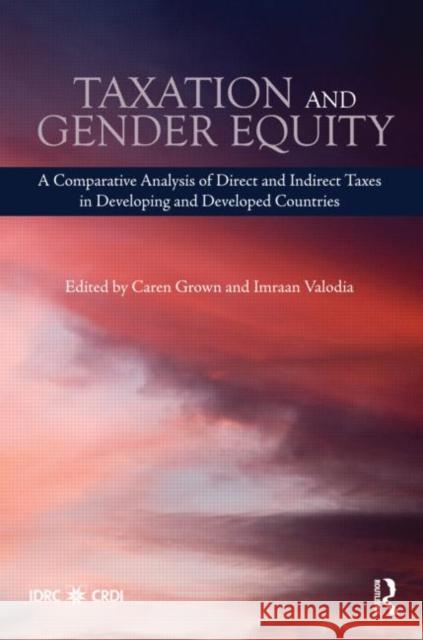
Taxation and Gender Equity: A Comparative Analysis of Direct and Indirect Taxes in Developing and Developed Countries
ISBN-13: 9780415492621 / Angielski / Twarda / 2010 / 352 str.
(netto: 693,98 VAT: 5%)
Najniższa cena z 30 dni: 705,23
ok. 22 dni roboczych
Dostawa w 2026 r.
Darmowa dostawa!
Around the world, there are concerns that many tax codes are biased against women, and that contemporary tax reforms tend to increase the incidence of taxation on the poorest women while failing to generate enough revenue to fund the programs needed to improve these women's lives. Because taxes are the key source of revenue governments themselves raise, understanding the nature and composition of taxation and current tax reform efforts is key to reducing poverty, providing sufficient revenue for public expenditure, and achieving social justice. This is the first book to systematically examine gender and taxation within and across countries at different levels of development. It presents original research on the gender dimensions of personal income taxes, and value-added, excise, and fuel taxes in Argentina, Ghana, India, Mexico, Morocco, South Africa, Uganda and the United Kingdom. This book will be of interest to postgraduates and researchers studying Public Finance, International Economics, Development Studies, Gender Studies, and International Relations, among other disciplines.
This book presents results from original research on the gender equity dimension of taxation from eight country studies, demonstrating new methodologies in evaluating the gender impacts of taxation, and making recommendations for tax policies and reform in developing and developed countries. The book develops a conceptual framework for analyzing taxation that combines the principle of vertical equity from public finance theory and the principles of the Convention on All Forms of Discrimination Against Women (CEDAW). The introductory and country chapters use that framework to critically evaluate the burden/incidence of income tax and indirect taxes (VAT, excise, fuel) and current proposals for tax reform in each country.
Methodologically, the book breaks new ground in the incidence analysis of direct and indirect taxes by moving away from the equation of gender analysis with female and male headship. The analysis develops two "gendered" typologies of households, classifying households by employment categories (male-breadwinner, female-breadwinner, dual earner, or none employed) and by sex composition (male dominated, female dominated, and equal numbers male/female). Each of these household categories is further disaggregated by expenditure quintile and presence/absence of children. The content of the analysis and methodologies used by the researchers are designed to be comparable across countries and directly applicable to policy for countries at different stages of development.




Czytaj nas na:
KrainaKsiazek.PL - Księgarnia Internetowa


