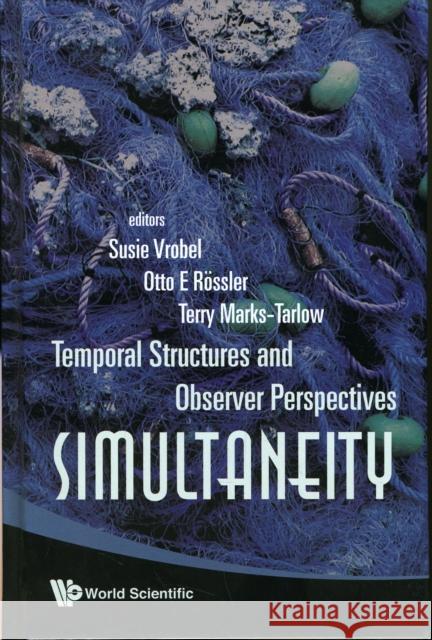
This book presents an interdisciplinary approach to the question of how observer-participant perspectives are generated, what constrains them and how they may be modified. These questions are of vital importance and must be addressed in any discipline before formulating a hypothesis or designing a model about reality. Both epistemological questions about the nature of temporal nested structures and practical applications of our ability to contextualize are discussed. The resulting temporal observer-participant perspectives reflect approaches to the concept of simultaneity from the viewpoints...
This book presents an interdisciplinary approach to the question of how observer-participant perspectives are generated, what constrains them and how ...
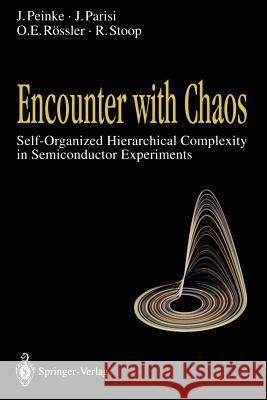
Joachim Peinke, Jürgen Parisi, Otto E. Rössler, Ruedi Stoop
Our life is a highly nonlinear process. It starts with birth and ends with death; in between there are a lot of ups and downs. Quite often, we believe that stable and steady situations, probably easy to capture by linearization, are paradisiacal, but already after a short period of everyday routine we usually become bored and seek change, that is, nonlinearities. If we reflect for a while, we notice that our life and our perceptions are mainly determined by nonlinear phenomena, for example, events occurring suddenly and unexpectedly. One may be surprised by how long scientists tried to...
Our life is a highly nonlinear process. It starts with birth and ends with death; in between there are a lot of ups and downs. Quite often, we believe...