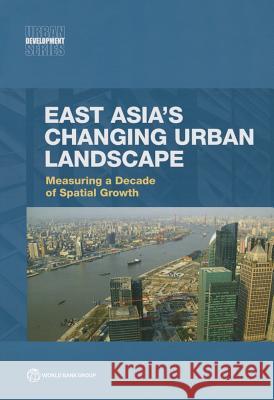
Urbanization is transforming the developing world. However, understanding the pace, scale, and form of urbanization has been limited by a lack of consistent data. East Asia's Changing Urban Landscape aims to address this problem by using satellite imagery and other data to measure urban expansion across the East Asia and Pacific region between 2000 and 2010. Illustrated with maps and charts, it presents trends in urban expansion and population growth in more than 850 urban areas -- by country, urban area, income group, and city size categories. It discusses findings related to increasing...
Urbanization is transforming the developing world. However, understanding the pace, scale, and form of urbanization has been limited by a lack of cons...
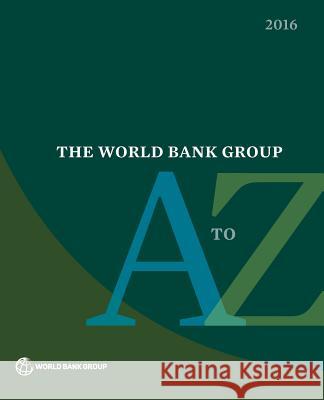
The World Bank Group A to Z provides the most concise and essential information about the mission, policies, procedures, products, and services of the new World Bank Group. With more than 280 entries arranged in encyclopedic A-to-Z format, readers can easily find up-to-date information about the five agencies of the World Bank Group and the wide range of areas in which they work: from agriculture, education, energy, health, social protection, and labor to gender, jobs, conflict, private sector development, trade, water, and climate change. The World Bank Group s work in all of these areas now...
The World Bank Group A to Z provides the most concise and essential information about the mission, policies, procedures, products, and services of the...
HIV Epidemics in the European Region: Vulnerability and Response provides a systematic review of the evidence on HIV vulnerability and response in all 53 countries of the World Health Organization's (WHO's) European Region, stretching from Iceland to the borders of China. The report focuses on key populations most at risk of HIV infection: people who inject drugs, sex workers, and men who have sex with men. It confirms that these populations are disproportionately affected by the growing HIV epidemic in Europe. Twenty-five percent of HIV diagnoses in Europe are associated with injecting drug...
HIV Epidemics in the European Region: Vulnerability and Response provides a systematic review of the evidence on HIV vulnerability and response in all...
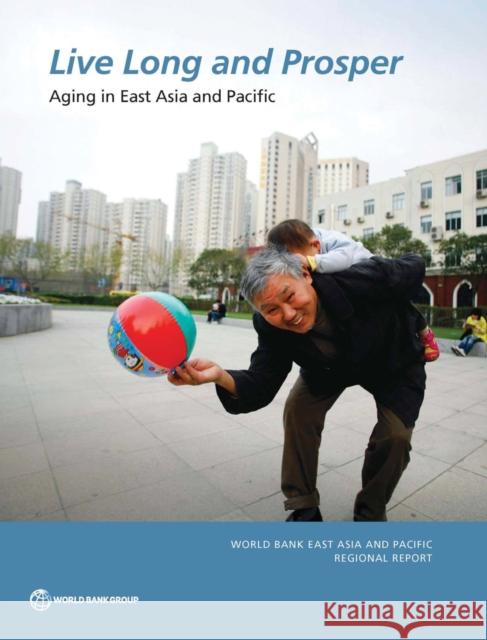
Aging is a challenge which countries in East Asia and Pacific (EAP) regions are grappling with or will soon confront. It raises many questions for policymakers ranging from potential macroeconomic impacts, to fiscal challenges of supporting pension, health and long-term care systems, and labor market implications as countries seek to promote productive aging. The urgency of the aging challenge varies across the region, but it will confront all EAP countries in time and early preparation is essential to avoid the missteps of other regions. Live Long and Prosper discusses the societal and...
Aging is a challenge which countries in East Asia and Pacific (EAP) regions are grappling with or will soon confront. It raises many questions for pol...
"The World Bank Group A to Z provides the most concise and essential information about the mission, policies, procedures, products, and services of the new World Bank Group. This second edition is a follow-up to the first volume released for the 2014 Annual Meetings. The World Bank Group A to Z series builds on previous editions of A Guide to the World Bank to include features not found in its predecessors including: a graphical introduction to the World Bank Group, highlighting the Bank Group's goals, financials, regions, and results; examples and photos of Bank Group projects and programs;...
"The World Bank Group A to Z provides the most concise and essential information about the mission, policies, procedures, products, and services of th...
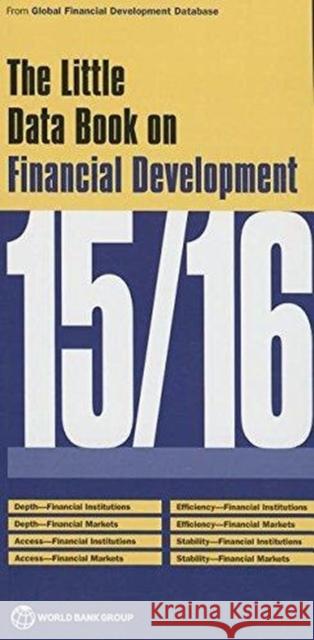
The Little Data Book on Financial Development 2015/2016 is a pocket edition of the Global Financial Development Database, published as part of the work on the Global Financial Development Report 2015/2016: Long-Term Finance. It contains 39 indicators of financial development in 202 economies, including measures of (1) financial depth, (2) access, (3) efficiency, and (4) stability of financial institutions and markets. Additional variables, historical observations, and links to underlying research are available at www.worldbank.org/financialdevelopment.
The Little Data Book on Financial Development 2015/2016 is a pocket edition of the Global Financial Development Database, published as part of the wor...
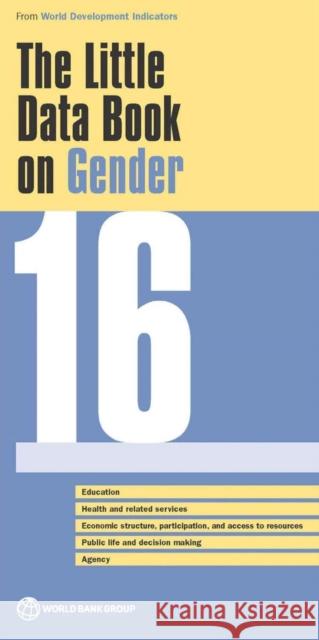
This handy pocket guide is a quick reference for users interested in gender statistics. The book presents gender-disaggregated data for more than 200 economies in an easy country-by-country reference on demography, education, health, labor force, political participation and the Millennium Development Goals. The book s summary pages cover regional and income group aggregates"
This handy pocket guide is a quick reference for users interested in gender statistics. The book presents gender-disaggregated data for more than 200 ...
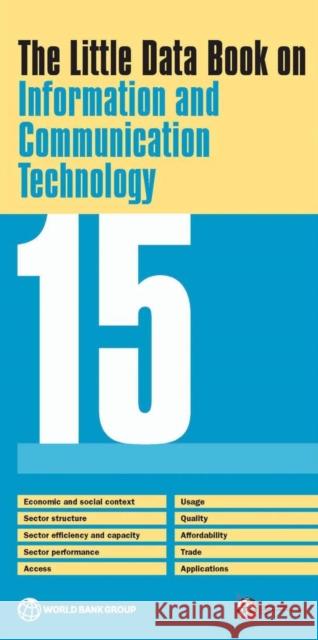
This Little Data Book on Information and Communications Technology 2015 presents tables for over 213 economies showing the most recent national data on key indicators of information and communications technology (ICT), including access, quality, affordability, efficiency, sustainability, and applications
This Little Data Book on Information and Communications Technology 2015 presents tables for over 213 economies showing the most recent national data o...
The Little Green Data Book 2015 is a pocket-sized ready reference on key environmental data for over 200 countries. Key indicators are organized under the headings of agriculture, forestry, biodiversity, oceans, energy, emission and pollution, and water and sanitation. For the third year, The Little Green Data Book presents a new set of ocean-related indicators, highlighting the role of oceans in economic development.
The Little Green Data Book 2015 is a pocket-sized ready reference on key environmental data for over 200 countries. Key indicators are organized under...
For Costa Rica, the Dominican Republic-Central America free trade agreement (CAFTA-DR) has been more than a trade agreement. Costa Rica has used trade liberalization and promotion of international trade as a core development strategy for decades. CAFTA-DR consolidated benefits that had previously been unilaterally extended under the Caribbean Basin Initiative into a multilateral free trade agreement, providing a more stable environment for trade relationships. Beyond just being a trade agreement, CAFTA-DR opened up state monopolies in telecommunications and insurance, which polarized the...
For Costa Rica, the Dominican Republic-Central America free trade agreement (CAFTA-DR) has been more than a trade agreement. Costa Rica has used trade...