Seneca (c. 4 65 CE) devotes most of Naturales Quaestiones to celestial phenomena. In Book 1 he discusses fires in the atmosphere; in 2, lightning and thunder; in 3, bodies of water. Seneca s method is to survey the theories of major authorities on the subject at hand, so his work is a guide to Greek and Roman thinking about the heavens.
Seneca (c. 4 65 CE) devotes most of Naturales Quaestiones to celestial phenomena. In Book 1 he discusses fires in the atmosphere; in 2, lightning and ...
Ahl's translations of three Senecan tragedies will gratify and challenge readers and performers. With stage performance specifically in mind, Ahl renders Seneca's dramatic force in a modern idiom and style that move easily between formality and colloquialism as the text demands, and he strives to reproduce the richness of the original Latin, to retain the poetic form, images, wordplays, enigmas, paradoxes, and dark humor of Seneca's tragedies.
In this powerful and imaginative translation of Medea, Frederick Ahl retains the compelling effects of the monologues, as well...
Ahl's translations of three Senecan tragedies will gratify and challenge readers and performers. With stage performance specifically in mind...
Are there no limits to human cruelty? Is there any divine justice? Do the gods even matter if they do not occupy themselves with rewarding virtue and punishing wickedness? Seneca's plays might be dismissed as bombastic and extravagant answers to such questions--if so much of human history were not -Senecan- in its absurdity, melodrama, and terror. Here is an honest artist confronting the irrationality and cruelty of his world--the Rome of Caligula, Claudius, and Nero--and his art reflects the stress of the encounter. The surprise, perhaps, is that Seneca's world is so like our own.
Are there no limits to human cruelty? Is there any divine justice? Do the gods even matter if they do not occupy themselves with rewarding virtue a...
Born in 4 b.c., Seneca lived during one of the most turbulent times in Roman history. He served as tutor and then adviser to the emperor Nero, witnessing firsthand many crimes and debaucheries. His experiences led him to turn away from public life and retreat into philosophical contemplation. A leading proponent of Stoicism, he has influenced writers and thinkers throughout the centuries.
Seneca's letters and essays are ideally suitable for intermediate- level Latin students. Written in a clear and crisp style, they are universal in scope and psychological in orientation. For this...
Born in 4 b.c., Seneca lived during one of the most turbulent times in Roman history. He served as tutor and then adviser to the emperor Nero, witn...
The Dialogues were an important medium for the spreading of Greek philosophical theories to the Roman world and to subsequent ages. This selection is of complete, not excerpted, dialogues.
The Dialogues were an important medium for the spreading of Greek philosophical theories to the Roman world and to subsequent ages. This selection is ...
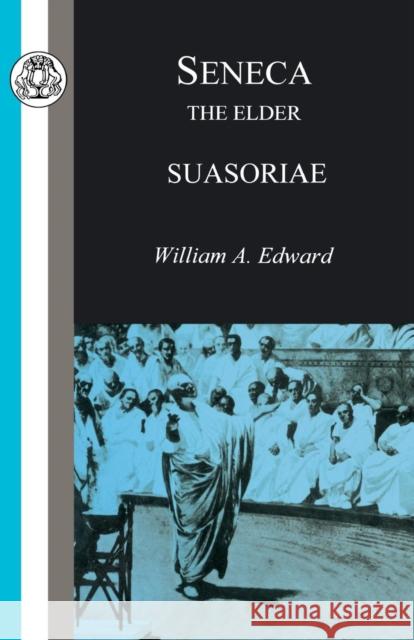
This work contains a copy of Seneca's "Suasoriae," along with facing translation, full annotation and a useful introductory essay which offers an argument against suggestions that Seneca was no more than a professional hack teacher of rhetoric and that his Latinity is inferior and unclassical.
This work contains a copy of Seneca's "Suasoriae," along with facing translation, full annotation and a useful introductory essay which offers an a...
The essays in this volume present new insights into the far-reaching influence of an early oral culture on subsequent development after the spread of literacy. At the outset, revisionist essays on the Homeric epics examine such questions as historical memory, Homer's audience(s), descriptive strategies, ring-composition, and the status of orality as a constitutive feature of the epics. These are followed by virtually unprecedented studies of the orality of later (written) literature, including Greek oratory, Virgilian epic, Pliny's Panegyricus and story-telling in late Greek writers....
The essays in this volume present new insights into the far-reaching influence of an early oral culture on subsequent development after the spread of ...
Ahl's translations of three Senecan tragedies will gratify and challenge readers and performers. With stage performance specifically in mind, Ah1 renders Seneca's dramatic force in a modern idiom and style that move easily between formality and colloquialism as the text demands, and he strives to reproduce the richness of the original Latin, to retain the poetic form, images, wordplays, enigmas, paradoxes, and dark humor of Seneca's tragedies.
Here is a moving and accomplished translation of this complex play dealing the the violent passions stirred by innocence and beauty and the...
Ahl's translations of three Senecan tragedies will gratify and challenge readers and performers. With stage performance specifically in mind, Ah1 r...
This is most comprehensive study of Seneca's Hercules Furens to date and indeed of any Roman tragedy. Apart from illustrating the poetic language, the literary conventions and the dramatic technique of the play, the book highlights the figure of the Roman Hercules in relation to its Greek model, the Euripidean Herakles. The comprehensive introduction on myth, modern interpretations and textual transmission of the play is followed by a discussion of the newly discovered collation of the codex Etruscus by J.F. Gronovius. The detailed commentary is provided with a new critical...
This is most comprehensive study of Seneca's Hercules Furens to date and indeed of any Roman tragedy. Apart from illustrating the poetic langua...