"Pamuk is a writer who shares my reverence for the great art of the novel. He takes the novel seriously in a way that is perhaps no longer possible for Western writers, boldly describing it as European civilization's greatest invention."--Michael McGaha
Turkish novelist Orhan Pamuk is a prominent voice in Turkish literature, speaking to the country's history, culture, and politics. In 2006, he became the first Turkish writer to receive the Nobel Prize for Literature.
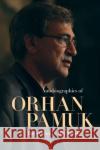
Autobiographies of Orhan Pamuk is the first book-length study of the life and writings of Pamuk. It...
"Pamuk is a writer who shares my reverence for the great art of the novel. He takes the novel seriously in a way that is perhaps no longer possible...
In this notable work, Souad T. Ali examines the seminal writings of Egyptian reformist scholar Ali'Abd al-Raziq, often regarded as the intellectual father of Islamic secularism, and his controversial argument that the caliphate should be considered a human innovation, rather than a religious imperative. 'Abd al Raziq contended that Islam is "a religion, not a state; a message, not a government," a major departure from the traditional view that religious and political spheres are intertwined and inseparable in Islam.
Opponents denounced 'Abd al-Raziq's ideas as a foreign corruption...
In this notable work, Souad T. Ali examines the seminal writings of Egyptian reformist scholar Ali'Abd al-Raziq, often regarded as the intellectual...
The Reza Ali Khazeni Lecture Series in Iranian Studies at the University of Utah began in 1995. Sponsored by the Reza Ali Khazeni Memorial Foundation, the Middle East Center, and the College of Humanities at the University of Utah, the lectures cover various aspects of Persian culture. This second volume in a multivolume series includes lectures that explore Iran s cultural and artistic achievements and help to create greater understanding of Iranian contributions to world civilization. Beginning with the earliest origins of the Persian state and culture, these lectures, primarily...
The Reza Ali Khazeni Lecture Series in Iranian Studies at the University of Utah began in 1995. Sponsored by the Reza Ali Khazeni Memorial Foundation,...
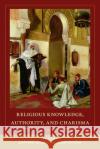
The issue of religious authority has long fascinated and ignited scholars across a range of disciplines: history, anthropology, the sociology of religion, and political science. Religious Knowledge, Authority, and Charisma juxtaposes religious leadership in premodern and modern Islam with examples from the Judaic tradition. By illustrating various iterations of authority in numerous historical and cultural contexts, this volume offers fresh insights into the nature of institutions of learning and other systems of establishing and disseminating authority, the mechanisms for...
The issue of religious authority has long fascinated and ignited scholars across a range of disciplines: history, anthropology, the sociology of relig...