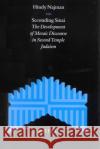
What is meant by attributing texts to Moses in Hebrew Bible and Second Temple Judaism? The answer depends not only on the history of texts but also on the history of concepts of textuality. This book criticizes the terms "Pseudepigraphy" and "Rewritten Bible," which presuppose conceptions of authentic attribution and textual fidelity foreign to ancient Judaism. Instead, this book develops the concept of a discourse whose creativity and authority depend on repeated returns to the exemplary figure and experience of a founder. Attribution to Moses is a central example, whose function is to...
What is meant by attributing texts to Moses in Hebrew Bible and Second Temple Judaism? The answer depends not only on the history of texts but also on...
This volume deals with the primaeval history in the Book of Jubilees, an interpretative rewriting of the biblical narratives of Genesis through Exodus 19, written in the second century BCE. It contains a close comparison of Genesis 1-11 and Jubilees 2-10, in order to get a clear picture of the specific way the biblical story was rewritten. Each chapter offers an overall comparison of the parallel pericopes in Genesis and Jubilees, with special attention to the structure of the passages. It then gives a synoptic overview of the text of the parallel passages, along with a classification (e.g.,...
This volume deals with the primaeval history in the Book of Jubilees, an interpretative rewriting of the biblical narratives of Genesis through Exodus...
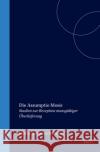
This study places the Assumptio Mosis (AM) in its literary context of traditions of the 2nd century BC to the 1st century AD. It examines how in AM the biblical traditions have been adopted and adjusted (Deut 31 - Josh 1) to the actual circumstances. After presenting the current state of affairs in research and analysing the structure of the AM, the investigation focuses on a detailed account on how Deut 31 - Josh 1 has been incorporated in the AM and how this process affected the theological content. Furthermore the AM is put in a comparative...
This study places the Assumptio Mosis (AM) in its literary context of traditions of the 2nd century BC to the 1st century AD. It examine...
The menorah was the most important and dominant symbol in Jewish art, both in the Land of Israel and the Diaspora. The menorah was an integral part of the Temple ritual and was the most important of the Temple vessels. Its later representation served the purpose of reminding the Jews of their previous glory as well as their pride in the Temple, and expressed the longing and hope for the renewal of the Temple services and worship. Following the destruction of the Temple, the menorah took on the profound significance of the Temple. It also came to symbolize Judaism, when it was necessary to...
The menorah was the most important and dominant symbol in Jewish art, both in the Land of Israel and the Diaspora. The menorah was an integral part of...
The present exegetical study in the Hebrew and Greek versions of Sirach 50 deals with the wisdom tradition, personified in Simon the High Priest, who is called "the Just" in the rabbinical tradition. As a genuine eyewitness Ben Sira offers proof of Simons significance in the re-building of Jerusalem as climax of the Praise of the Fathers on Rosh Hashanah. His re-writing of Israels history ends with a polemic against the legality of the Samaritan temple and a direct allusion to the author's name. The volume examines three new pictures of the original Geniza-fragments found in 1896. The...
The present exegetical study in the Hebrew and Greek versions of Sirach 50 deals with the wisdom tradition, personified in Simon the High Priest, who ...
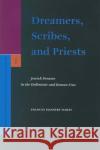
This investigation focuses on divinely-sent dreams in early Judaism and discusses their literary forms and socio-religious functions. It examines Jewish dreams in the Bible, Apocrypha, Pseudepigrapha, Dead Sea Scrolls, and Josephus, setting them in the wider context of antecedent and contemporary dream cultures. Part One grounds the project in the dream traditions of the ancient Near East, Hebrew Bible, Greece, and Rome. Part Two investigates the unique emphases of early Jewish dreams, including: a priestly and scribal milieu, access to various planes of reality, new roles for dream...
This investigation focuses on divinely-sent dreams in early Judaism and discusses their literary forms and socio-religious functions. It examines Jewi...
This volume considers the emerging Jewish interest in an afterlife during the second temple period in relation to developing views of the deity and the self. In some circles God is understood as increasingly distant from the human sphere, and so justice must occur in another world or after death; at the same time, more autonomous constructions of the self in response to community breakdown suggest that reward and punishment come not only collectively, but also on the individual level in a post-mortem realm. The book traces the interconnections between these themes in Job and Ecclesiastes, Ben...
This volume considers the emerging Jewish interest in an afterlife during the second temple period in relation to developing views of the deity and th...
The present volume has been compiled by colleagues and friends as a tribute to Dr. A. Hilhorst, the Secretary of the Journal for the Study of Judaism, on the occasion of his 65th birthday. Its 23 contributions by renowned international experts, reflect the various interests of the honouree, his approach to the Classical and Semitic languages and literatures as forming part of a continuum, and his attention to the interactions between the different literary corpora. Several contributions deal with the interaction of the Old Testament with later Jewish, Gnostic, or Christian writings;...
The present volume has been compiled by colleagues and friends as a tribute to Dr. A. Hilhorst, the Secretary of the Journal for the Study of Judai...
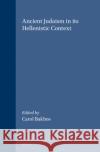
This volume explores the ways in which Jews lived within the Hellenistic and Greco-Roman contexts, how they negotiated their religious and social boundaries in their own distinctive manner.Scholars demonstrate how the Jewish encounter with Hellenism led not to a conscious struggle with alien forces but rather in many instances to an active re-tailoring and re-shaping of tradition in light of their material, ideological and philosophical surroundings. That is to say, the Jews, a minority people, maintained their identity by adapting the trappings, to varying degrees, of their milieu.These...
This volume explores the ways in which Jews lived within the Hellenistic and Greco-Roman contexts, how they negotiated their religious and social boun...
This rich collection of articles dedicated to Michael E. Stone by his colleagues and students honors his contributions to the study of Judaism and Christianity. Many of the articles discuss apocryphal and pseudepigraphical works stemming from Jewish or Christian authors and transmitted primarily but not exclusively by Christian scribes. Particularly well-represented are the earliest books of 1 Enoch and the Testaments of the Twelve Patriarchs. A number of articles introduce newly available material from the Dead Sea Scrolls while others deal with Philo, Hellenistic Judaism, and early...
This rich collection of articles dedicated to Michael E. Stone by his colleagues and students honors his contributions to the study of Judaism and Chr...