When D Burns arrived at the mighty Pitchfork Ranch as the new manager in 1942, he walked straight into the hostility of a lot of longtime hands who did not want to take orders from an outsider. Gradually, though, D and his wife, Mamie, won allies and made a place for themselves on the historic spread. For the next twenty-three years Mamie jotted down stories about the cowhands, the cooks and gardeners at the Big House, the many guests, and her own lively family. Her stories reveal life as it was on an isolated ranch during the war years and the years of change that followed. The Pitchfork...
When D Burns arrived at the mighty Pitchfork Ranch as the new manager in 1942, he walked straight into the hostility of a lot of longtime hands who di...
From Sam Maverick's arrival in Texas to his death in 1870, he participated in many of the most momentous events of the state's early history, including the Siege of Bexar and the defense of the Alamo. He accumulated a fabled land empire and inspired the term "maverick" to denote an unbranded calf or an independent person. Sam's wife, Mary--by some accounts the first AngloAmerican woman to settle in San Antonio--lived through the stresses and tragedies of pioneer family life, chronicling them with emotional intensity and immediacy of detail. Together Sam and Mary founded a Texas family dynasty...
From Sam Maverick's arrival in Texas to his death in 1870, he participated in many of the most momentous events of the state's early history, includin...
"They came, they saw, they liked it," Stanley Marcus recalls of 1936 - the year "the rest of America discovered Texas." That year, in the midst of the nation's depression, the Lone Star State extravagantly celebrated the centennial of its independence from Mexico with fervor, fanfare, and hoop-la. Spawned by pride, patriotism, and a large measure of economic self-interest, the 1936 centennial observances marked a high tide of ethnocentrism in Texas and etched a new image of the state. In 1923 the Advertising Clubs of Texas launched the centennial movement to advertise the state...
"They came, they saw, they liked it," Stanley Marcus recalls of 1936 - the year "the rest of America discovered Texas." That year, in the midst of the...
One- and two-room schools represent a time in Texas history when a child's school term was based on the local crop season and family duties received priority. They were the center of educational, social, political, and religious activity, where children were taught reading and math, couples were united in marriage, funerals were preached, and Friday night socials were held. The rise and fall of the rural school mimicked the rise and fall of population patterns. As more people moved into and settled an area, more schools were necessary. Because of transportation limitations, schools were...
One- and two-room schools represent a time in Texas history when a child's school term was based on the local crop season and family duties received p...
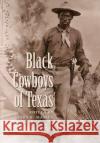
In the early days of Texas, the work of the cowhand was essential to the newly arrived settlers building a life on the frontier. The story of the Anglo cowboys who worked the ranches of Texas is well known, but much more remains to be discovered about the African American cowhands who worked side-by-side with the vaqueros and Anglo cowboys. The cowboy learned his craft from the vaqueros of New Spain and Texas when it was the northern territory of Mexico, as well as from the stock raisers of the south. Such a life was hardly glamorous. Poorly fed, underpaid, overworked, deprived of sleep, and...
In the early days of Texas, the work of the cowhand was essential to the newly arrived settlers building a life on the frontier. The story of the Angl...
Lawrence Sullivan Ross, born in Iowa Territory, served Texas with a zeal unmatched by many of its native sons, devoting most of his life to the Lone Star State as Indian fighter, Texas Ranger, Confederate soldier, sheriff, constitution framer, state senator, governor, and president of Texas A&M College. In this first full-scale biography of Ross, Judith Benner engrossingly narrates the story of his life, from a sturdy child of the Texas frontier to a venerable college president credited with revitalizing a nearly defunct institution. Using such unpublished material as military records,...
Lawrence Sullivan Ross, born in Iowa Territory, served Texas with a zeal unmatched by many of its native sons, devoting most of his life to the Lone S...
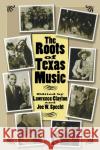
The music of Texas and the American Southwest is as diverse and distinctive as the many different groups who have lived in the region over the past several centuries," writes Gary Hartman in his introduction to this refreshingly different look at various genres of Texas music. Roots of Texas Music celebrates the diverse sources of the music of the Lone Star State by gathering chapters by specialists on each of them-specialists whose views may not have dominated the perception of Texas music to date. Editor Lawrence Clayton conceived this project as one that would not simply repeat the common...
The music of Texas and the American Southwest is as diverse and distinctive as the many different groups who have lived in the region over the past se...
A fraction of Texans are Jewish, yet Texas rabbis are among the most influential, colorful, and celebrated figures in the state's history and culture. In "Jewish Stars in Texas, "Hollace Ava Weiner examines eleven rabbis whose wisdom and leadership were felt not only by their congregations but also by their communities. Texas proved to be a blank slate for many rabbis--a chance to escape traditional practices, make a fresh start, or, simply, a chance to make a living. Of Weiner's eleven rabbis, ten grew to lead Reform congregations, stressing social justice and community service, and one...
A fraction of Texans are Jewish, yet Texas rabbis are among the most influential, colorful, and celebrated figures in the state's history and culture....