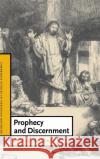
If people claim to speak for God, what enables us to know when to credit or discredit the claim? This book analyses the criteria for discernment of prophetic authenticity in the Old Testament, and for discernment of apostolic authenticity in the New Testament; and also considers their validity and viability in a contemporary context. After explaining the biblical concept of prophetic and apostolic speech on God's behalf, Moberly offers close readings of the biblical text so as to bring to life the distinctive voices, especially those of Jeremiah and St Paul, which speak of critical...
If people claim to speak for God, what enables us to know when to credit or discredit the claim? This book analyses the criteria for discernment of pr...
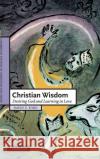
What is Christian wisdom for living in the twenty-first century? Where is it to be found? How can it be learnt? In the midst of diverse religions and worldviews and the demands and complexities of our world, David Ford explores a Christian way of uniting love of wisdom with wisdom in love. Core elements are the 'discernment of cries', the love of God for God's sake, interpretation of scripture, and the shaping of desire in faith. Case studies deal with inter-faith wisdom among Jews, Christians and Muslims, universities as centres of wisdom as well as knowledge and know-how and the challenge...
What is Christian wisdom for living in the twenty-first century? Where is it to be found? How can it be learnt? In the midst of diverse religions and ...
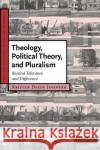
How can we live together in the midst of our differences? This is one of the most pressing questions of our time. Tolerance has been the bedrock of political liberalism, while proponents of agonistic political thought and radical democracy have sought an answer that allows a deeper celebration of difference. Kristen Deede Johnson describes the move from tolerance to difference, and the accompanying move from epistemology to ontology, within political theory. Building on this 'ontological turn', in search of a theological answer to the question, she puts Augustine into conversation with recent...
How can we live together in the midst of our differences? This is one of the most pressing questions of our time. Tolerance has been the bedrock of po...
This book cuts new ground in bringing together traditional Christian theological perspectives on truth and reality with a contemporary philosophical view of the place of language in both divine and wordly reality. Patterson seeks to reconcile the requirements that Christian theology should both take account of postmodern insights concerning the inextricability of language and world as well as taking God's truth to be absolute for all reality. Yet it is not simply about theological language and truth as such. Instead Patterson asks: where does language fit in divine and human reality?...
This book cuts new ground in bringing together traditional Christian theological perspectives on truth and reality with a contemporary philosophical v...
Michael Barnes SJ contributes to the debate about the place of inter-religious relations in the life of the Church by developing a "theology of dialogue." He offers a critique of much current thinking in this area and proposes instead a theology rooted in the themes of welcome and hospitality. He argues for a vision of Christianity as a "school of faith," a community called not only to teach others but to learn from them as well.
Michael Barnes SJ contributes to the debate about the place of inter-religious relations in the life of the Church by developing a "theology of dialog...
Offering a Christian response to ecological crisis, this book argues that our present-day ecological problems are due to the displacement of the triune God and the subsequent separation of humanity from nature. Peter Scott contends that this situation can be decisively addressed only within theology. Drawing insights from ecology, ecofeminism, and social and socialist ecologies, he proposes a common realm of God, nature and humanity. Both Trinitarian and political, this common realm offers a theological rationale for an ecological democracy, founded on the ecological renewal secured by...
Offering a Christian response to ecological crisis, this book argues that our present-day ecological problems are due to the displacement of the triun...
Offering a Christian response to ecological crisis, this book argues that our present-day ecological problems are due to the displacement of the triune God and the subsequent separation of humanity from nature. Peter Scott contends that this situation can be decisively addressed only within theology. Drawing insights from ecology, ecofeminism, and social and socialist ecologies, he proposes a common realm of God, nature and humanity. Both Trinitarian and political, this common realm offers a theological rationale for an ecological democracy, founded on the ecological renewal secured by...
Offering a Christian response to ecological crisis, this book argues that our present-day ecological problems are due to the displacement of the triun...
Michael Barnes SJ contributes to the debate about the place of inter-religious relations in the life of the Church by developing a "theology of dialogue." He offers a critique of much current thinking in this area and proposes instead a theology rooted in the themes of welcome and hospitality. He argues for a vision of Christianity as a "school of faith," a community called not only to teach others but to learn from them as well.
Michael Barnes SJ contributes to the debate about the place of inter-religious relations in the life of the Church by developing a "theology of dialog...
This is an important and original study of the ideas of self and Christian salvation. Using the pivotal image of the face, David F. Ford engages with three modern thinkers in order to rethink and reimagine the self. He goes on to examine the dimensions of salvation through the lenses of scripture, worship practices, Christ and the lives of contemporary saints. The result is a theology of self and salvation immersed in Christian faith, thought and practice, while also being deeply involved with modern life in a pluralist world.
This is an important and original study of the ideas of self and Christian salvation. Using the pivotal image of the face, David F. Ford engages with ...